What is The Empress about?
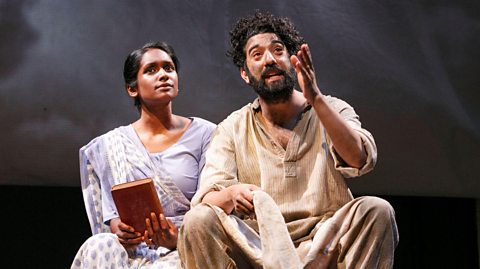
The Empress by Tanika Gupta is a play set during the final 14 years of Queen Victoria’s reign, from 1887 to her death in 1901.
There are two acts and each act contains 15 scenes.
The play follows two separate narratives:
- Rani’s relationship with Hari
- The relationship between Queen Victoria and her Indian servant Abdul Karim.
Many of the characters and actions in the play are based on real historical figures and events. Gupta used her imagination to bring these events and people to life, so the dialogue is all fictional.

Remember
In your exam you do not need to recount all the events in the plot.
Focus on analysing when and why specific events happen.
Overview
Timeline
This timeline shows 11 key moments from The Empress by Tanika Gupta.
Mini quiz
Put these key events from The Empress into the correct order.
Act One
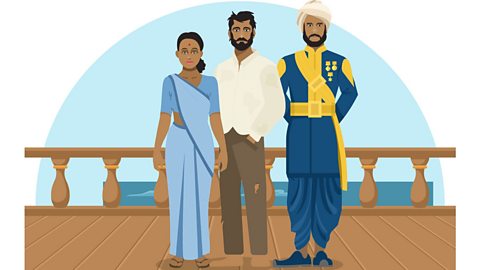
Act One starts on board a ship sailing from India to Tilbury docks in London. On board the ship, the audience are introduced to:
- Indian Indian nursemaids who looked after European children, often on sea voyages to and from Britain. (nursemaid) Rani who is looking after the Matthews’ children
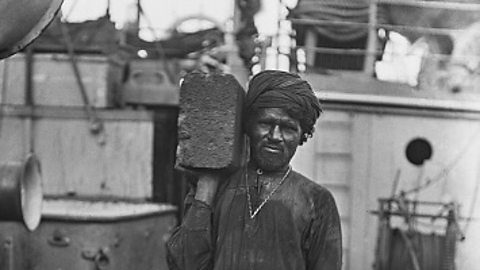
- Non-European sailors who worked on British ships trading in the Indian Empire. They were paid less than European sailors and worked in worse conditions. (sailor) Hari who is working on the ship
- Abdul Karim who is travelling to Windsor Castle to work as a servant for Queen Victoria
- Dadabhai Naoroji who is travelling to London in the hope of becoming a Member of Parliament.
Three key elements of the plot are developed in Act One.
The poor treatment of ayahs and lascars
On board the ship, Hari is beaten and Dismissed as unimportant or made fun of. by the Serang, his superior. Dadabhai comments on the poor treatment of the lascars.
Rani is working for Susan Matthews as an ayah, taking care of her children and preparing to work as the family nanny in England. She is unaware that she will be fired once they arrive.
She is later treated poorly by her next employer, Lord Oakham, who To make someone to do something they don’t want to using force or threats. her into a sexual relationship.
The relationship between Hari and Rani
Hari and Rani are close friends at the start of the play. While on the ship, Rani teaches Hari how to read and write and he asks her to marry him. Although Rani likes Hari and they kiss, she declines his offer as she wants to be independent and doesn’t fully trust him.
When Rani is fired by Susan Matthews, Hari offers to help her and takes her to Lascar Sally’s boarding house.
Queen Victoria and Abdul Karim's relationship
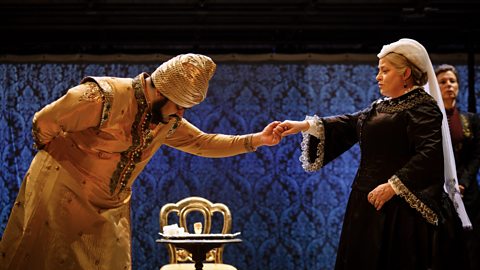
Abdul is given to Queen Victoria as a gift for her Golden Jubilee. He starts working as her servant and they become friends. Abdul’s close relationship with Queen Victoria is sometimes presented as flirtatious, and causes her lady in waiting, Lady Sarah, great discomfort.
Abdul persuades Queen Victoria to promote him so that he is properly recognised for his position and work. She promotes him to A Persian word meaning teacher. (teacher), which further angers Lady Sarah.
Mini quiz
Act Two
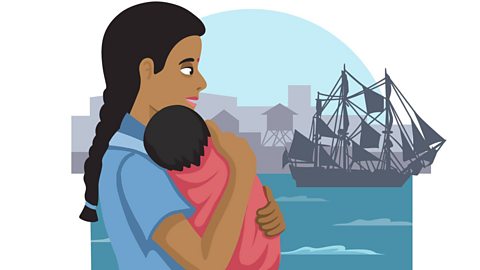
Act Two starts at Tilbury docks in 1891.
Rani has had Lord Oakham’s baby and considers leaving it at the docks as she has no job and no way to take care of it.
Lascar Sally and Firoza, an older ayah, persuade her to keep the baby.
They name her Asha, which means ‘hope’ in Bengali.
There are four key elements of the plot in Act Two.
Hari fights for lascar rights
Hari writes a list of demands to the ship’s captain, fighting for the rights of lascars. Hari’s final demand is:
We demand to be respected as members of the human race."
Despite cheers from his fellow lascars, Hari is beaten by the Serang and fired by the captain. He is abandoned at the Cape Colony in South Africa. The next time we see Hari, he is dressed in a suit and stepping off a ship in England.
Dadabhai becomes an MP (Member of Parliament)
Dadabhai helps to open the Ayahs' Home, a refuge for abandoned and destitute ayahs in London. Rani starts working as Dadabhai’s assistant as he campaigns to be elected as a Member of Parliament.
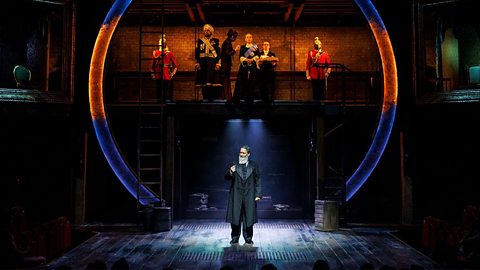
In 1892, Dadabhai is elected as an MP for Finsbury Park and faces racist criticism in British newspapers. Dadabhai delivers a speech in the House of Commons which criticises Queen Victoria and the suffering caused by the British Empire. He says:
Millions of Indian men, women and children are dying. Millions more will die unless financial resources are directed back to the people."
Following his long and difficult struggle for justice, he later leaves England and returns to India.
Victoria and Abdul grow close
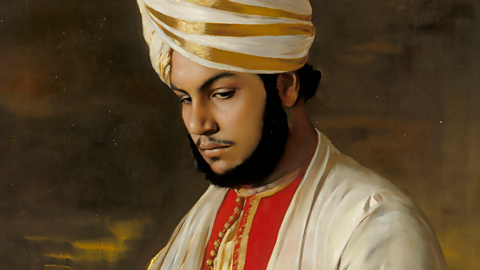
Queen Victoria hires a portrait painter to complete an official portrait of Abdul as her Munshi. As they grow closer, Abdul starts to challenge Queen Victoria’s view of the British Empire and teaches her about the suffering of people in British colonies.
Queen Victoria plans to have Abdul knighted but this angers the royal household. Lady Sarah tells Queen Victoria that if she gives Abdul a knighthood, her son, Bertie, and the Prime Minister, Lord Salisbury, will declare her insane and unfit to rule.
Abdul organises Indian musicians and performers for the Queen while she is ill.
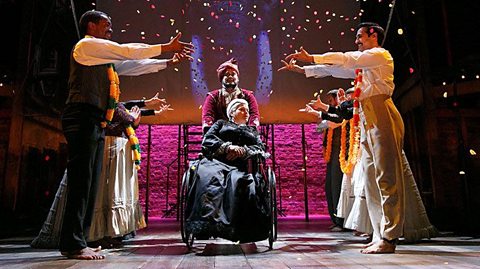
After Queen Victoria’s death, Abdul is ordered to return to India and evidence of their relationship and his position is destroyed.
Lady Sarah says to Abdul:
You will return to India. His Majesty says that he has no further use for your services. Have I made myself clear?"
Rani and Hari are re-united
Lascar Sally receives a bundle of letters from Hari to Rani which he has been writing over the years they have been apart.
Rani decides to be a teacher and aims to open her own school. Hari is now working as a furniture maker in London.
Hari and Rani are reunited and kiss at the end of the play, they decide to settle in England and raise Asha together. Hari tells Rani that:
Every night I thought of your smiling, happy face."
Mini quiz
Dramatic technique - Cross-cutting
The action in The Empress takes place over different locations. At some key moments, scenes take place on stage at the same time but in different settings. This is called cross-cutting. Gupta uses this dramatic technique to highlight key themes in the play.
Here are some examples of cross-cutting in The Empress.
Act 1, Scene 12
- Hari is on a ship at sea. He sings a song while working hard with other lascars.
- Rani is at Lord Oakham’s house in London. She is heavily pregnant and looking after the Oakham children.
- Dadabhai meets with English politicians in London.
Question
What is the dramatic effect of cross-cutting in this scene?
Answer
In this scene, Gupta’s cross-cutting allows the audience to follow the narratives of three different characters at the same time from their different locations. Gupta shows the suffering of Rani and Hari, while Dadabhai works to fight injustice in the British Empire.
Act 2, Scene 11
- Queen Victoria is at one of her royal residences. Her servants are dressing her in diamonds in preparation for her Diamond Jubilee dinner.
- Dadabhai is giving a speech in parliament about poverty in India. He calls Queen Victoria the ‘Empress of Famine’.
Question
What impact might this example of cross-cutting have on the audience?
Answer
Cutting Dadabhai’s critical speech with Victoria being pampered and dressed in diamonds highlights the different experiences of characters in the play based on race and class. The audience is encouraged to question the lavish lifestyle enjoyed by the Queen while her subjects across the globe are suffering.
Quiz
Test your understanding of the plot of The Empress by taking this multiple-choice quiz.
GCSE English literature revision podcasts. audio
Whether you're at home or on the go, listen to these podcasts by Bitesize and BBC Sounds to refresh your memory of key texts.

More on The Empress
Find out more by working through a topic
- count2 of 5
- count3 of 5
- count4 of 5