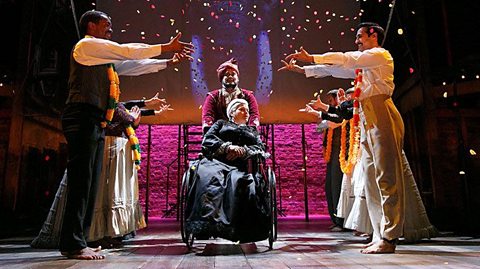
Who are the key characters?
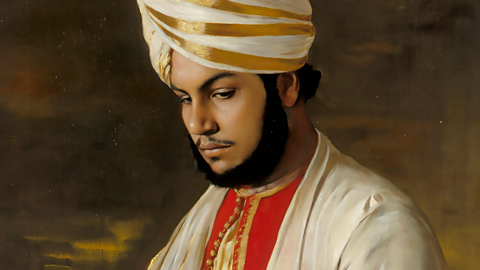
The Empress has four main characters: Rani, Hari, Abdul and Queen Victoria.
There are four secondary characters in the play – Rani’s employer Lord Oakham, Indian politician Dadabhai Naoroji, Queen Victoria’s servant Lady Sarah and Lascar Sally.
There are many minor characters in the play: Rani’s friend Firoza, Gandhi the Head of a lascar crew., Susan Matthews, Georgina, Charlotte, Mary and William.
Some of the characters in the play are based on real historical figures, such as Queen Victoria. Gupta uses her imagination backed up with lots of research to bring these characters to life.

Remember
In your exam you will be asked to write about a character or a theme. If writing about a character you should include:
- Key moments for the character
- If and how the character changes throughout the play
- Gupta’s intentions and message relating to the character
- How an audience might respond to the character
Rani Das
- Innocent or lacking experience.
- Caring
- Able to recover quickly when something difficult has happened.
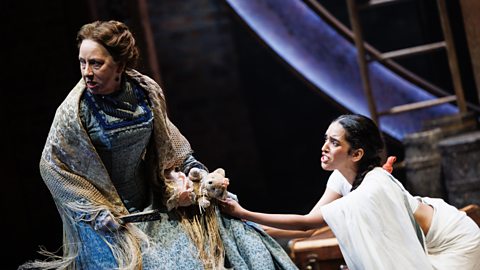
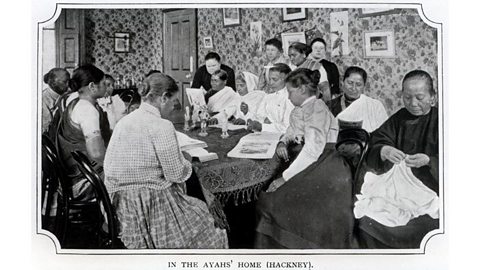
Rani – whose name means ‘Queen’ in Bengali - is 16 years old when she arrives in London. She is naïve and was expecting to continue working as an Indian nursemaids who looked after European children, often on sea voyages to and from Britain. for the Matthews family but is immediately dismissed, replaced with an English nanny and left alone on Tilbury docks.
Her next employer is Lord Oakham, whom Rani trusts to look after her. Lord Oakham To make someone to do something they don’t want to using force or threats. Rani into a sexual relationship by promising to send money back to her family in India. However, he rejects and abandons her when she becomes pregnant with his child.
Rani is a strong, resilient character who fights against Difficult times or circumstances. to raise her daughter, Asha, and to work as Dadabhai’s assistant. She is self-motivated and educates herself. She falls in love with Hari on the boat when she is 16 and is reunited with him 14 years later.
Question
What evidence could be used to show how Rani's character changes throughout the play?
Answers
| Quote | What it shows about Rani |
|---|---|
| "I am a complete stranger in this country" | This shows Rani’s vulnerability and loneliness when she is fired by Mrs Matthews at Tilbury docks. She feels that she is completely alone in a foreign country. |
| "I need to send money orders back to India" | This demonstrates Rani’s selflessness. It also shows the reality of life for many Black and Asian immigrants at the time who travelled to England and were expected to send money back home to support their families. |
| "Destroyed everything – hopes, dreams, future…" | This shows Rani’s despair after Lord Oakham fires her. She feels she is left with nothing. This is also linked to the abuse she has suffered and the extra responsibilities she now has as a mother. |
| "I am not your little Rani anymore" | This highlights Rani’s growth throughout the play. She has educated herself and is now an independent and capable woman. |
Hari Sharma

- Immature
- Outspoken
- Determined
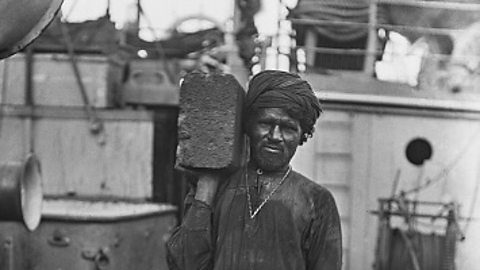
Hari is a Non-European sailors who worked on British ships trading in the Indian Empire. They were paid less than European sailors and worked in worse conditions. who is treated badly by the Head of a lascar crew. (his superior). He is friends with Rani, but they fall out when he gets drunk and makes unwanted advances towards her at Lascar Sally’s boarding house. He writes a letter of apology to Rani when he goes back to work on the ship.
Later in the play, Hari fights for equal rights for the lascars which leads to him being beaten and losing his job. Even though he is teased by Lascar Sally about his girlfriends, he cares deeply about Rani and writes to her often when they are apart.
At the end of the play, he admits to Rani that "Every night I thought of your happy, smiling face". He only returns to her once he feels he is good enough for her and has a job.
Activity
Queen Victoria
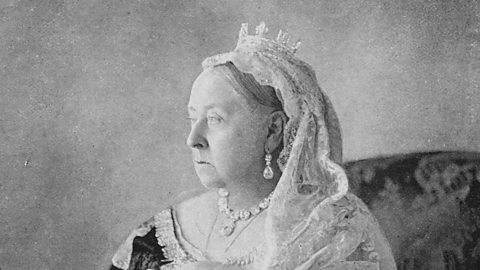
In the play, the character of Queen Victoria is presented as being:
- Open-minded
- Stubborn
- Pampered
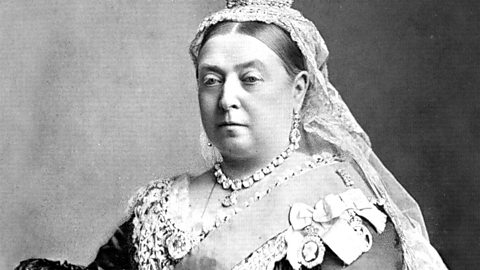
Queen Victoria is presented as an open-minded character. Unlike the rest of the royal household, she is notTreating someone differently based on something they cannot change like their race or gender. against Abdul, but she remains prejudiced to other people in India, and throughout the British Empire. Instead, she stubbornly forms a strong friendship with him and promotes him from her servant to her A Persian word meaning teacher..
In the play, Queen Victoria is pampered and unaware of the suffering faced by people living in countries that were When one country enforces political control over another. by the British. She constantly refers to herself as "we" and admits that she has never visited India, even though she is their Empress.
We see how Queen Victoria enjoys the riches of the Empire as she shows off the gifts she has received for her Diamond jubilee. Abdul challenges Queen Victoria on the expansion of the British Empire and the pain and suffering this causes to those who are colonised.
Abdul Karim
- Intelligent
- Ambitious
- Loyal
Abdul Karim is given as a gift to Queen Victoria for her Golden Jubilee at the start of the play.
Abdul is an educated and loyal man who is promoted the role of A Persian word meaning teacher.. He tries to educate Queen Victoria and fights against the Treating someone differently based on something they cannot change like their race or gender. of her other servants who do not want to see him as part of the court.
He clashes with Victoria’s lady-in-waiting, Lady Sarah, who takes issue with Abdul Karim's promotion in the royal court, perhaps because he is an Indian man.
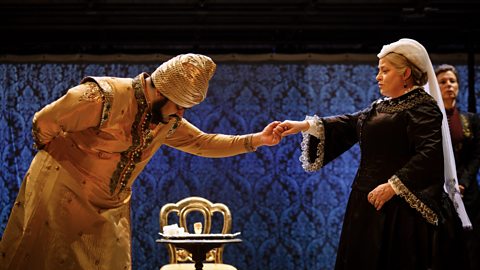
Abdul is a loyal friend to the Queen and is not afraid to speak his mind. He reminds her that she is privileged and needs to ensure that she does not abuse her power. She admired him so much that she wanted to make him a knight but was refused.
In the play and in history, Abdul remained close friends with Queen Victoria until her death, when he was forced to return to India.
Mini quiz
Lord Oakham and Lady Sarah
Words to describe Lord Oakham:
- Racist
- Manipulative
- Coercive
Words to describe Lady Sarah:
- Racist
- Stubborn
- Patriotic

Both Lady Sarah and Lord Oakham represent the rich British upper class who are racially Treating someone differently based on something they cannot change like their race or gender. in the play.
Lord Oakham employs Rani as an Indian nursemaids who looked after European children, often on sea voyages to and from Britain. and servant after she is fired by Susan Matthews. He treats Rani badly and coerces her into a sexual relationship before throwing her out when she becomes pregnant.
Lady Sarah is Victoria’s lady-in-waiting. She disapproves of Victoria’s close relationship with Abdul.
Remember
The Empress is set in the Victorian era when society was A society where men have more power than women. and rigid class structures were upheld.
As a working-class Indian woman, Rani has very little power and has no choice but to enter into a relationship with Lord Oakham.
Dadabhai Naoroji
- Caring
- Wise
- Persistent
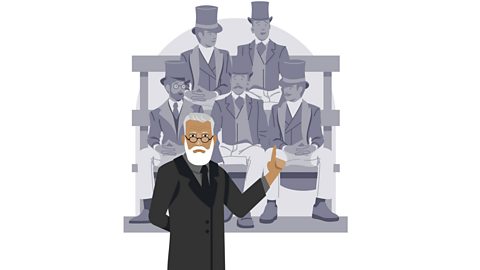
Dadabhai is an activist who tries to highlight the impact that A system in which one country rules over other countries or territories, often by invasion or exerting power. has had on India. He becomes a Member of Parliament (MP) and accuses the "British of inflicting upon Indians all the scourges of the world: war, pestilence and famine".
Dadabhai hires Rani to help him in his campaign to become an MP and becomes a close friend and mentor to her.
What is Dadabhai's role in The Empress?

Image caption, Dadabhai and education
Through the character of Dadabhai, Gupta shows the importance of education. Gupta illustrates Dadabhai's intelligence as a politician and his commitment to education when he encourages Rani to educate herself, saying "education is the only path to freedom".
1 of 3
Lascar Sally
- Supportive
- Kind
- Outspoken
Lascar Sally is a confident and outspoken woman who is able to speak Hindi to her lascar customers. She is a successful business owner who runs a boarding house in London where lascars can stay while on land.
She is portrayed as constantly shouting at the lascars in her boarding house, and as a caring woman who helps Rani when she first arrives. Along with Firoza, they look out for Rani and help her reunite with Hari at the end of the play.
Quiz
Test your knowledge of the characters in The Empress by taking this multiple-choice quiz.
GCSE English literature revision podcasts. audio
Whether you're at home or on the go, listen to these podcasts by Bitesize and BBC Sounds to refresh your memory of key texts.

More on The Empress
Find out more by working through a topic
- count3 of 5
- count4 of 5
- count1 of 5