What is context?
Context refers to background information which allows for a better understanding of the play and its themes.
When writing about The Empress, you could consider:
- The life and inspiration of the playwright, Tanika Gupta
- The British Empire
- The treatment of Indian nursemaids who looked after European children, often on sea voyages to and from Britain. and Non-European sailors who worked on British ships trading in the Indian Empire. They were paid less than European sailors and worked in worse conditions. in Victorian Britain
- The historical relationship between Queen Victoria and her Indian servant Abdul Karim
- The historical figures of Dadabhai Naoroji and Gandhi.

Remember
When writing about context in an essay consider these points:
Context could include information about the life and inspiration of the writer as well as information about when the play was written and is set.
Be specific about the historical time period you are talking about. The Empress is set in the Victorian era between 1887 and 1901.
Comments about context should be weaved through an answer, not bolted on to the end of a paragraph.
The playwright: Tanika Gupta

Tanika Gupta is a British playwright who was born in London in 1963. The year before she was born, her parents moved to England from Kolkata, India.
As a child, Gupta went on many trips to India and her parents encouraged her to educate herself about her family heritage. She grew up hearing stories about the history of India and its struggle for independence from British colonial rule.
Gupta attended Oxford University and graduated with a degree in Modern History. In an interview, she commented that while studying for her degree, she "never saw anything about my history, my community’s history. It almost seemed like it was wiped off".
Gupta was inspired to write The Empress after reading Rozina Visram’s book ‘Ayahs, Lascars and Princes: The story of Indians in Britain 1700-1947’. The book inspired her to research ayahs in Victorian Britain and she became determined to write a play about them. Gupta wanted to show audiences that Asians had been "part of the fabric of this country" for a long time.
The Empress play was commissioned by the Royal Shakespeare Company and first performed in 2013.
Question
Read the sentences below.
In 'The Empress', Rani is presented as a Able to recover quickly when something difficult has happened. woman who overcomes many obstacles. At the start of the play, Rani is unfairly dismissed by Susan Matthews and left alone and hopeless in England.
What relevant contextual information could be added to improve this response?
The sentences are about the character of Rani and how she is treated as an ayah. Contextual information about Gupta’s research on ayahs and inspiration for Rani’s character would be relevant to this point. For example:
After reading Vizram’s ‘Ayahs, Lascars and Princes’, Gupta started researching ayahs in Victorian London and found that many were abandoned. Gupta used her research as inspiration for Rani’s character and through her journey in the play, celebrates the strength of these Indian women who were seen as disposable by the British.

The British Empire
Video
Watch this short video about the British Empire.
Narrator: By 1913, the British had built an empire which ruled over 400 million people and covered a quarter of the Earth’s surface. The empire brought Britain wealth, power and influence. However, for the people that were colonised, it brought violence, disease and famine. 1838 was the second year of Queen Victoria’s reign. Looking at this single year, we can get a sense of the different experiences of life in the British Empire.
In Jamaica, the abolition of slavery in 1833 had not actually freed enslaved people. They were forced to work as unpaid apprentices for their former masters. The British rulers were concerned that those formerly enslaved could now vote in elections and threaten their power. In 1838, the British governors of Jamaica made plans to introduce a law that ensured only property owners could vote.
This allowed British control to continue and prevented most Black people from voting. The 1830s had seen a push for colonial emigration to Australia. The Aboriginal people were met with violence and new diseases brought by the settlers. In 1838, British settlers began to forcibly take lands from the Aboriginal peoples and there were several massacres, in which a large number of people were killed over the following years.
Since the 17th century, the British-owned East India Company had controlled large parts of India. In 1838 there was terrible drought in Agra, which meant many crops and cattle died causing a famine. The East India Company and the British rulers did little to help with the relief and by the end of the year, 800,000 people had died from starvation.
The Empress is set during the final 14 years of Queen Victoria’s reign, from her Golden Jubilee in 1887 to her death in 1901. The period when Queen Victoria ruled was known as the Victorian era. During this time, Britain When one country enforces political control over another. many countries and was described as an ‘When a group of countries, states or territories is ruled over by a single country or ruler.’.
The Victorian era was a time of unrivalled expansion for the British Empire. By 1913, the Empire ruled over 400 million people and covered a quarter of the Earth’s surface. Many inhabitants were treated badly as the British took over, claimed their natural resources and left them in poverty.
The East India Company
From 1757, Britain increased its control of India through a powerful private trading company called the When a group of countries, states or territories is ruled over by a single country or ruler.. From 1858 onwards, the British government directly ruled India, and it became known as the British Raj.
For many Indians, life under the control of the British Raj meant poverty and violence from British merchants. High tax levels left Indians particularly vulnerable when famines hit the region, as they struggled to afford food.
Throughout the play, Gupta criticises both British rule in India and the Empire in general.
Question
How does Gupta criticise the British Empire in The Empress?
Gupta exposes and criticises the British Empire and British rule in India through the treatment of some of the play’s characters.
Indians working for the British Empire are treated poorly. Hari and the other lascars on the British Empire trading ship are beaten and verbally abused. Rani is promised a job in England as an ayah but fired as soon as she arrives.
The character of Queen Victoria is uninformed about the truth of the British Empire and more focused on her reputation as Queen. She says "we bring order to chaos. We are not in the habit of quelling nations through brutality".
Dadabhai’s character is elected as a Member of Parliament and fights to educate the British about the devastating impact of British colonial rule in India in the hope of inspiring change. He says that "millions more will die unless financial resources are directed back to the people".
Ayahs and lascars
In The Empress, Gupta refers to roles which were taken on by Indians working for the British Empire during the Victorian era.
Ayahs
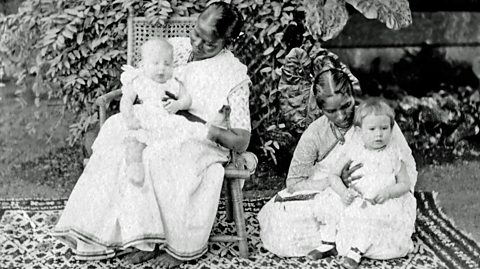
Rani is an Indian nursemaids who looked after European children, often on sea voyages to and from Britain.. Ayahs were nursemaids, nannies or servants who were of Indian origin and worked for British families. Ayahs were employed by individual families which meant there was no employment contract and they had no legal protection.
During the Victorian era, many abandoned and Extremely poor or without the means to look after oneself. ayahs could be found begging on the streets and living in A place in Victorian times where people living in poverty were provided with food and shelter in return for work.. The Ayahs’ Home was established in 1900 in London as a charitable organisation to provide lodgings and education for abandoned ayahs.
Lascars
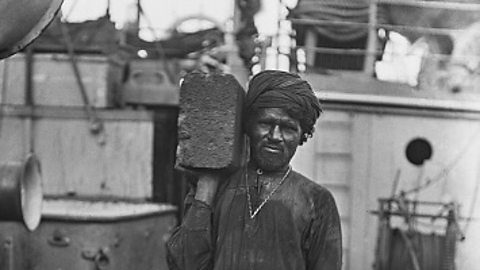
Hari is a Non-European sailors who worked on British ships trading in the Indian Empire. They were paid less than European sailors and worked in worse conditions.. Lascars were Asian (usually Indian) sailors who were employed by the British Empire on trading ships. They were treated poorly by their employers in the following ways:
- They were paid less than European sailors.
- They faced racial discrimination at work.
- They were forced to work in harsh boiler room conditions as it was believed their bodies could withstand the heat more than white sailors.
- They did not have a trade union so could be treated unlawfully by their employers. They were not provided with accommodation by shipping companies.
Like ayahs, lascars formed the earliest Indian working-class communities in Britain. Port cities in England became diverse, multiracial communities during the 19th century.
In The Empress, Gupta criticises the poor treatment of ayahs and lascars, while also celebrating and highlighting the diversity of Victorian Britain. Through the fictional characters of Rani and Hari, Gupta gives a voice to previously untold stories and ignored communities.
Mini quiz
Historical figures
Queen Victoria and Abdul Karim
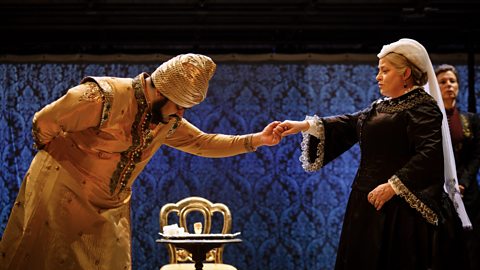
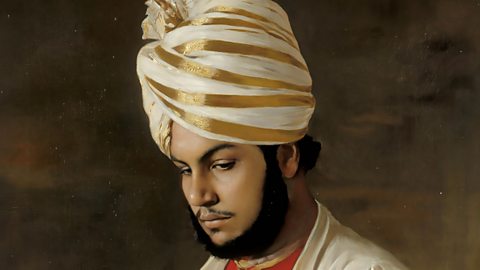
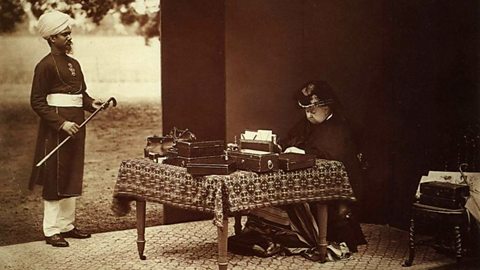
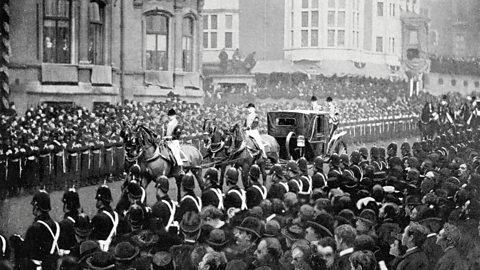
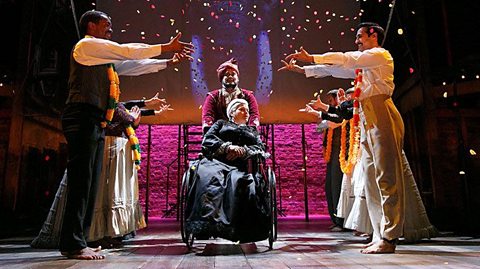
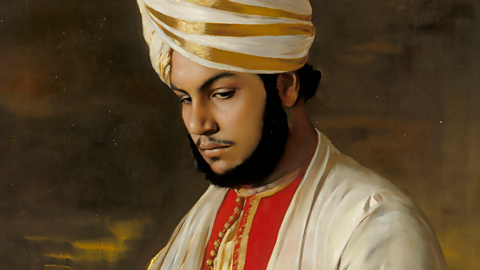
The play’s title The Empress is based on Queen Victoria, the Empress of India. Gupta used the real relationship between Queen Victoria and Abdul Karim as inspiration for her play and to explore ideas about race, power and love.
Explore Queen Victoria and Abdul Karim's relationship in the pictures below.
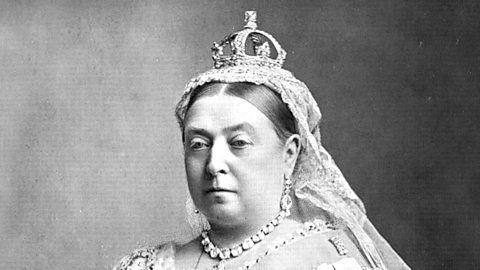
Image caption, Queen Victoria ruled from 1837 to 1901. In 1877, Victoria was proclaimed Empress of India by then British Prime Minister Benjamin Disraeli. Victoria never visited India but the purpose of the title was to bind India more closely to Britain.
1 of 4
Dadabhai Naoroji and Mohandas Gandhi
Dadabhai Naoroji and Mohandas Gandhi are on the same ship that Rani, Hari and Abdul Karim are on at the start of the play. These two characters are based on real historical figures who fought for Indian independence in the early 20th century.
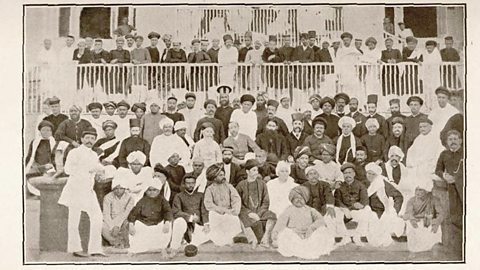
Dadabhai Naoroji
Dadabhai was an Indian politician known fondly in India as ‘The Grand Old Man of India’. He was a Professor of Gujarati at University College, London from 1856 to 1865 and was one of the founders of the Indian National Congress in 1885.
In 1901 he published a book about the British Empire titled ‘Poverty and Un-British Rule in India’. In the book, he argues that poverty in India was a direct result of British rule. In 1892, Dadabhai was elected as a Member of Parliament for Finsbury Central, the first non-white MP in British history.
In The Empress, Gupta includes Dadabhai’s election campaign and the racial discrimination he faced: Lord Salisbury comments that the British would never elect a ‘black man’. Rani works as Dadabhai’s assistant and he acts as a mentor figure to her, telling her that ‘education is the only path to freedom’.
Mohandas Gandhi
Gandhi was an Indian lawyer who was a major part of the successful campaign for India’s independence from British rule in the 20th century. He has inspired civil rights movements across the world and was known for nonviolent resistance.
Gandhi appears as a minor character in The Empress, appearing in only two short scenes with Dadabhai.
- At the start of the play, Dadabhai and Gandhi are seen discussing the poor treatment of the ayahs on board the trading ship bound for Tilbury docks.
- He is seen later congratulating Dadabhai on his election win.
Learn more about India’s Independence Campaign on Bitesize History.
Question
Why did Gupta include the characters of Dadabhai and Gandhi?
Answer
Including the characters of Dadabhai and Gandi adds authenticity to the events of the play. Gupta wanted to highlight the multicultural, diverse nature of Victorian Britain as well as include real historical figures who fought for Indian independence. In an interview, Gupta called Dadabhai Naoroji an ‘extraordinary man’.
Quiz
GCSE English literature revision podcasts. audio
Whether you're at home or on the go, listen to these podcasts by Bitesize and BBC Sounds to refresh your memory of key texts.

More on The Empress
Find out more by working through a topic
- count1 of 5
- count2 of 5
- count3 of 5