Quick version
Scots left a lasting legacy in New Zealand. Many Scots settlers arrived to pursue religious ambitions as well as financial ones.
- the Free Church of Scotland established the colony in Otago in the South Island of New Zealand
- a Scottish Presbyterian preacher, Norman Macleod, established the settlement of Waipu in the North Island
Scots emigrants played an important roll in New Zealand's economy:
- Scots established and worked on huge sheep farms
- a gold rush saw Scots arrive to work in mines
- the trade in frozen lamb meat was developed by a Scot businessman
- Scots established banks and financial institutions
Scots also played a major roll in New Zealand society:
- Scots were important in the foundation of schools and colleges
- Scots were lawyers, doctors, and teachers
- Scots held important political office – including being Prime Minister
Scots had complex relationship with indigenous people – the Māori – and were complicit in conflicts with them resulting in a dramatic drop in population numbers.
Learn in more depth
The Colony of New Zealand was established in 1841, and from the date onwards Scots had a prominent and lasting legacy.
Scots and New Zealand colonialism
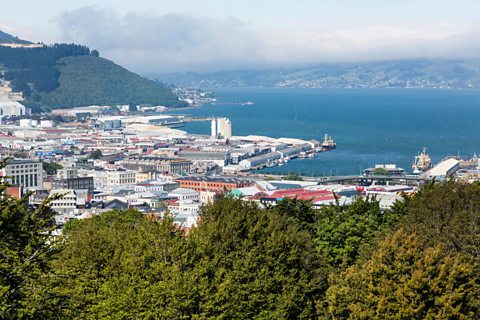 Image source, incamerastock/ALAMY
For some of the earliest colonies, religion rather than trade or commerce was the primary reason for migration.
The European settlers of New Zealand's South Island region of Otago were predominantly Scottish as the Free Church of Scotland paid for the establishment of a colony.
Two ships carrying 344 settlers – mostly from the Lowlands of Scotland – set sail from Greenock and arrived in New Zealand's South Island in 1848. In the next decade, over 12,000 other settlers joined them.
The place names of this new colony displayed the Scots heritage of the settlers:
- the regional capital was called Dunedin – a variation of the Gaelic name for Edinburgh
- the original two counties of Otago were named Wallace and Bruce
- other settlements included Hampden, Invercargill, Balclutha, and Campbelltown
In the North Island of New Zealand, the settlement of Waipu was established by Highland Scots in 1854 under the leadership of Presbyterian minister, Norman MacLeod from Assynt, Sutherland.
In Waipu, Gaelic was the dominant language until the 1880s and many still spoke it in the 1920s.
During peak years of Scots emigration to New Zealand, such as between the 1850s and the 1870s, Scots made up around a third of New Zealand's population (source: https://teara.govt.nz/en/scots).
Image source, incamerastock/ALAMYScots and the New Zealand economy
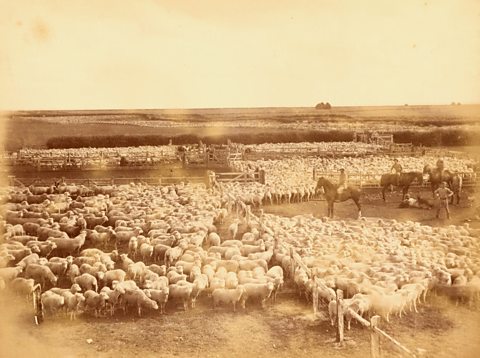 Image source, NZ/BT/ALAMY
Scots played an important part in forming and developing New Zealand's early economy.
Before Europeans established colonies, European whalers hunted and killed whales for their oil in the waters off of New Zealand. Scots – especially from the north of Scotland – had been in the the whaling trade for a long time. Scots whalers were instrumental in the establishment of some of the early trading posts in New Zealand that catered to the trade.
Farming was the primary business of the colonies. As the climate and geography in New Zealand was so similar so Scotland, Scottish settlers had success in turning New Zealand's wilds into farmland.
As was the case in Australia, sheep and cattle became a staple activity in the economy. Scots were capable employees as, in the 1800s, the majority of Scots migrants were Lowlanders with a rural and agricultural background.
With the development of refrigeration, frozen meat products, such as lamb, became a major export for New Zealand. A Scots businessman, Thomas Brydone from Peeblesshire, was a major pioneer in the creation of a successful frozen meats export industry.
Scots also fulfilled other important roles.
- the discovery of gold in New Zealand in the 1880s saw Scots arrive to make their fortune as miners
- Scots professionals were important as teachers, lawyers, doctors, administrators, and politicians
Image source, NZ/BT/ALAMYScots and New Zealand politics
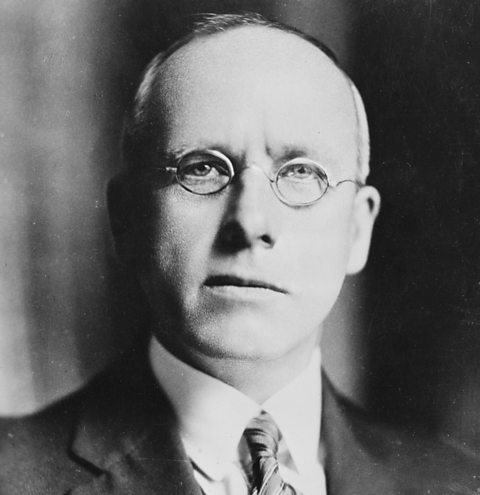 Image source, Photo 12/ALAMY
Scots were equally prominent in New Zealand politics as they were elsewhere.
New Zealand's twenty-fourth Prime Minister, Peter Fraser, was born in Easter Ross. Fraser served as the country's leader from 1940 to 1949 and was a key figure in New Zealand's contribution to World War Two.
Dr David Munro was another important and influential figure in New Zealand politics. He arrived in the country in 1842 and was responsible for introducing the first sheep from Australia. Within 20 years he himself had 14,000 sheep on an estate of 13,000 acres.
As well as occasionally practicing medicine, Munro became a foundation member of the Company of Governors of Nelson College and was elected to the House of Representatives in 1853, where he acted as Speaker between 1861 and 1870.
John McKenzie was another influential Scots-born New Zealand politician. In 1891 he held the government post of Minister of Lands.
As a child, McKenzie had witnessed Highland families forcibly evicted from their land by ruthless landlords during the Highland Clearances. As minister, he implemented policies designed to protect smaller farmers from landlords who intended to buy up land to maximise profit.
Image source, Photo 12/ALAMYScots and New Zealand society
Aside from place names, Scottish migrants made a lasting contribution to New Zealand society and culture.
Scots contributions included:
- the University of Otago – New Zealand's oldest university – was founded by Scottish colonists
- the Geographical Survey of New Zealand that mapped the nation was established by Scots
- Scottish migrants valued education, and numerous schools and colleges were established by Scots
As with other parts of the British Empire where they made a home, Scottish traditions such as Highland Games, kilts, language, food, and customs such as Burns Night Suppers became ingrained.
In New Zealand, Caledonian Societies were formed to share and maintain these Scottish traditions. These traditions continue to exist and have relevance in today's modern New Zealand society.
Scots and indigenous New Zealanders
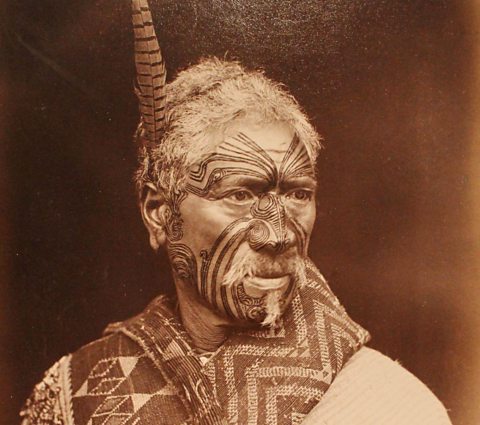 Image source, EMU history/ALAMY
As with other territories of the British Empire, such as India and Australia, the indigenous people of New Zealand – the Māori – often paid a heavy price when colonies were established.
At the time of explorer James Cook's early visits to New Zealand in 1769, it was estimated that the Māori population stood somewhere in the region of 100,000 people. By 1858, after colonisation, it was estimated to have dropped to 60,000 (source: https://teara.govt.nz/).
Relations with Māori were complex and often negative, marked by conflict in the North Island, land acquisition, and the devastating impact of European diseases.
Scots were responsible for the establishment of many settlements in New Zealand. They also cleared forests for farmlands. While peaceful interactions did occur, Scots were complicit in the decline of the Māori population.
Image source, EMU history/ALAMYDonald MacLean
Born on the island of Tiree, Donald MacLean rose to an important position in New Zealand's early colonial history.
MacLean was employed by the British administration as a negotiator between the colonists and the Māori. In the North Island territories of New Zealand tensions were running high over the issue of land.
Treaty of Waitangi of 1840 was signed by Māori leaders and representatives of the British Crown. Under the terms of the treaty, the territories of New Zealand would come under control of Britain, but there was an acknowledgement that the land belonged to the Māori:
- land could only be sold by the Māori
- land could only be bought by the British Crown
Although land sale to private individuals was theoretically impossible, many settlers exploited Māori tribal rivalries. In 1860s, it was MacLean's role in the sale to British colonists of disputed Māori lands that led to a series of wars and large uprisings by Māori chieftains against the encroachment of settlers.
The Invasion of Waikato, 1863-1864
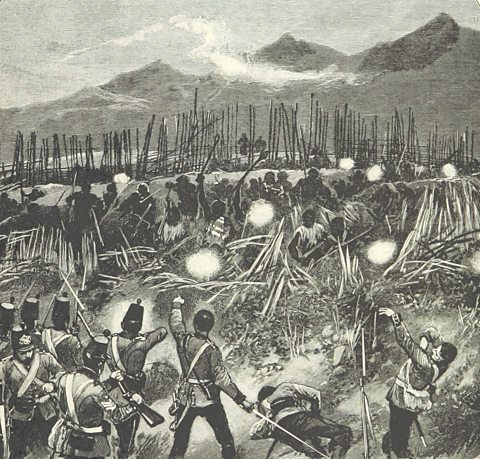 Image source, UtCon Collection/ALAMY
The conflict escalated until British forces invaded the Māori-controlled Waikato region in 1863. At the peak, over 14,000 British troops were involved in the conflict - known as the Invasion of Waikato. After nine months of bitter fighting, the Māori retreated into the mountains and British forces captured the region.
The legacy of these conflicts persists to the modern age where compensation for land seizure and the breaking of the terms of the Treaty of Waitangi are still ongoing.
In 1995, the British Crown formally apologised to the Māori people of Waikato and Tainui for the invasion, loss of life, and confiscation of lands during the 1860s. The apology included a settlement of money and land valued at 170 million New Zealand dollars.
Image source, UtCon Collection/ALAMYTest your knowledge
Quiz
Recap what you have learned
Scots left a lasting legacy in New Zealand. Many Scots settlers arrived to pursue religious ambitions as well as financial ones.
- the Free Church of Scotland established colonies in the South Island of New Zealand
- Presbyterian preacher, Norman Macleod, established the settlement of Waipu in the North Island
Scots emigrants played an important roll in New Zealand's economy:
- Scots established and worked on huge sheep farms
- a gold rush saw Scots arrive to work in mines
- Scots established banks and financial institutions
Scots also played a major roll in New Zealand society:
- Scots were important in the foundation of schools and colleges
- Scots held important political office – including being Prime Minister
Scots had complex relationship with indigenous people – the Māori – and were complicit in conflicts with them resulting in a dramatic drop in population numbers.
More on Migration and Empire
Find out more by working through a topic
- count12 of 13
- count13 of 13