Quick version
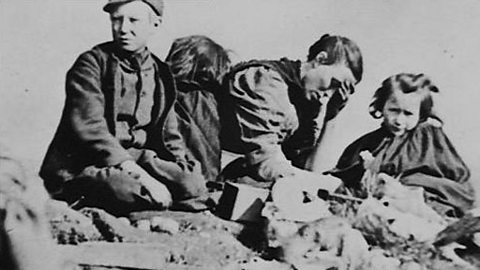
During the 19th century, tens of thousands of Scots emigrated to Australia.
- some came during a gold rush to pursue wealth as miners
- others came to escape poverty in Scotland, lured by the promise of high wages and cheap land
- some were encouraged to emigrate by emigration agents who toured Scotland
Scots emigrants played a big part in Australia's development.
- Scots established and worked on the sheep farms that were a staple part of the Australian economy
- Scots held important roles in powerful positions in Australian society
Scots also had a darker legacy. Prejudice and competition for land brought many Scots into conflict with indigenous Australians. Indigenous people were forced from their land, attacked, and even killed at the hands of Scots colonists.
Learn in more depth
While Australia as a destination began as a British penal colony, it soon became a growing nation in need of settlers.
In the early 1850s an estimated 90,000 Scots left for Australia.
- some arrived seeking their fortune after the discovery of gold
- some arrived to escape poverty at home in Scotland
- some were assisted to move by organisations such as the Highland and Islands Emigration Society (between 1852 and 1858 they helped 5,000 Highlanders emigrate to Australia)
Private companies even sent out special emigration agents to give lectures, hand out pamphlets to encourage Scots to emigrate, promising higher wages, better accommodation, and the availability of cheap land.
Most of the Scottish migrants who settled in Australia were in the east, only a minority went to the west. These Scots would go on to have a massive impact on Australian business, education, and religious and cultural life.
Scots and the Australian economy
Scottish settlers played a crucial role in the development of Australia's economy. Scots brought ideas and methods from Scotland that helped to establish the territory's agriculture and industry.
Scots and Australia's agriculture
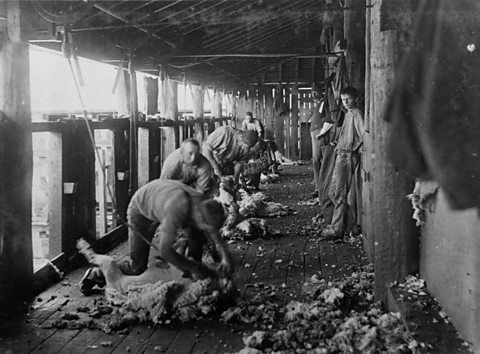 Image source, Historic Collection/ ALAMY
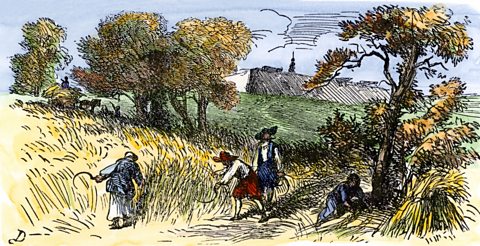
Scots had a lasting legacy on the Australian agricultural sector. Most early Scot emigrants were from rural parts of Scotland and well suited to agricultural work.
As well as providing a hard-working labour force, Scots settlers brought modern farming techniques and methods from Scotland with them. This knowledge helped establish a thriving agricultural sector.
- the size of Australia meant that land was cheap and plentiful
- the climate meant that interior land was often unsuitable for arable crops but perfect for raising livestock
- large sheep and cattle farms soon developed
- the sheep and wool market became the staple of the Australian economy
The success of the sheep farms encouraged other Scots to emigrate to Australia is search of jobs and a better life.
William Leslie, laird of the Warthill estate in Aberdeenshire sent three of his sons to Australia to run sheep farms. This investment generated wealth for the family and brought about further emigration to Australia by encouraging tenants from the Warthill estate to find lucrative employment in this new country.
Image source, Historic Collection/ ALAMYScots and Australian industry
Industrious Scot succeeded in Western Australia by creating close economic associations with other Scottish migrants. Scottish success in Western Australia lay primarily in the formation of Scottish partnerships and small Scottish work communities bound together by cultural ties.
Scots were heavily involved in the development of industry, particularly coal mining, engineering, and shipping. As with agriculture, Scots brought expertise and skills learnt in Scotland with them to Australia.
Born in Lanarkshire, the brothers James and Alexander Brown had emigrated to Australia in 1842. Originally working as farm labourers, the went on to establish important coal mines in New South Wales. As well as providing coal for domestic industry, they established markets overseas for Australian coal.
Scots and Australian politics
Scotland had a lot of educated, trained middle-class professionals who emigrated across the territories of the British Empire and ended up in positions of power and influence. This was the case in Australia – of the first six governors of New South Wales, half of them were Scots.
One of the most prominent was Lachlan Macquarie.
Lachlan Macquarie
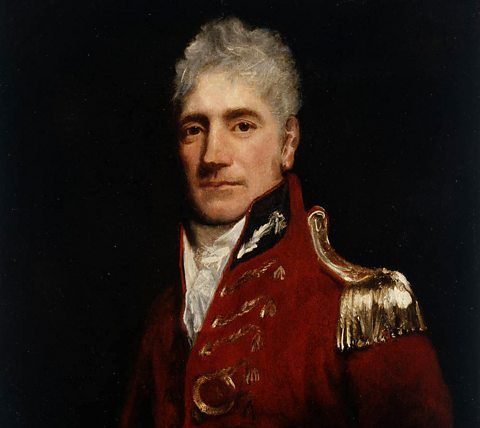 Image source, Art Collection 3/ALAMY
Lachlan Macquarie was born on the island of Ulva, in the Inner Hebrides, in 1762.
He joined the British Army and had a distinguished career as an officer. In 1809, he was appointed Governor of New South Wales and he held the position until 1821.
Although his time in Australia predates the 1830-1939 period covered in Higher History, he had long term impact on Australia and has been seen as one of the most important people in the development of Australia from a penal colony into a nation.
- eliminated corruption in the colony's police force
- introduced urban planning measures to create ordered streets and parks
- introduced Australia's first proper currency – based on Spanish dollar coins
- cracked down on alcohol and promoted church attendance and marriage
- rehabilitated convicted criminals and appointed skilled convicts to positions of influence and power
Image source, Art Collection 3/ALAMYAndrew Fisher
Andrew Fisher emigrated from Crosshouse in Ayrshire to Australia in 1885. He did mining work in his early years and became prominent in early Australian trade unionism.
At the turn of the century, he became involved in politics with the formation of the Labour Party. He was an important figure in Australian politics and was the nation's Prime Minister three times - from 1908 to 1909, from 1910 to 1913, and from 1914 to 1915.
Samuel Amess
Samuel Amess was born in Newburgh, Fife, in 1826. In 1852, he emigrated to Australia and worked as a gold miner. After earning enough money, he established himself as a builder and was responsible for the construction of many of Melbourne's civil buildings.
In 1864, Amess was elected as Mayor of Melbourne. He remained an influential political figure in Melbourne until his death in 1898.
Scots and Australian culture and society
 Image source, Chronicle/ALAMY
In their everyday lives, Scottish migrants wanted a taste of home in Australia. In an unfamiliar environment and as a small minority, Scottishness provided familiarity and a sense of place.
The naming of Scottish places (Perth for example) is an obvious indicator of this attempt to find familiar surroundings.
The wearing of Scottish dress, the Gaelic language, the playing of Scottish music, and eating Scottish food and drink were all common in the colony.
The legacy of these early migrants can still be found in modern day Australia.
Image source, Chronicle/ALAMYScots and education in Australia
As they did elsewhere across the territories of the British Empire, educated Scots established schools and universities in the colonies.
Scotch College, for example, was opened in Melbourne in 1851 and provided education for the sons of the wealthy in the state of Victoria.
Alexander Morrison (originally from Moray) was the principal of the school between 1857 and 1903. Under his leadership the school was transformed from a school with around 50 pupils to become one of the leading schools in Australia with a high reputation for scholarship.
Scottish professors could also be found in various universities and schools across Australia, especially at the University of Australia.
Scots and religion in Australia
Scottish settlers established Presbyterian religious groups that were later very influential in bringing about the creation of congregations and church buildings.
John Dunmore Lang from Greenock was responsible for the foundation of the Caledonian Academy Primary School that was attached to the Scots church in Sydney.
It was supervised by the Church of Scotland and included daily prayers, Bible study and religious education. By 1844, a total of thirteen primary schools had been founded in the Sydney area, nearly all with Scottish teachers.
In 1857 the Australian College was opened by Lang and staffed by three members of the Church of Scotland. During its 23 year existence the College – founded on the principles of Scottish Presbyterianism – educated many boys, many of whom went on to have a major impact on the country's development.
Scots and indigenous Australians
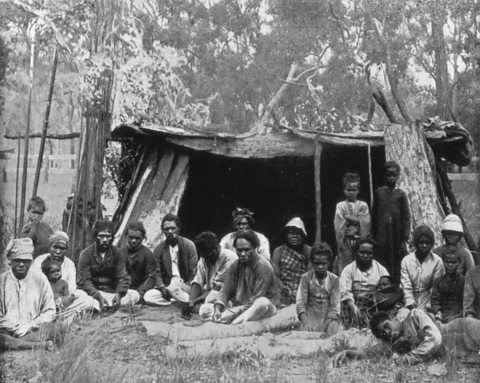 Image source, The Print Collector/Heritage Images/ALAMY
The relationship between Scots and the indigenous Australians was far more volatile. The indigenous people and the emigrant Scots needed and wanted the land for their own use, which inevitably led to tension.
The expansion in farming took the Scots to unexplored areas. As the Scots expanded their farming this led to conflict with the nomadic indigenous population. The result of the tension was violence and the decline of the native Australian population.
- sheep farming was a major industry and employer for Scots colonists
- British colonists viewed the native Australians as savage and uncivilised
- a number of Scots were guilty of forcing native Australians from their land, and on occasion, murder
The volatile relationship between the Scots and the native Australians reached a new height in the 1840s. In 1843, a Scottish settler, Ronald Macalister was murdered. Local indigenous men were blamed for the killing. In retaliation, a band of Gaelic-speaking Scottish settlers, calling themselves the Highland Brigade, killed between 60 - 150 native Australians at the Warrigal Creek Massacre.
Far from being an isolated incident, early Australian history has many instances of indigenous people being the victims of massacres and assaults from British colonists.
Image source, The Print Collector/Heritage Images/ALAMYTest your knowledge
Quiz
Recap what you have learned
During the 19th century, tens of thousands of Scots emigrated to Australia.
- some came during a gold rush to pursue wealth as miners
- others came to escape poverty in Scotland
- emigration agents toured Scotland to persuade Scots to emigrate
Scots emigrants played a big part in Australia's development:
- Scots established and worked huge sheep farms
- Scots held important roles in powerful positions in Australian society as politicians, preachers, and teachers
Prejudice and competition for land brought many Scots into conflict with native Australians. Indigenous people were forced from their land, attacked, and even killed at the hands of Scots colonists.
More on Migration and Empire
Find out more by working through a topic
- count12 of 13
- count13 of 13