Key points about sport in Spanish

Use the Word used to describe an action, state of being or an occurrence.jugar (to play) and hacer (to do/make) to talk about sports and exercise.
Generally used to describe a verb, or actions to add more detail about how something is being done (and when, where or how often something takes place). of frequency give detail about how often you do something.
This guide contains listening and reading practice as well as a video comprehension.
Vocabulary - Sports and exercise
Useful nouns for describing different sports include:
| Spanish | English | Spanish | English |
|---|---|---|---|
| Check your connection, refresh the page and try again. | athletics | Check your connection, refresh the page and try again. | football |
| Check your connection, refresh the page and try again. | basketball | Check your connection, refresh the page and try again. | gymnastics |
| Check your connection, refresh the page and try again. | pitch, field | Check your connection, refresh the page and try again. | gym |
| Check your connection, refresh the page and try again. | race | Check your connection, refresh the page and try again. | player |
| Check your connection, refresh the page and try again. | club | Check your connection, refresh the page and try again. | swimming |
| Check your connection, refresh the page and try again. | competition | Check your connection, refresh the page and try again. | (sports) match |
| Check your connection, refresh the page and try again. | sport | Check your connection, refresh the page and try again. | rules |
| Check your connection, refresh the page and try again. | exercise | Check your connection, refresh the page and try again. | results |
| Check your connection, refresh the page and try again. | team, equipment | Check your connection, refresh the page and try again. | skiing |
| Check your connection, refresh the page and try again. | tennis | Check your connection, refresh the page and try again. | stadium |
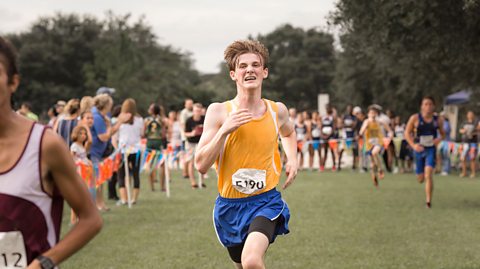
Useful verbs for talking about sport and exercise include:
| Spanish | English | Spanish | English |
|---|---|---|---|
| bailar | to dance | jugar | to play (a sport with a ball) |
| correr | to run | marcar (un gol) | to score (a goal) |
| entrenar/entrenarse | to train | montar a caballo | to go horseriding |
| esquiar | to ski | montar en bici | to go cycling |
| ganar | to win | nadar | to swim |
| hacer | to do, play (a sport without a ball) | participar | to participate |
| ir al gimnasio | to go to the gym | perder | to lose |
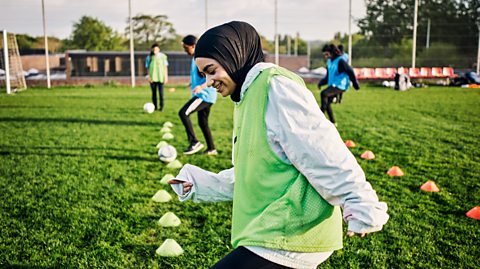
For example:
Prefiero ir al gimnasio porque es activo. – I prefer going to the gym because it’s active.
Me encanta montar a caballo porque es divertido. – I love going horseriding because it’s fun.
Me entreno tres veces a la semana. – I train three times a week.
A veces ganamos el partido de fútbol pero la semana pasada perdimos. – Sometimes we win the football match but last week we lost.
Hago atletismo pero no me gustan las carreras porque no puedo descansar. – I do athletics but I don’t like races because I can’t relax.
Grammar - Key verbs for talking about sport
There are three key verbs used to talk about sport:
jugar - to play a sport
practicar - to practise/do/take part in a sport
hacer - to do
If a sport is played with a ball, use jugar. Otherwise, use practicar or hacer.
It is important to know how to use these in the past, present and future The verb formation that describes the time at which the action occurred, eg past, present or future. .
| Past (preterite) tense | Present tense | Future tense |
|---|---|---|
| jugué al tenis (I played tennis). | juego al tenis (I play tennis). | voy a jugar/jugaré al tenis (I am going to play/I will play tennis). |
| practiqué atletismo (I did athletics). | practico atletismo (I do athletics). | voy a practicar/practicaré atletismo (I am going to do/I will do athletics). |
| hice natación (I went swimming). | hago natación (I go swimming). | voy a hacer/haré natación (I am going to go/I will go swimming). |
'Jugar' and 'hacer' - Mini quiz
Complete the following sentence in Spanish.
_______ al fútbol.
I played football.
Jugué al fútbol.
Jugué is the past (preterite) tense and means ‘I played’.
Translate the following sentences into Spanish.
I go swimming.
Hago natación.
Swimming is a sport without a ball and so takes the verb hacer.
Hacer is an irregular verb and the present tense of the ‘I’ form is hago.
I am going to play basketball.
Voy a jugar al baloncesto.
Voy a plus the infinitive of the verb forms the near future tense ‘I am going to’.
Basketball is played with a ball so jugar is the verb needed.
I do athletics. (Use the verb practicar).
Practico atletismo
Practicar is a regular ar verb. The ending in the ‘I’ form is o.
Listening practice
Listen to Omar talk about his sporting experience and decide which of the following four statements are true.
| A | He played a lot of sport when he was younger. |
| B | He plays sport regularly now. |
| C | He plays basketball every day. |
| D | He will play football after school tomorrow. |
| E | He used to play football in the park when he was younger. |
| F | He doesn't think exercise is important. |
| G | He is going to play basketball tomorrow. |
| H | He did athletics at school yesterday. |
| I | He hates doing sport at school. |
The correct statements are B, E, G and H.
B is correct because Omar says hoy en día intento hacer deporte regularmente (these days I try to do sport regularly).
E is correct because he says cuando era joven, solamente jugaba al fútbol en el parque (when I was younger, I only used to play football in the park).
G is correct because he says mañana voy a jugar al baloncesto (I am going to play basketball tomorrow).
H is correct because he says ayer hice atletismo en el colegio (yesterday I did athletics at school).
Click or tap on Show more to read the transcript and a translation.
Transcript:
Pues, tengo que admitir que en el pasado no era una persona muy activa, pero hoy en día intento hacer deporte regularmente.
Cuando era joven, solamente jugaba al fútbol en el parque con mis amigos y nada más.
Ahora entiendo que el ejercicio es muy importante así que mañana voy a jugar al baloncesto.
Ayer hice atletismo en el colegio.
Translation:
Well, I have to admit that in the past I wasn't a very active person, but these days I try to do sport regularly.
When I was younger, I only used to play football in the park with my friends and nothing else.
Now I understand that exercise is very important, so tomorrow I am going to play basketball.
Yesterday I did athletics at school.
Vocabulary - Describing sporting activities
Useful adjectives for describing sport include:
| Spanish | English | Spanish | English |
|---|---|---|---|
| activo/a | active | físico/a | physical |
| aburrido/a | boring | joven | young |
| caro/a | expensive | nacional | national |
| deportivo/a | sporty, sports | peligroso/a | dangerous |
| divertido | fun, enjoyable | primer/primero/a | first |
| emocionante | exciting | social | social |
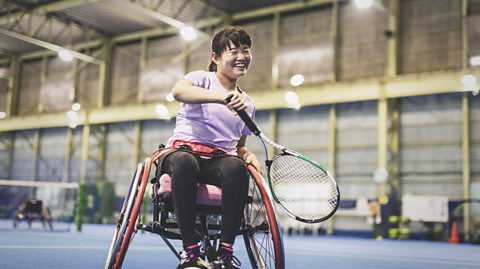
For example:
El partido internacional que vi ayer fue emocionante. - The international match that I saw yesterday was exciting.
El rugby es un deporte muy físico y a mi modo de mi ver es demasiado violento. - Rugby is a very physical sport and in my opinion it is too violent.
Soy muy deportiva y pore so me gusta estar activa. - I’m very sporty and so I like being active.
Hay algunos deportes como el esquí que son muy caros pero otros como el fútbol que son gratis. - There are some sports like skiing which are very expensive but there are others like football which are free.
All Foundation Tier vocabulary listed in this guide can be found on the vocabulary sheet below.
Grammar - Adverbs and phrases of frequency
Useful adverbs of frequency and other phrases which show frequency include:
| Spanish | English | Spanish | English |
|---|---|---|---|
| a menudo | often | de vez en cuando | from time to time/once in a while |
| a veces | sometimes | todos los días | every day |
| diariamente | daily | cada día | every day |
| nunca | never | raramente | rarely |
| siempre | always | dos veces a la semana | twice a week |
| regularmente | regularly | cada semana | every week |
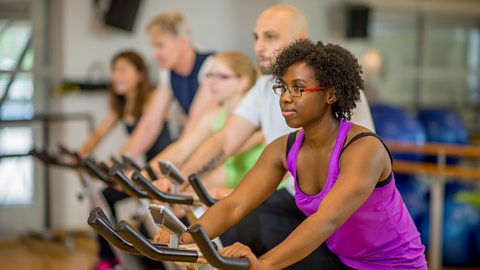
For example:
Hago deporte raramente. A veces voy a la piscina para nadar. - I rarely do sport. Sometimes I go to the swimming pool to swim.
Nunca monto en bici pero voy al gimnasio dos veces a la semana. - I never go cycling but I go to the gym twice a week.
Es importante hacer deporte y por eso me gusta correr todos los días. - It’s important to do sport and so I like running every day.
Juego al tenis para mi club regularmente y juego al fútbol a menudo con mis amigos. - I play tennis regularly for my club and I play football often with my friends.
Adverbs and phrases of frequency - Mini quiz
Complete the following sentences in Spanish.
Corro ____________ .
I run from time to time.
Corro de vez en cuando.
De vez en cuando means from time to time.
Va al gimnasio ________ .
He often goes to the gym.
Va al gimnasio a menudo.
A menudo means often.
______ voy a la piscina.
I never go to the swimming pool.
Nunca voy a la piscina.
Nunca is the adverb meaning never.
Mi padre hace ejercicio __________.
My father rarely exercises.
Mi padre hace ejercicio raramente.
Raramente is the adverb meaning rarely.
Reading practice
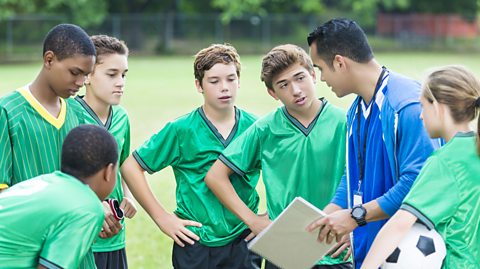
Read the text about Carlos who coaches football and answer the questions.
Según mi experiencia, no existe una fórmula mágica. Se dice que las leyendas salen de los barrios más pobres porque el fútbol es casi la única posibilidad de salir de la pobreza* y para muchos jóvenes es la única esperanza** para lograr una vida mejor.
En nuestro país el camino es largo ya que el niño tendría que comenzar a practicar desde los cuatro años, y a los seis empezar a entrenar formalmente.
Los criterios más importantes que busco en un jugador son la técnica, la condición física y la actitud mental. Cuando ayudo a estos jugadores, tienen que trabajar duro y respetar las reglas.
*la pobreza = poverty
**la esperanza = hope
1. What reason is given as to why many football legends come from poorer areas?
| A | Because they learn good footballing skills playing with other children |
| B | Because it’s the only way to achieve a better life |
| C | Because their schools have good coaches |
The correct answer is B
El fútbol es casi la única posibilidad de salir de la pobreza y para muchos jóvenes es la única esperanza para lograr una vida mejor. - Football is almost the only way of escaping poverty and for many young people it's the only hope of having a better life.
2. What does he say children should do at the age of six?
| A | They should be practising regularly |
| B | They should be in a club with a coach |
| C | They should be formally training |
The correct answer is C.
…el niño tendría que comenzar a practicar desde los cuatro años, y a los seis empezar a entrenar formalmente. - …the child should start practising from four years old, and start formally training at six.
3. What is one thing Carlos looks for in a player?
| A | Mental attitude |
| B | Supportive parents |
| C | The ability to score goals |
The correct answer is A.
…la actitud mental - …mental attitude
4. What two things do his players have to do?
| A | Be in good physical condition and have a good technique |
| B | Have a good attitude and a good technique |
| C | Work hard and respect the rules |
The correct answer is C.
…trabajar duro y respetar las reglas. - …work hard and respect the rules.
Click or tap on Show more to read a translation.
In my experience, there is no magic formula. They say that legends emerge from the poorest neighbourhoods because football is almost the only way of escaping poverty and for many young people it's the only hope of having a better life.
In our country the journey is long and the child should start practicing from the age of four, and start formally training at six.
The most important criteria I look for in a player are technique, physical condition and mental attitude. When I help these players, they have to work hard and respect the rules.
Video comprehension
Laura describes her fitness routine
- At the start of the video, why is Laura pleased with yesterday's football match?
Her team won and she scored two goals.
She says: Ayer jugué al fútbol con mi equipo y ganamos. Marqué dos goles. - Yesterday I played football with my team and we won. I scored two goals.
- When exactly does Laura usually go to the gym?
On Mondays after school.
Laura says: Normalmente, voy al gimnasio los lunes después de salir de clase. - Normally, I go to the gym on Mondays after leaving class.
- When does Laura not have a football match on Wednesdays? What is the reason for this?
In August. Because it's too hot.
She mentions: Juego un partido todos los miércoles. Pero en agosto no jugamos porque hace demasiado calor. - I play a match every Wednesday. But we don't play in August because it's too hot.
- What is the main reason that Laura loves playing a football match on Saturdays?
It's fun.
She says: Los sábados siempre tengo partido con mi equipo. ¡Es muy competitivo! Me encanta porque es sociable, pero sobre todo porque es divertido. - I always have a match with my team on Saturdays. It's very competitive! I love it because it's sociable, but above all because it's fun.
- Why doesn't Laura go to watch Atlético Madrid play anymore?
She lives too far from the new stadium / stadium is on the outskirts of the city.
She explains: Cuando era más pequeña, iba al estadio para ver los partidos, pero ahora vivo demasiado lejos del estadio nuevo. Está en las afueras de la ciudad. - When I was younger, I used to go to the stadium to see the games, but now I live too far away from the stadium. It's on the outskirts of the city.
Click or tap on Show more to read a transcript and translation.
Transcript
Soy fanática del deporte.
Antes me encantaba el baloncesto, pero ahora lo que más e gusta es el fútbol.
Es mi deporte favorito.
Ayer jugué al fútbol con mi equipo y ganamos.
Marqué dos goles.
Este año voy a ser la capitana de mi equipo.
Tengo que entrenar muchisimo.
Si quiero tener éxito como líder.
Tengo una rutina para estar en forma.
Intento comer sano todos los días.
Normalmente, voy al gimnasio los lunes después de salir de clase.
Todos los martes salgo a correr para intentar ser más rápida.
Juego un partido todos los miércoles.
Pero en agosto no jugamos porque hace demasiado calor.
Los jueves y los Viernes entreno con mis amigas.
Los sábados siempre tengo partido con mi equipo. ¡Es muy competitivo!
Me encanta porque es Sociable, pero sobre todo porque es divertido.
Los domingos descanso e intento hacer algo relajante como ver pelis.
Como ves, me encanta jugar al fútbol.
Pero también me gusta verlo en la tele.
¡Mi madre dice que estoy enganchada!
Todas mis amigas son del Barça… pero yo soy aficionada o ‘fan’ del Atlético de Madrid.
Cuando era más pequeña, iba al estadio a ver los partidos, pero ahora vivo demasiado lejos del estadio nuevo.
Está en las afueras de la ciudad…
Bueno. Hoy es lunes, entonces tengo que ir al gimnasio.
¡Hasta luego!
Translation
Hello, I’m Laura. I’m a sports fan.
Before, I used to love basketball, but now what I like the most is football.
It’s my favourite sport.
Yesterday, I played football with my team and we won. I scored two goals.
This year, I’m going to be captain of my team. I need to train a lot if I want to be a successful leader.
I have a routine to get in shape.
I try to eat healthily every day.
Normally, I go to the gym on Mondays after leaving class.
Every Tuesday I go for a run to try to get faster.
I play a match every Wednesday. But in August we don’t play because it’s too hot.
On Thursdays and Fridays, I train with my friends.
On Saturdays I always have a match with my team. It’s very competitive.
I love it because it’s sociable, but above all because it’s fun.
On Sundays…I rest. And I try to do something relaxing like watch films.
As you can see, I love playing football but I also like to watch it on telly. My mum says I’m hooked!
All my friends support Barça but I’m a fan of Atlético Madrid.
When I was younger, I used to go to the stadium to watch the matches, but now I live too far from the new stadium. It’s on the outskirts of the city.
Well, today is Monday, so I have to go to the gym. See you later
Vocabulary sheet
Click or tap on the image below for a list of useful vocabulary to use when talking about sports and exercise.

Higher Tier - Vocabulary - Sports and exercise
Useful vocabulary includes:
| Spanish | English | Spanish | English |
|---|---|---|---|
| la temporada | season (of sport) | mundial | world(wide) |
| el torneo | tournament | emocionado/a | exciting |
| caminar | to walk | relajante | relaxing |
| internacional | international | gratis | free |
| acuático | water, aquatic | violento/a | violent |
All vocabulary listed in this guide can be found on the vocabulary sheet below.
Higher Tier - Vocabulary sheet
Click or tap on the image below for a list of useful Higher Tier vocabulary to use when talking about sports and exercise.
Now you have revised the important vocabulary and key grammar points for talking about sports and exercise, why not have a look at the Family celebrations in Spanish guide?
Careers advice and tips from BBC Bitesize
Future careers, further studies and the world of work - we're here to help with advice from experts and from young people who've found their path.

More on Free time activities
Find out more by working through a topic
- count4 of 5
- count5 of 5

- count1 of 5
- count2 of 5