What is media?
Media goes hand-in-hand with English. Just as English is about studying how we communicate with words, media as a subject is about studying how we communicate with images.This could be still images, such as on a leaflet or a film poster, or moving images in a TV show or game. When you study a multimedia text such as an advert or a book cover, you will be asked not only how the language used appeals to the audience, but how the pictures, colours and layout chosen are also sending messages about:
- who the product is for
- what it is like
- what makes it good or enjoyable
The relationship between the multimedia text and its audience is one that you can comment on in much the same way as we would comment on the relationship between a story, poem or article and how its language appeals to a reader.
You may have also heard of ‘The Media’ or ‘Mainstream Media’. This is a blanket term that refers to all the different ways we can receive our news, entertainment and information: radio, internet, television, cinema, video games and published material like books and newspapers. Media students study these platforms too, and their audiences, but for now we will focus on the basics of how any multimedia text communicates its message.
How much do you know about studying media?
Media Language
Analysing moving images
Narrator: Hello and welcome to the media.
Today, we will be discussing how we, the media, sneakily use visual codes to portray ideas in a specific way.
This can help define the genre of the pieces through different camera shots, angles, movements, etc.
This allows you, the audience, to know what to expect, for example, by analysing this setting.
You note that I'm giving you a very important news report. But this can be changed to something else. Let's take a look at the techniques we can use.
The extreme close up is used in both moving image and print to focus on one aspect of the subject.
For example, somebody's smile in a toothpaste advert, or the eyes of a frightened character in a horror film, or something we sneakily want to draw attention to without mentioning it.
Low angle shots make the subject look powerful and even intimidating to the audience. These shots are often used in action adventure films to make the characters seem invincible.
A pan camera movement across the screen horizontally shows more of the landscape in which the action is taking place. A fast pan, called a whip pan, is used to suggest panic and thrills.
Colour is also used to indicate genre.
If I want you to think I'm sad, this could be coloured with a blue tone to convey coldness.
If I want you to think I'm happy, we could change this to warm — see?
In post-production, an editor might drain the colour to make the image seem older, if it is a period drama, or bright colours may be enhanced in a superhero film to emphasise its comic book origins.
Editors may use different techniques to piece together different genres.
For example, a tense drama may have a slow editing pace, whereas an action adventure film may be faster and more dynamic in style.
In most television serial dramas, there will be an edited recap to update the viewer on the story so far.
Like: “Previously on the media…”
Previously on the media.
Science-fiction, action and horror films with lots of special effects.
Advances in technology means cool scenes can be produced with computer software and edited into the backdrop of a scene, like here.
I'm totally in a real battle and definitely not standing in front of a green screen.
This means I can finally walk away from an explosion without looking at it — something I've always wanted to do.So there you have it.
Now you're in the know of the tricks and techniques that we use to let you in on what we want you to think.
Oh, look! A distraction.
Elements of an image
To understand ways a picture can communicate, think about colours. What about the colour blue, for example?
- Blue is a colour we often use to show water, even though water is actually clear and colourless, so we might associate it with the sea.
- Blue can also mean cold, such as on a tap.
- Blue can be associated with sadness – “feeling blue” – but it might equally be used for some positive energy or emotions – “blue sky thinking”.
- We might also be encouraged to think of something in blue packaging as being for boys, in the way pink is often used for girls.
- Having “blue blood” is an old-fashioned term for royalty.
As you can see, the different messages we can take from the colour blue are almost always nothing to do with the colour itself. Think about crisps – what flavour of crisps do you associate with a blue packet? Are any of the ingredients in that flavour actually blue in colour? Probably not, but we still know what we’re going to get when we choose that colour of crisp packet.
Arrangement of an image
As well as colour, there are countless other elements in a picture which can communicate with us. They are mostly to do with what is there and how it is arranged. This might include:
- Size - what is big and what is smaller. We are used to seeing important characters, places or things taking up a lot of space so we know they’re important, but smaller things might be important too.
- Inclusion - what we can see, and what is left out. There might be a gap in a family photo, an empty seat at the table or something missing from a shelf, any of which might make us ask questions about who or what is absent and why they aren’t there. There might also be faded backgrounds or hidden characters to help suggest mystery.
- Placement - where things are placed within the image. Usually the most important people or things would be at the centre, so if attention is being drawn elsewhere by lighting or colour, or if something is half-hidden at the edge, maybe there’s a reason for that.
- The people there, if any, and what they’re doing. Facial expressions can give big clues to what is going on – someone looking frightened on a horror movie poster, for example, or smiling in an advert so we know they’re happy with the product they’re using. The direction a character is looking or what they’re looking at can be important to tell us what they care about or want to achieve. Body language is important too; for example, action heroes are often shown in the middle of running, jumping or aiming a weapon on posters for action movies.
- The way people’s bodies and faces look. Fashion models are carefully dressed, made up and lit, and the photos carefully airbrushed and edited so the models will look extremely attractive. This is done so that people reading magazines and seeing adverts will want to buy the clothes and accessories shown in the hope they will look attractive in them too. Even when showing an ‘average’ family, the actors hired for a TV show, movie or advert will often be chosen to look attractive. While standards are now more diverse, it’s still uncommon to see certain disabilities, skin conditions or body types in mainstream media texts, especially in adverts.
Camera angle
Another important aspect of media language is not just what’s in the picture, but how it has been presented – where the camera was in relation to what was photographed, or from where the artist drew their perspective.
Think about how it might feel if someone or something very big loomed over you. Might you feel small, weak or frightened? What if you were the one who was bigger and higher up than someone else – would you feel as though they were small and weak, or maybe as if they needed protection?
When the camera is down low and looking up at something, it’s called a low angle shot. It gives a point of view that is lower than we might be used to, and might remind us of being smaller, like a child looking up at adults. It can make us feel that whatever we are looking at – a very tall building, for example – is much bigger, mightier or more important than we are. We might feel small or weak compared to the object we are looking up towards.
Likewise, placing a camera high up, looking slightly down is called a high angle shot. It gives a ‘tall’ perspective and makes us feel as though whatever the camera is looking at is smaller than us – maybe less important than we are, or weak and in need of protection.
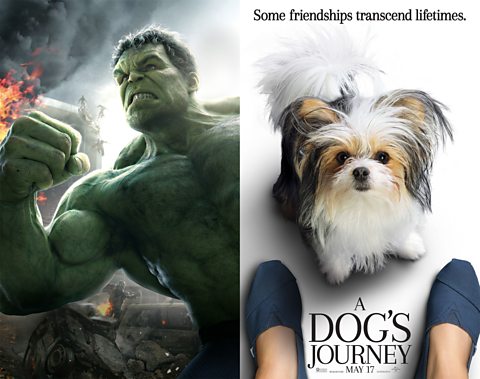 Image source, Shutterstock
An eye level shot is just what it sounds like – the camera is placed so we seem to meet the person or thing we’re looking at eye-to-eye. This might be used to make a character or object look friendly and appealing to us.
Direct eye contact from the person, animal or character in a photograph or image is another way of trying to make us feel connected to them. This could be friendly, such as a smiling model looking at us from an advert, but it could also be sinister, such as an evil character looking straight at ‘us’ in a way that makes us feel like they’re going to come and get us.
Font
Most media texts contain words as well as pictures. This might be the slogan on an advert, the tagline of a movie or a headline in a newspaper or magazine. The language used can be studied in English, but the font or typography chosen for the writing is important - the style of how the writing looks is part of the overall texts and it will be sending messages too with its colour, shapes, size and appearance.
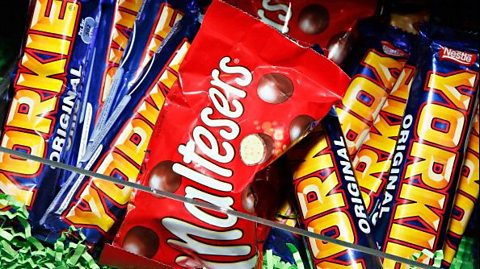 Image source, Shutterstock
Chocolate bars are a good example of this – they are aimed at different audiences and sold as different types of treat, even when they have the same basic recipe. Galaxy chocolate is sold as being smooth and luxurious, and has smooth joined-up cursive writing in its logo to reflect its sophisticated style; Yorkie bars in contrast are supposed to be solid and chunky, and have huge, square block capitals in their logo.
Smarties are colourful, small, easy to share and aimed at small children. The Smarties logo has friendly-looking rounded letters which are jumbled together in a fun, silly way instead of following rules by being evenly spaced on a straight line. The letters are also separately printed so they’re easier to read than cursive script – all details that are perfectly designed to appeal to children. There are many examples once you start to look closely!
Now look at the poster for a film you like. Is the title written in a particular style that tells us something about the film?
Examples of font choices
- Image source, Shutterstock
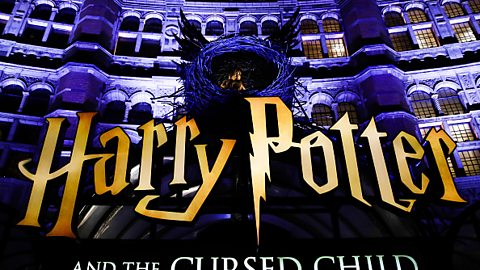
Image caption, Harry Potter and the Cursed Child
The logo for the ‘Harry Potter’ franchise incorporates a zigzag shape into the ‘P’ in his name, to simulate Harry’s lightning-shaped scar and remind fans of his past and his destiny.
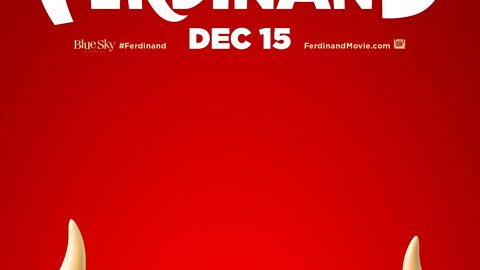
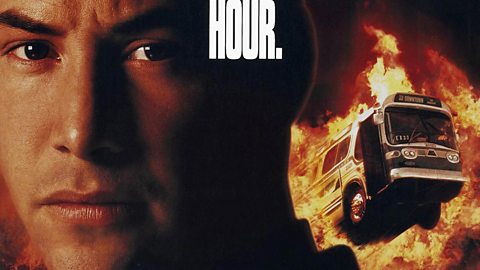
1 of 3
When you look at a media text, here are some basic questions to ask yourself about the font choices that have been made for the main words in the piece:
- How big is it?
- What colour is it?
- Is it all in capitals?
- Are the letters thick or thin?
- Are the letters straight or slanted?
- Are the words in a straight line or at an angle?
- Are the edges round, square or pointed?
- Does it remind you of anything else?
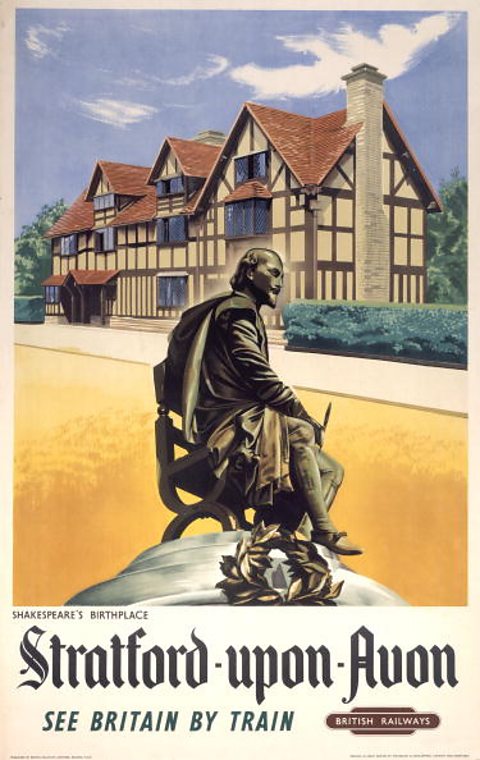
Even though this is a mid-twentieth century poster advertising rail travel, they have used a recognisable ‘ye olde style’ calligraphic font for the name of Stratford because we tend to associate that style of writing with Medieval England and the culture Shakespeare lived in and wrote about.
Remember, any element that you notice in a media text has a reason to be there. Even if you’re not sure what that reason is, try to imagine what the effect on the audience of a particular colour, camera angle, font or image is supposed to be, and explain that possible effect in your analysis.
More on Introduction to media
Find out more by working through a topic
- count3 of 4

- count4 of 4