What is Narrative?
Narrative is another word for story. It isn’t just TV shows and films that use images to tell stories – a still image can create a narrative too, by setting up a scenario that we recognise or one that makes us wonder what has happened or is about to happen. Adverts, film posters and book covers are all examples of media texts that use still images to help create a narrative.
Here are some of the ways media texts can tell stories.
Binary Opposites
Binary means something made of two parts, so binary opposites are two things that oppose each other: light and dark; young and old; big and small; city and country; inside and outside.
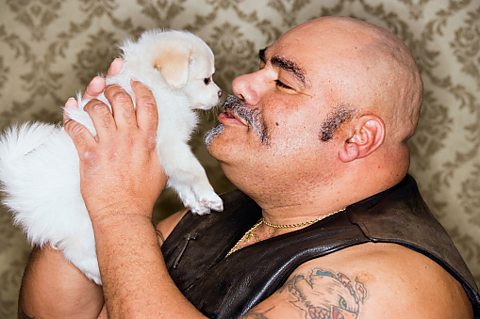
The conflict created between opposite things can drive a story so it’s very common to see binary opposites at the heart of a narrative. The most obvious example is a hero opposing a villain, which we see in almost all traditional tales.
Many forms of media, from early theatre to Star Wars, would use contrasting colours to show binary opposites, dressing heroes in white and villains in black.
Some genres lend themselves to particular binary opposites in the stories they tell. Science fiction, for example, often focuses around a nature versus technology binary, exploring issues raised by new technologies like space travel. Superhero movies commonly ask questions raised by having supernatural abilities, looking at the binary of power versus responsibility. It can even be as simple as before and after, where an advert might tell the story of how life gets better after a character uses a particular product.
Character Types
A Russian theorist called Vladimir Propp examined many fairytales and traditional stories to understand how they worked. He identified several types of character that were found in all or almost all of the best known and best loved stories.
These were:
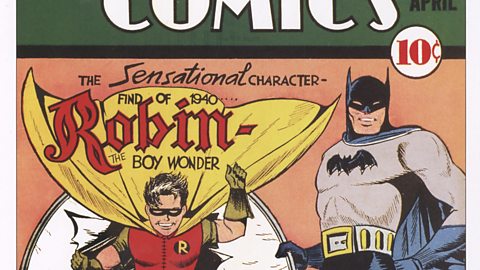
Hero – the main character we follow, whose actions drive the story
Villain – the figure that goes against the hero or tries to stop them
Sidekick – a helper who sticks with the hero
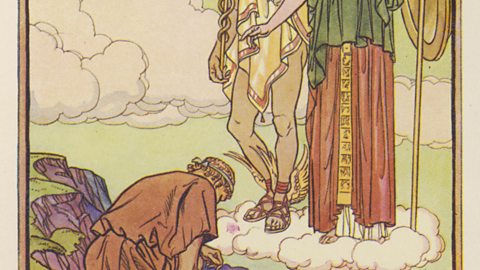
Dispatcher – usually older/wiser person who sends the hero on a quest
Donor– gives the hero a weapon, object or advice to help them
Princess – the ‘prize’ awaiting the hero when the quest is complete*
False Hero – a cowardly figure who pretends to be the hero or tries to take credit for the hero’s actions
* The term ‘princess’ could be seen as sexist now because it refers to a time when it was assumed all heroes were male, all women were helpless and that everyone would be happy in a traditional marriage even if they didn’t choose the partner they loved. It may be more helpful to think of the ‘princess’ as just representing the person or people the hero loves and wants to get back to when things are normal again, including family or friends.
Examples of Character Types in media
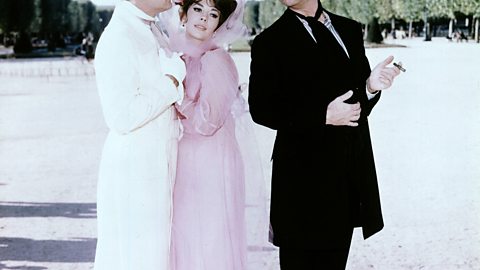
Image caption, The Great Race - 1965 Tony Curtis, Natalie Wood, Jack Lemmon 1965
Stereotypical costumes showing hero, princess and villain characters in ‘The Great Race’, 1965
1 of 3
To think of an example, Harry Potter is the hero – the books and films are named after him and we follow his actions and see his point of view on things. The villain is obviously Voldemort, who inspires terror among the wizarding community and attacked Harry as a baby, killing his parents and changing his life forever. Harry’s sidekicks are Ron and Hermione, who help him through thick and thin, and he has several donors such as Sirius Black, who gives him advice and buys him a state-of-the-art broom, and Dumbledore who gives him the invisibility cloak. Dumbledore ultimately sends Harry on missions to destroy Voldemort and is the dispatcher character, while Gilderoy Lockhart tries to take credit for the actions of others, including Harry, so he is the false hero. Ginny Weasley ends up being the princess as she and Harry later become romantically involved.
Many popular films still use these character types in some way, even if they don’t include them all or double up the character role. Shrek for example has a hero (Shrek), sidekick (Donkey) and princess (Fiona), but Lord Farquaad has the role of both the dispatcher, who sends Shrek to rescue Fiona in the first place, and the villain or antagonist.
The two most obvious character types are the hero and villain – most stories have some form of this dynamic because it works so well and audiences understand and enjoy it.
Test yourself on character types
Equilibrium
Another Russian theorist named Tzvetan Todorov was interested in the actions that shaped narratives. He realised that every story starts with a form of normality or equilibrium, then something happens to disrupt that normality and characters try to overcome the disruption (disequilibrium) and get back to some kind of normality again.This is a pattern you can see in many narratives:
- In the Harry Potter series, the return of Voldemort disrupts the equilibrium of the wizarding world and there is a fight to defeat him and restore equilibrium and safety.
- In War Horse, Albert’s world is disrupted by the poverty that forces him to sell his horse Joey. They are separated and both fight in the Great War but are reunited when the war ends and return home to their new equilibrium.
- In The Lego Movie, Lord Business disrupts the existing Lego world with plans to ‘freeze’ all the pieces. Emmett and his friends fight the plan to restore the equilibrium of a world where anything can be built.
In most narratives it is the villain who causes the disruption and the hero who restores equilibrium, but sometimes there is more than one disruption that causes the life of the main character or characters to change. A character who wakes up to find they have new superpowers, for example, certainly experiences disruption because of this, and may then have to fight a villain who is causing disruption of a different kind.
More on Introduction to media
Find out more by working through a topic
- count4 of 4
- count1 of 4