Consequences of underdevelopment: Nigeria
Quick version
Nigeria is the most populated country in Africa with over 232 million people in 2024.
Nigeria ranks low on the Human Development Index (HDI), with an average life expectancy of 56 years.
Nigeria is the world’s second largest poor population after India. 38.9% of the population live below the poverty line.
Many small villages and towns in Nigeria lack access to electricity and water supplies.
Learn in more depth
Keep going to learn more:
Case study: Nigeria
- city life
- rural life
Then test how much you have learned.
Consequences of underdevelopment - Case study: Nigeria
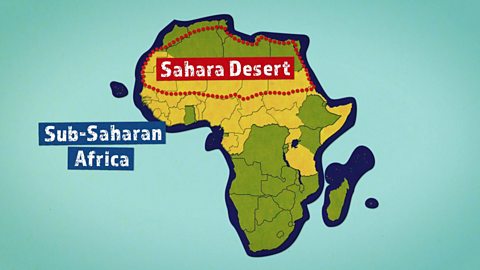
Lack of development within sub-Saharan Africa has significant consequences for the people who live there.
| Nigeria | United Kingdom | |
|---|---|---|
| Human Development Index (HDI) Ranking 2025 | 164 (low) | 15 (very high) |
| GDP per capita in dollars ($) 2023 | 1,621 | 48,866 |
| Life expectancy (years) 2024 | 56 years | 80.1 |
| Literacy rate (%) | 77.6 in 2021 | 99 |
| Infant mortality per 1,000 live birth | 69 in 2022 | 4 in 2022 |
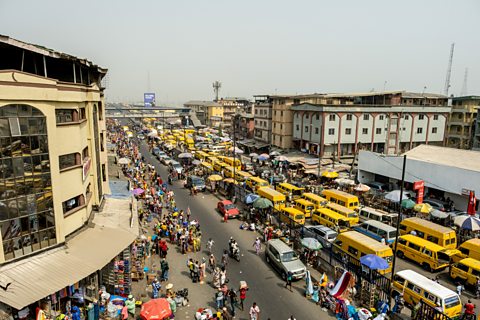 Image source, Bloomberg/Getty Images
Nigeria is a country in West Africa. It is the most populated country in Africa, and the sixth most populous country in the world. In 2024 the population reached over 232 million people.
Lagos, the country's largest city is home to about 16.5 million people, as of 2024.
Just over half the people of Nigeria (54%) live in towns and cities. The remainder (46%) live in the countryside.
There are some wealthy people in Nigeria: there were an estimated 8,200 millionaires in 2024. But according to the World Bank, 38.9% of Nigerians (87 million) live below the poverty line, and the country has the world’s second largest poor population (after India).
Image source, Bloomberg/Getty ImagesRural life in Nigeria
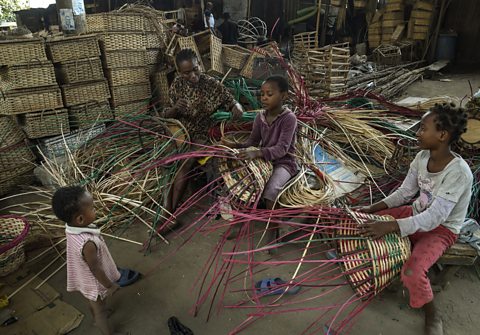 Image source, PIUS UTOMI EKPEI / Getty Images
Life in the countryside is hard for many Nigerians. In the cities there are pockets of wealth and evidence of social and economic progress but this is far less true of rural areas.
While many people live in poverty in Nigeria's cities and towns, the figure is much higher in rural areas.
According to survey figures from 2018:
- 75.5% of the rural population lived in poverty
- 41.3% of the urban population lived in poverty(Source: World Bank, 2025)
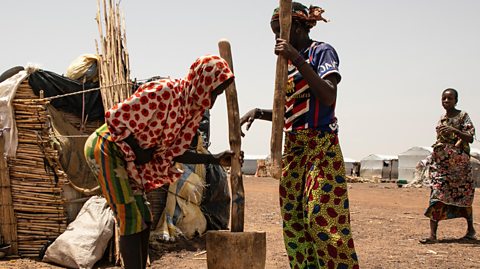
For many people in rural areas, life is a struggle which involves rising early, working on the land or fishing in the rivers and lakes to make enough to live on, walking long distances to take their products to and from the market, and then returning home in the evening to repeat the process the next day and almost every day.
Many small villages and towns lack proper electricity and water supplies. In rural areas, 39% of households lack access to at least basic water supply, while only half have access to proper toilets sanitation. Houses are built from mainly local materials such as mud, wood and thatch. They are small and basic.
According to the World Bank, in 2023:
- 33% of rural households had access to electricity
- 85% of urban households had access to electricity
Roads and other infrastructure such as medical centres and schools are few and under-developed. Given the size of Nigeria and the remoteness of many outlying villages, there is also a shortage of trained teachers and medical staff.
According to UNICEF in 2023:
- In rural areas, 61% of children completed primary school, and 37% completed senior school
- In urban areas, 90% completed primary, and 76% completed senior school
The literacy rate in urban areas for men in Nigeria is just over 86% but in rural areas that figure drops to 59.5%.
For women the equivalent figures are 74% and 35.4%.
Problems of poverty, lack of infrastructure and lack of social support and health support all contribute to a high late of rural to urban migration. Those who move tend to be younger and more educated.
As a consequence, a less educated, older population exists in rural areas. This limits employment and has an impact on farming production. In turn, this limits rural economic development.
Image source, PIUS UTOMI EKPEI / Getty ImagesRural to urban migration in Nigeria
Since the mid-20th Century, Nigeria's population has changed from being mostly rural, to being mostly urban:
- In 1950, 9.4% of the population lived in urban areas.
- By 2020 this had risen to 52%.
- By 2050 the population in cities is expected to reach 70%.
- The urban population is growing at a rate of 4.3% each year.
(Source: UN-Habitat, 2023)
What are the consequences of underdevelopment on Nigeria's cities?
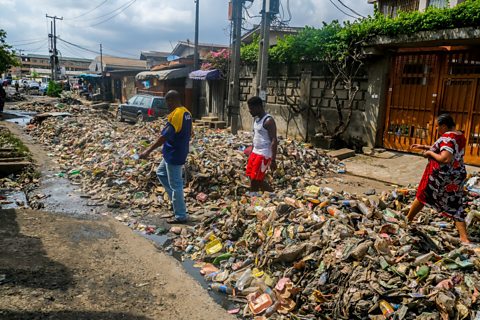 Image source, Anadolu/Getty Images
Nigerian cities have struggled to deal with this rapid growth. Many areas are overcrowded and lack basic facilities. There are not enough homes for the growing population, especially for those on low or very low incomes.
In 2025, according to the Federal Mortgage Bank of Nigeria (FMBN), the country needs to build approximately 700,000 houses each year until 2045 to meet for the next 20 years to bridge the gap.
Lagos is Nigeria's largest city and its economic centre. Despite this the city faces many issues:
- Lagos was ranked as the 2nd least livable city out of 172 global cities. (Source: EIU Global Liveability Ranking 2022)
- There is a housing deficit of 3.3 million units. 87% of the houses needed are for low and very low-income households.
- 50-75% of the population live in informal housing.
- Only 14% of households receive steady, reliable supply.of electricity (for more than 8 hours per day).
- Only 20-30% of waste is collected.
- Only 35% of the population has access to the public water supply.
- Only 5% is connected to the public sewerage system.(Source: World Bank, 2022)
As well as struggling to secure adequate housing and sanitation, many people in Lagos face issues with employment, which also has an impact on the economy:
- 45% of the working age population have only informal employment.
- The informal sector contributes about one third to the economy, significantly lower than the percentage of people employed in it.
- Almost 42% are under-employed or unemployed.
- While Lagos's GDP has grown by 5.8% between 2003 and 2019, GPD per capita (per person) has been falling since 2015.(Source: World Bank, 2022)
Image source, Anadolu/Getty ImagesCity life: Lagos
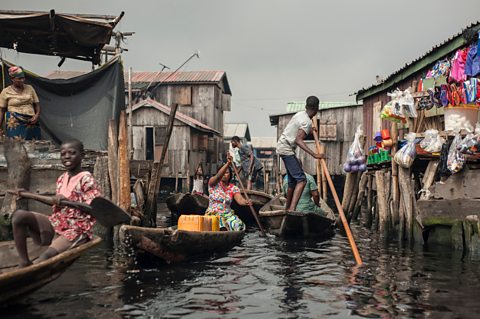 Image source, Anadolu/Getty Images
One of the poorest areas of Lagos is Makoko. Many houses there are built on stilts above a lagoon and people mainly move around by boat. The area is home to over 100,000 people (the exact figure is unknown). Overcrowded and lacking basic services such as clean water supplies, proper sanitation and electricity, Makoko, like much of Lagos, is a cramped and dirty place to live.
BBC News: Lagos' floating slum Makoko - what's it like to live there?
John Mary is a primary teacher in Makoto. Unlike thousands of other people, especially girls who make up 60% of those young people not in school in Makoko, John Mary managed to get herself an education despite the surrounding poverty.
John Mary was qualified to go to university but financially she and her family could not afford for her to go. So, instead, she teaches primary age pupils in a makeshift “school” for a little over a dollar a day. For John Mary and many other young people in Makoko, education is hugely important as it offers the best chance to secure work. In Nigeria there are few social security benefits so people, in the main, must provide for themselves.
BBC World News: John Mary, Primary Teacher, Makoko
Another resident of the floating informal settlement is Hannah. Hannah is a clothes designer and maker who runs her own business employing a small number of women. Although life is hard, Hannah stresses the importance of education and of learning to speak English to help people improve their chances in life and to maintain the business.
BBC World News: Hannah, Fashion Designer, Makoko
Elijah Kunu also lives in Makoko. He stopped going to school around the age of nine when he started fixing boat engines for a living. Elijah is a highly skilled mechanic and the money from the work he carries out means he is doing a little better than many in the city. Nonetheless, like John Mary and Hannah life is hard and poverty is everywhere. Around 33% of the people in the country are unemployed.
BBC World News: Elijah Kunu, Makoto
Despite the problems the people of Lagos experience, life in the city is showing signs of improving as development progresses. Incomes are increasing, education levels, including the numbers attending university are rising, and there is a greater number of better paid jobs than in the past, especially in service industries which includes finance.
Image source, Anadolu/Getty ImagesWhat are the consequences of emigration from Nigeria?
Like many poorer countries, Nigeria faces issues from emigration.
- In a 2024 survey, a majority of Nigerians have considered leaving the country.
- One in three said they had considered emigration 'a lot'.
- This figure has grown from one in nine in 20217
- The main reason given were the search for work, better opportunities and to overcome hardship.
(Source: Afrobarometer)
Those who consider emigration are more likely to be young, highly educated, unemployed and from urban areas.
The loss of working age population, especially skilled workers, can hold back development. It can also have a direct impact on crucial services, such as health care.
Many health workers have left Nigeria in search of better pay and working conditions, job security, as well as to to escape instability and a lack of welfare.
- As of 2023 over 12,000 Nigerian doctors have moved to work in the UK(Source: Global Health and Education Projects, 2025)
- Between 2022 and 2024, 42,000 nurses have left Nigeria, with the higher number working in the UK.
(Source: Sage Journal, 2025)
This brain drain has resulted in a severe shortage of health workers in Nigeria. This has had an impact on workloads and quality of care, and is likely to be linked to worsening health statistics:
- The annual maternal mortality rate rose from 2.2% in 2007 to 3.6% in 2019.
- Despite relatively high GDP and spending on healthcare, Nigeria had the fourth-worst under-five mortality rate in the West Africa region in 2019.
(Source; The Lancet, 2022)
Quiz
Recap what you have learned
Lack of development within sub-Saharan Africa effects the people who live there.
Nigeria ranks low (164) on the Human Development Index (HDI) 2025 , with significant contrasts to the United Kingdom in GDP per capita, in terms of:
- life expectancy
- literacy rates
- infant mortality
Nigeria is the most highly populated country in Africa with over 232 million people in 2024.
In 2024, just over half the people in Nigeria (54%) live in towns and cities while the remainder (46%) live in the countryside.
Wealth disparity is vast, with an estimated 87 million Nigerians living below the poverty line.
Rural areas often lack infrastructure, with many not having access to basic water and sanitation.
The literacy rate in 2023 in urban areas for men in Nigeria is just over 86% but in rural areas that figure drops to 59.5%. For women the equivalent figures are 74% and 35.4%.
More on Development sub-Saharan Africa
Find out more by working through a topic
- count9 of 9