Impact of underdevelopment in sub-Saharan Africa on other countries
Quick version
Lack of development in sub-Saharan Africa can significantly impact neighbouring countries.
When a crises such as a conflict or natural disaster arise, governments often struggle to respond, leading to people seeking asylum in other countries or being displaced within their own country.
A lack of development in sub-Saharan Africa can impact countries like the UK through the cost of providing development assistance and supporting asylum seekers seeking refugee status.
In 2023, the UK government provided £15.4 billion in Official development assistance (ODA).
International aid comes in many different forms including: bilateral aid, multilateral aid and voluntary aid.
Migration from underdeveloped regions can spread diseases like TB, increasing healthcare costs in host countries.
Underdevelopment drives skilled workers abroad, creating staff shortages at home and increasing reliance on foreign workers in countries like the UK.
Learn in more depth
Keep going to learn more:
- Consequences for neighbouring countries
- What costs underdevelopment brings to other countries
- How underdevelopment can lead to the spread of disease
- How underdevelopment impacts on services in other countries
Then test how much you have learned.
Consequences on neighbouring countries
The consequence of a lack of development within sub-Saharan Africa can have significant effects on neighbouring countries in the region.
As many sub-Saharan countries are among the poorest in the world, when a crisis such as conflict or natural disasters arise, the governments of these countries often struggle to respond if they choose to respond at all.
Consequently, many people may move within the country or move to another neighbouring country seeking asylum. For the country receiving refugees, this puts a huge strain on their government.
Case study: Burkina Faso
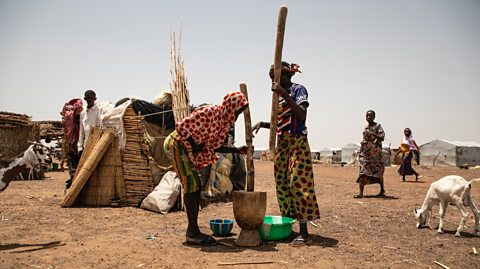 Image source, FANNY NOARO-KABRE / Getty Images
Burkina Faso is a landlocked country in western Africa. Around 23.8 million people live in the country.
Burkina Faso is one of the poorest countries in Africa with an HDI ranking of 186 (low) out of 193 countries in the world.
Life expectancy stands at only 59.7 years with average GDP per capita estimated at just $1,100 in 2025.
For a number of years, conflict in neighbouring Mali had been affecting Burkina Faso. Caused by an uprising of armed Islamic Jihadist rebels, the conflict had spilled over in Burkina Faso resulting in at least 10,000 Burkina Faso deaths and two million leaving their homes. The conflict in Mali had also led to 38,000 Malian refugees entering Burkina Faso. (Source: UNHCR)
In 2022, the Burkina Faso army seized control of the country in a coup promising to put an end to the violence. However, the result of the military coup has far from ended the conflict. Instead, violence escalated and spread across the country with many more people having been killed or having been forced from their homes.
In a report published in early 2024, the United Nations High Commission for Refugees (UNHCR) stated that there was a humanitarian crisis in Burkina Faso with over two million internally displaced and 4.7 million in need of humanitarian assistance. Furthermore, close to 200,000 of the people of Burkina Faso had sought refuge in neighbouring countries, such as Côte d'Ivoire, Benin, Togo, Ghana and Niger.
For Burkina Faso’s neighbours, such as Cote d’Ivoire, it has been a struggle to manage the people fleeing from Burkina Faso. With limited resources themselves, there is little in the way of direct support available.
As a result, many Burkina Faso refugees end up in living in overcrowded, unsanitary conditions where there is little access to food supplies, healthcare or education services for children. Many of the child refugees (estimated at 59% of all refugees) are vulnerable to exploitation and forced recruitment as child soldiers.
The large numbers of refugees from Burkina Faso are now having a destabilising effect on Burkina Faso’s neighbours. Just as Mali refugees entering Burkina Faso put a strain on the Burkina Faso government with devastating consequences, Burkina Faso’s refugees are now putting pressure on the governments of surrounding countries.
Image source, FANNY NOARO-KABRE / Getty ImagesWhat costs does underdevelopment bring to other countries?
A lack of development in sub-Saharan African can have consequences beyond the African countries themselves, including affecting the United Kingdom.
This can happen in two ways:
The cost to developing countries in providing development assistance
The cost of supporting asylum seekers arriving in developed countries seeking to secure refugee status
The cost of development assistance to the global community
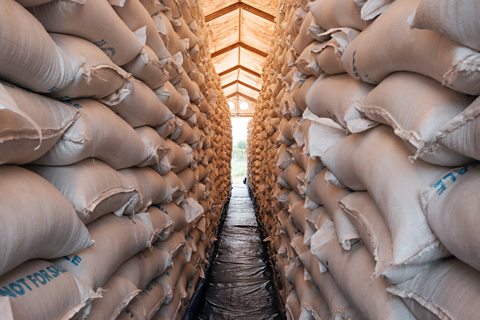 Image source, GUY PETERSON / Getty Images
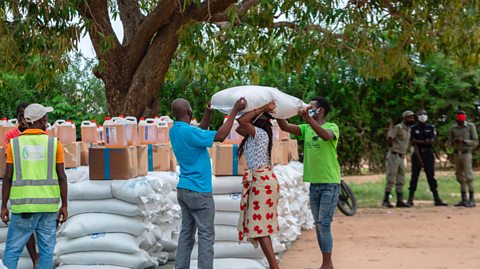
Developed countries provide a range of types of assistance to developing countries across the world including countries in sub-Saharan Africa.
This assistance is organised in a number of different ways including:
- direct government-to-government or bilateral aid (support)
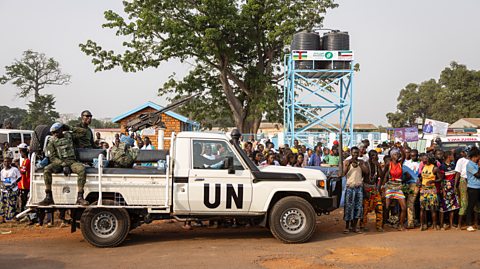
- given as multi-lateral aid by organisations such as the United Nations (UN)
- smaller amounts of more targeted support delivered as voluntary aid by organisations such as Oxfam, Save the Children or the Red Cross.
Development assistance is important to developing countries as it can provide investment in projects to help improve the country in the long-term and also it can provide emergency assistance, when there is a humanitarian crisis.
Although there is a debate as to whether international aid is the best way to help promote development, those who support the idea of development assistance believe it is crucial to saving or improving the lives of millions of people in the world.
In 2024, the UK government provided £14,066 million in Official Development Assistance (ODA). This was 0.5% of GNI which is below the UN target of 0.7% of GNI. Of this UK bilateral ODA was £11,261 million and UK multilateral ODA was £2,806 million.
The bilateral aid spent by geographic region saw Africa as the largest recipient at £1,479 million (up from £1,051 million in 2023).
(Source: Gov.uk)
The United Nations (UN) also provides financial assistance to developing countries. In 2021, the UN spent over $65 billion most of which came from contributions from member countries to support development and humanitarian projects. In 2023, 35% of UK development assistance ($5.5 billion) was delivered via multilateral organisations most of which went to the UN.
Image source, GUY PETERSON / Getty ImagesGlobal cost of supporting asylum seekers
When people move to another country seeking asylum, there is a cost to the host country until a decision is taken as to what happens to them next. In the short-term, host countries have to allocate resources to support the food, medical, housing and administration needs of new arrivals.
Managing asylum seekers was a key issue in the 2024 UK General Election.
In the UK there were, 67,337 submitted asylum claims in 2023. In responses, the UK government allocated £4.3 billion (27.9%) of the £15.4 billion it spent on Official development assistance (ODA) to supporting refugees in the UK.
(Source: Gov.uk)
The increasing use of ODA aid to support people arriving in the UK, rather than it being used to reduce poverty in the poorest countries was criticised by the UK Parliament’s International Development Committee in 2023.
Voluntary organisations have also criticised the use of ODA to support asylum seekers in addition to their criticism of the UK’s failure to meet its international obligation of allocating 0.7% of GNI to aid.
Although there are initial costs to government to manage people who move to the UK (and other developed countries) there is research which demonstrates immigration can benefit the country economically in the long-term. For example, filling in gaps in the job market, bringing in skilled workers and boosting the economy.
How does underdevelopment lead to the spread of disease?
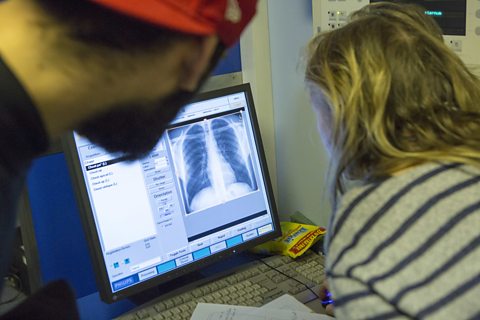 Image source, Andrew Aitchison / Getty Images
Underdevelopment can lead to the spread of disease.
People who migrate to new countries may spread diseases they are infected with to new areas or countries. Others may contract infections as they pass through other countries.
Tuberculosis in the UK
For example in 2021, people born outside the UK accounted for 76.4% of tuberculosis (TB) notifications in England. Somalia and Eritrea were listed in the top five countries of birth for people with TB in the non-UK born population.
(Source: Gov.uk)
This has an impact on the UK:
- Funding has been needed to screen people arriving from high risk countries for TB.
- Healthcare is needed to treat people with TB.
TB and mining in Southern Africa
Lack of employment opportunities means that working age adults may move to other countries seeking work.
For example, many miners working in South Africa have migrated from Mozambique, Swaziland and Eswatini.
Mineworkers are particularly susceptible to lung diseases. In 2018, the World Bank reported an incidence of TB in miners of three to four times that of the general population. Factors that contribute to the higher risk of TB among mineworkers include exposure to silica dust; crowded living and working conditions and HIV/TB co-infection.
Workers may return to their home countries increasing the spread of infection. Their illness can affect their ability to work and place extra strain on healthcare services.
For example, in Eswatini between 2020 and 2023, over 5,000 ex-miners and their families, have lodged compensation claims with mining companies, arguing they have contracted TB or other lung diseases through their work.
Image source, Andrew Aitchison / Getty ImagesHow can underdevelopment impact services in other countries
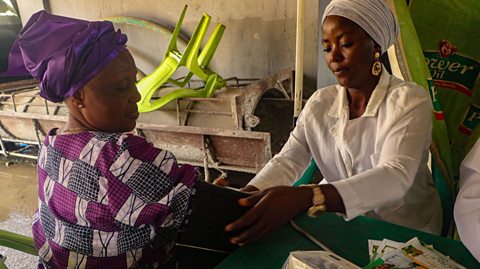 Image source, Majority World / Getty Images
Workers from sub-Saharan Africa may struggle to find well paid jobs or to advance in their careers. Skilled workers including doctors and nurses may emigrate to find better paid jobs and better working conditions in other countries.
Based on 2025 figures:
- A nurse in Nigeria can be paid as little as £65 per month. (Source: Pulse Nigeria)
- A newly qualified nurse working in NHS England has a salary of £2,587 per month. (Source: NHS Employers)
In 2023, there were over 22,000 people from Nigeria working in NHS England, including over 8,000 nurses. (Source: House of Commons Library)
3.8% of NHS England staff were born in Africa and it could be argued that the health service relies on foreign-born workers, including from sub-Saharan Africa to overcome staff shortages.
Image source, Majority World / Getty ImagesQuiz
Recap what you have learned
Many sub-Saharan countries are among the poorest in the world.
When a crisis such as conflict or natural disasters arise, the governments of these countries often struggle to respond.
The impact of challenges in sub-Saharan Africa extends beyond the region, affecting countries like the United Kingdom in two main ways:
- The cost to developing countries in providing development assistance.
- The cost of supporting asylum seekers arriving in developed countries seeking to secure refugee status.
International aid comes in many different forms including:
- bilateral aid: direct from government to government
- multilateral aid: from international organisations such as the United Nations
- charities: from voluntary organisations such as Oxfam, Save the Children or The British Red Cross
In 2023, the UK government allocated £4.3 billion (27.9%) of the £15.4 billion it spent on Official development assistance (ODA) to supporting refugees in the UK.
In 2021, the UN spent over $65 billion to support development and humanitarian projects.
People moving from underdeveloped regions may carry infectious diseases like TB, increasing healthcare costs and requiring screening and treatment in host countries like the UK.
Underdevelopment drives doctors and nurses to emigrate for better pay, creating staff shortages in their home countries while increasing reliance on foreign workers in places like the NHS.
More on Development sub-Saharan Africa
Find out more by working through a topic
- count9 of 9
- count1 of 9