How does hot weather affect daily life?
Hot weather can affect our lives in many different ways.
In this article you can learn about:
- The advantages and disadvantages of hot weather
- What we can do to stay cool and safe during warm weather
- How hot weather affects plants and animals
This resource is suitable for weather topics for primary school learners.
Video - Hot weather and the world around us
Watch this video to learn how hot weather affects people, plants and animals.
The sun's out! Warm weather means we can spend more time outside: playing, cycling, having a picnic or a barbecue.
When it's warm, we want icy drinks and colder foods – like salads or ice cream. They help to cool our body temperature and top up our bodies' water supply - as we tend to sweat a lot more during hot weather.
If it is too hot, it can be difficult to concentrate on what your teacher is saying and running around at playtime will make you even hotter.
Hot weather can also make it tricky to get to sleep at night. You might open your windows more and you definitely won't need the heating on.
If it is really hot, it can even melt road surfaces and bend railway lines.
Higher temperatures affect plants and animals too.
Some plants, like a tomato plant, will wilt if temperatures are too high and many animals struggle if it gets too hot. We have to take extra care of our pets and make sure they have plenty of water and don't overheat.
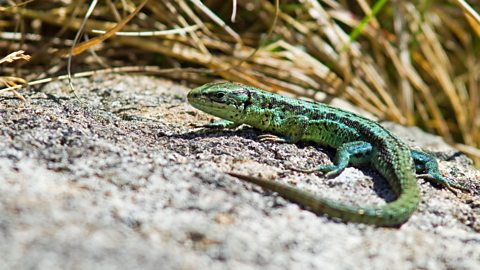
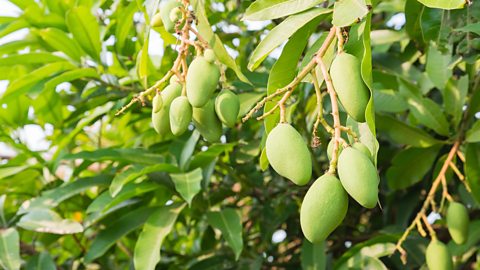
However, some plants and animals love the heat! Snakes and other reptiles are cold - blooded so they need heat from the sun and their surroundings to warm up their bodies. And tropical fruit, like mangoes and bananas, grow better in warm weather too.
What do you like to do when it's warm outside? And how do you keep cool when it gets too hot?
How does hot weather affect our lives?
- Warm weather means we usually spend more time outside: playing, cycling, having a picnic or a barbecue.
- When it's warm, we want icy drinks and colder foods, like salads or ice cream. They help to cool our body temperature and keep us To add water to something. For example, humans drink water to stay hydrated. as we tend to sweat a lot more during hot weather.
- When sweat When water turns from a liquid into a gas., it draws heat away from our skin and cools the body down. When it's hot, humans can sweat up to 5 litres a day! That's why it's very important to drink lots of water in hot weather.
- If it's too hot, it can be difficult to concentrate in class or get to sleep at night.
- At home, you won't need the heating on and you might open your windows more to let cooler air in.
Learn more: How do humans maintain temperature and water balance?
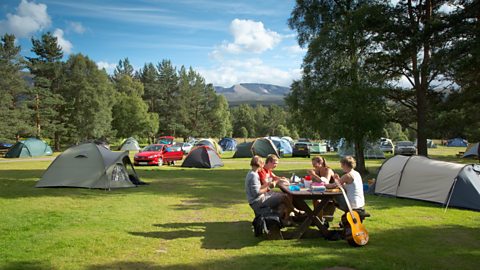
Image caption, Spending more time outside
We usually spend more time outside when it is warm - like having a picnic! (Scottish Viewpoint / Alamy Stock Photo



1 of 4
How does hot weather affect transport, plants and animals?
- Very high temperatures can melt road surfaces and bend railway lines.
- Some plants, like a tomato plant, will When a plant becomes weak and droopy. if temperatures are too high.
- Many animals struggle if it gets too hot. We have to take extra care of our pets during hot weather and make sure they have access to shade and plenty of water to drink.
- Some animals love the heat. Animals that cannot control their body temperature by themselves. They need to lie in the sun's ray to stay warm or the shade to cool down. All reptiles are cold-blooded., like snakes and other reptiles, prefer hot conditions because they need the sun's heat to stay warm.
- Tropical fruit, like mangoes and bananas, grow best in hot humid climates. That's why we usually To bring in products or goods from another country. tropical fruit from far away places, like South America, where it is much warmer.
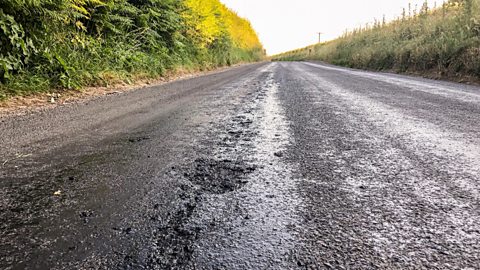
Image caption, Melting road surfaces
Very high temperatures can melt road surfaces. (JamesJagger / StockimoNews / Alamy Stock Photo)


1 of 5

Key words about hot weather
- hydrate - Adding water to something. When it is warm we can dehydrate so it's important we drink plenty of water.
- wilt - When a plant becomes limp and droopy.
- cold-blooded animals - Animals that rely on the sun's heat to stay warm. All reptiles, like snakes and lizards, are cold-blooded so they tend to live in places with warmer weather. Cold-blooded animals are also known as conformers.
- tropical - Hot and humid weather. Tropical fruit, like mangoes and bananas, grow best in warm weather.
Test your knowledge
Quiz
Test your knowledge of hot weather with this short multiple choice quiz.
Challenge

Create a fact file about an animal or plant that thrives in hot weather.
In the video at the top of the page, we learned that cold-blooded animals, like snakes, tend to live in hotter countries and tropical fruit, like mangoes, grow best in warmer climates.
Research an animal or plant that lives in a very hot place. Write a short report and explain to your reader why they live or grow best in places with hotter temperatures.
If you need some more help writing your fact file, you can get more information here: How to write a report
Here are some articles to help you with your research:
How animals control their body temperature. revision-guide
Find out how animal behaviour helps them maintain their body temperature.

Seasonal food. revision-guide
Different seasons bring different kinds of weather. This affects the food we grow and eat. Find out more about seasonal food.

How conformers and regulators maintain their body temperature. revision-guide
Find out how conformers and regulators maintain their body temperature in different ways.
More on Weather
Find out more by working through a topic
- count16 of 22
- count17 of 22

- count18 of 22

- count19 of 22

