What are the key learning points about nuclear fission?
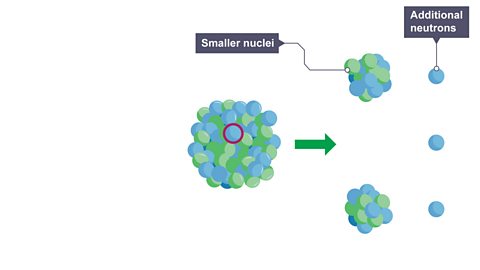
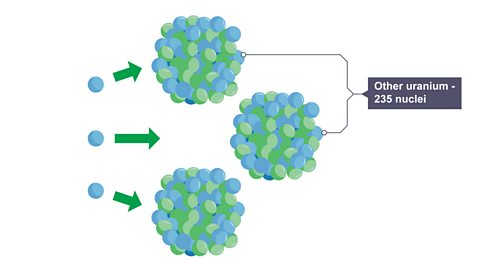
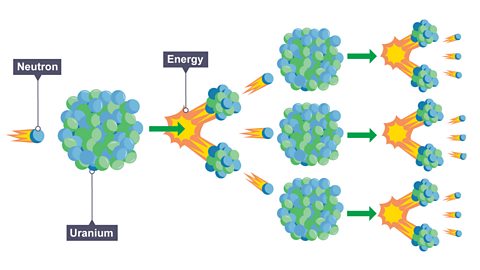
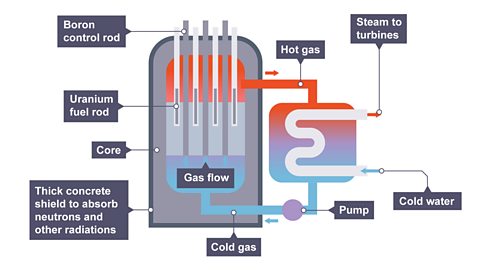
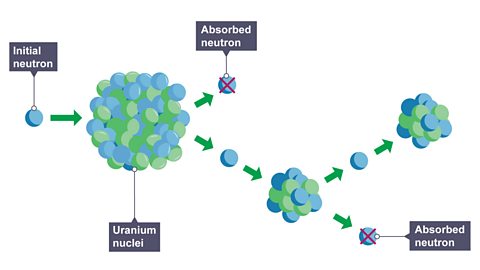
To understand the steps in the The splitting of a large nucleus to produce two smaller ones. Two or three neutrons are also released in the process. The energy from the neutrons powers a nuclear reactor. process.
What are the advantages and disadvantages of fission?
What happens during nuclear fission to generate energy?
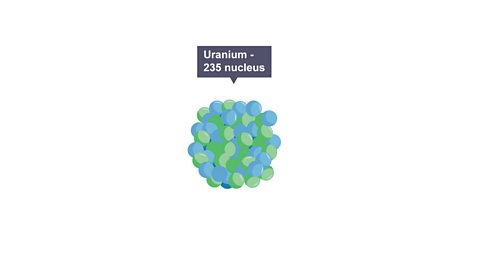
Image caption, 1. Nuclear fission is a process used to generate electricity in nuclear power stations. The fuel for nuclear fission is usually uranium-235.
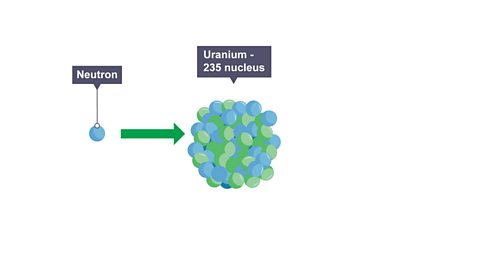
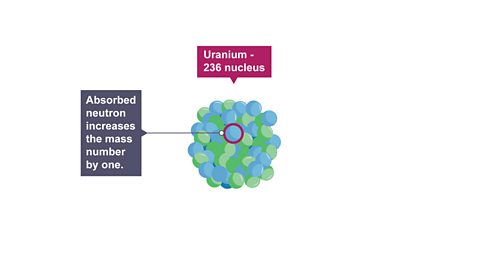
1 of 8
An uncontrolledThe splitting of a large nucleus to produce two smaller ones. Two or three neutrons are also released in the process. The energy from the neutrons powers a nuclear reactor. reaction is the basis of an atomic bomb.
There are many political, social, environmental and Regarding questions of right or wrong and how one should behave. issues relating to using nuclear energy to generate electricity.
What are the advantages and disadvantages of nuclear fission?
Advantages
The nuclear fission reaction does not release the The gases responsible for global warming - carbon dioxide, methane, nitrous oxide and CFCs (chlorofluorocarbons)., carbon dioxide.
A controlled nuclear fission reaction releases one million times more energy per kg of fuel than a chemical reaction such as burning coal, oil or gas.
Nuclear power creates well-paid employment opportunities for many people.
Modern reactor designs are extremely safe.
Disadvantages
Many people have concerns about living close to nuclear power plants and the storage facilities used for radioactive waste because they fear radioactive material may leak out into the environment.
Major catastrophic incidents at nuclear power plants in Ukraine and Japan have caused huge economic, health and environmental damage to the area surrounding the power plant.
The mining, transport and purification of the uranium ore releases some greenhouse gases.
Like fossil fuels, nuclear fuels used for fission, such as uranium ore, are non-renewable energy resources since supplies will not last forever.
Decommissioning a nuclear power plant is extremely expensive and requires a skilled workforce.
The same technology used to make the fuel for use in reactors can be used to make nuclear weapons.
Radioactive waste is extremely dangerous and long lasting and expensive measures must be taken to store it.
In some cases, the waste is stored deep underground and must be kept for tens of thousands of years. Over time, this could leak and cause underground water and soil pollution. This is a particular worry in regions where there are earthquakes.
How much do you know about nuclear fission?
More on Unit 1: Atomic and nuclear physics
Find out more by working through a topic
- count6 of 6
- count1 of 6
- count2 of 6
- count3 of 6