Key points about describing healthy habits in Spanish
Use the A verb that describes an action that is happening now or that happens regularly, eg I eat breakfast. to talk about what you currently do to maintain a healthy lifestyle.
Generally used to describe a verb, or actions to add more detail about how something is being done (and when, where or how often something takes place). of frequency can be used to say how often you do things.
Vocabulary – Describing a healthy lifestyle
Useful verbs for describing a healthy lifestyle include:
| Spanish | English | Spanish | English |
|---|---|---|---|
| recomendar | to recommend | el ejercicio físico | physical exercise |
| beber | to drink | estar en forma | to be fit |
| comer | to eat | ir al gimnasio | to go to the gym |
| la dieta | diet | correr | to run |
| el corazón | heart | el riesgo | risk |
| dormir | to sleep | la salud | health |
| mejorar | to improve | sano/a | healthy, wholesome |
| la actividad | activity | una vida sana | a healthy life |

For example:
Para llevar una vida sana, los médicos recomiendan dormir ocho horas cada noche. – For a healthy life doctors recommend sleeping eight hours each night.
Regular verbs in the present tense regular verbs
All Spanish verbs end in either ar, er or ir. This form of the verb is called the Form of the verb that has not been conjugated. Usually translated with 'to' in English, eg to play..
For example:
Check your connection, refresh the page and try again. - to rest
Check your connection, refresh the page and try again. - to eat
Check your connection, refresh the page and try again. - to live
When using verbs, you will need to be able to conjugate them. Conjugating a verb means changing the infinitive ending to match the Replaces a noun that is the subject of the verb. (yo, tú, él, ella etc).

Remember
In Spanish there is a unique verb ending for each subject pronoun, so the verb ending tells you who is doing the action.
For this reason, you don’t always need to use subject pronouns in Spanish.
Conjugating regular ‘ar’, ‘er’ and ‘ir’ verbs in Spanish
To conjugate regular verbs, remove the ar, er or ir ending from the infinitive and add the unique ending that goes with each subject pronoun to the stem.
Click or tap on Show more to see how to conjugate the regular verbs in Spanish.
Regular ar verb – descansar
| Subject Pronoun | Stem | Ending | Example | English |
|---|---|---|---|---|
| yo | descans | o | (yo) descanso | I rest |
| tú | descans | as | (tú) descansas | you (informal) rest |
| él/ella/usted | descans | a | (él/ella/ usted) descansa | he/she/ rests, you (formal) change |
| nosotros/as | descans | amos | (nosotros/as) descansamos | we rest |
| vosotros/as | descans | áis | (vosotros/as) descansáis | you (plural informal) rest |
| ellos/ellas/ustedes | descans | an | (ellos/ellas/ ustedes) descansan | they/you (formal) rest |
Other common regular ar verbs include:
mejorar - to improve
cocinar - to cook
odiar - to hate
For example:
Mejoro mi dieta actualmente. I’m improving my diet currently.
¿Cocinas para tu familia? Do you cook for your family?
María odia las verduras. - María hates vegetables.
Regular er verb – comer
| Subject Pronoun | Stem | Ending | Example | English |
|---|---|---|---|---|
| yo | com | o | (yo) como | I eat |
| tú | com | es | (tú) comes | you (informal) eat |
| él/ella/usted | com | e | (él/ella/ usted) come | he/she eats, you (formal) eat |
| nosotros/as | com | emos | (nosotros/as) comemos | we eat |
| vosotros/as | com | éis | (vosotros/as) coméis | you (plural informal) eat |
| ellos/ellas/ ustedes | com | en | (ellos/ellas/ ustedes) comen | they/you (formal) eat |
For example:
Ella come cereales y tú comes tostadas. - She eats cereal and you eat toast.
Other common regular er verbs include:
beber - to drink
correr - to run
For example:
Bebes mucho agua. - You drink a lot of water.
Corro en mi barrio. - I run in my neighbourhood.
Regular ir verb – vivir
| Subject Pronoun | Stem | Ending | Example | English |
|---|---|---|---|---|
| yo | viv | o | (yo) vivo | I live |
| tú | viv | es | (tú) vives | you (informal) live |
| él/ella/usted | viv | e | (él/ella/ usted) vive | he/she lives, /you (formal) live |
| nosotros/as | viv | emos | (nosotros/as) vivimos | we live |
| vosotros/as | viv | éis | (vosotros/as) vivís | you (plural informal) live |
| ellos/ellas/ ustedes | viv | en | (ellos/ellas/ ustedes) viven | they/you (formal) live |
For example:
Yo vivo en Mánchester pero tú vives en Birmingham. - I live in Manchester but you live in Birmingham.
Other common regular ir verbs include:
permitir - to allow
decidir - to decide.
For example:
Mis padres me permiten ir al colegio en bici. - My parents allow me to go to school by bike.
Decide hacer más ejercicio. - She decides to do more exercise.
Regular verbs in the present tense - Mini quiz
Complete the following sentences in Spanish.
________ comida fresca.
We cook fresh food.
cocinar = to cook
Cocinamos comida fresca.
Cocin is the stem and amos is the ‘we’ ending of this regular ar verb.
¿________ comida basura regularmente?
Do you (singular informal) buy junk food regularly’?
comprar = to buy
¿Compras comida basura regularmente?
Compr is the stem and as is the you singular informal ending of this regular -r verb.
________ tres veces a la semana.
She runs three times a week.
correr = to run
Corre tres veces a la semana.
Corr is the stem and e is the ‘she’ ending of this regular er verb.
___________ lo que como.
I decide what I eat.
decidir = to decide
Decido lo que como.
Decid is the stem and o is the ‘I’ ending of this regular ir verb.
Find out more about about using the regular verbs in the Present tense of regular verbs guide.
Listening practice
Listen to two people talk about healthy living and answer the questions.
Mario is talking about what he does to keep fit and healthy.
Write down one thing that Mario does to stay healthy and one thing that he would like to do.
Mario tries to eat a balanced diet, or he always eats five portions of fruit and vegetables a day.
He says intento llevar una dieta equilibrada y siempre como cinco raciones de fruta y verduras al día (I try to eat a balanced diet and I always eat five portions of fruit and vegetables a day).
He would like to buy organic products.
He says si tuviera más dinero, compraría productos orgánicos (if I had more money, I would buy organic products).
Transcript
Creo que es esencial mantenerse en forma. Intento llevar una dieta equilibrada y siempre como cinco raciones de fruta y verduras al día. Si tuviera más dinero, compraría productos orgánicos.
Translation
I think it's essential to stay in shape. I try to eat a balanced diet and I always eat five portions of fruit and vegetables a day. If I had more money, I would buy organic products.
Now listen to Nadia.
Write down one thing that Nadia does to stay healthy and one thing that she should do.
She has a good breakfast, or she never misses meals.
She says siempre tomo un buen desayuno y nunca me salto ninguna comida (I always have a good breakfast and I never miss any meals).
She should drink less caffeine, or she should go to bed earlier.
Transcript
Siempre tomo un buen desayuno y nunca me salto ninguna comida. Por otro lado, debería beber menos cafeína y acostarme más temprano.
Translation
I always have a good breakfast and I never miss any meals. On the other hand, I should drink less caffeine and go to bed earlier.
Vocabulary - Describing changing habits and routines
Useful sentences to describe changing habits and routines include:
| Spanish | English |
|---|---|
| Mi estilo de vida es más sano ahora porque voy al gimnasio tres veces a la semana. | My lifestyle is healthier now because I go to the gym three times a week. |
| El año pasado cambié mi dieta y ahora como menos azúcar. | Last year I changed my diet and now I eat less sugar. |
| Cuando era joven, comía demasiada comida rápida. | When I was younger I used to eat too much fast food. |
| Cuando era menor, hacía más ejercicio porque jugaba al fútbol cada día en la calle. | When I was younger I used to do more exercise because I used to play football every day in the street. |
| Intento llevar una dieta equilibrada porque ayuda a reducir el riesgo de ponerse enfermo. | I try to eat a balanced diet because it helps reduce the risk of becoming ill. |
All Foundation Tier vocabulary listed in this guide can be found on the vocabulary sheet below.
Grammar – Adverbs of time and frequency
Useful adverbs to describe frequency and routines include:
| Spanish | English | Spanish | English |
|---|---|---|---|
| a menudo | often | todos los días | every day |
| a veces | sometimes | cada día | each day |
| normalmente | normally | recientemente | recently |
| nunca | never | dos veces a la semana | twice a week |
| siempre | always, forever | cada semana | every week |
| de vez en cuando | from time to time/once in a while | cada fin de semana | every weekend |
For example:
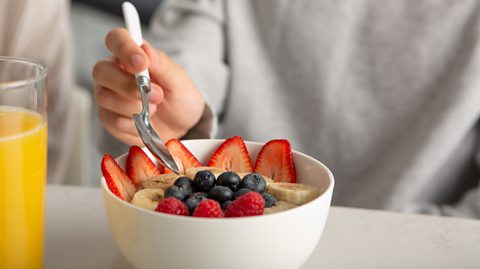
Voy al gimnasio tres veces a la semana. – I go to the gym three times a week.
Monto en bicicleta cada fin de semana. – I go cycling every weekend.
Como pescado una vez a la semana porque es bueno para la salud. – I eat fish once a week because it’s good for your health.
Tomo cinco raciones de fruta y verduras cada día. – I have five portions of fruit and vegetables every day.
Adverbs of frequency – Mini quiz
Complete the following sentences in Spanish
Corro _________ .
I run often.
Corro a menudo.
A menudo is the adverb meaning ‘often’.
______ fui a la piscina.
Recently I went to the pool.
Recientemente fui a la piscina.
Recientemente is the adverb meaning ‘recently’.
Mi madre ______ come sano.
My mother always eats healthily.
Mi madre siempre come sano.
Siempre is the adverb meaning ‘always’.
______ vamos al gimnasio.
Sometimes we go to the gym.
A veces vamos al gimnasio.
A veces is the adverb meaning ‘sometimes’.
Reading practice
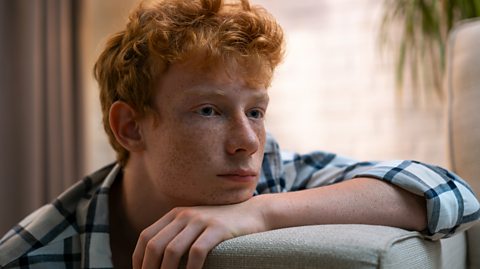
On a Spanish forum, two young people are talking about their lifestyle.
Read the extracts and decide:
Which part of each writer’s lifestyle is good?
Which part needs to improve?
| A | exercise |
| B | sleep |
| C | use of social media |
| D | food |
| E | handling stress |
| F | drink |
Gaby
Es importante dormir lo suficiente y normalmente duermo por lo menos ocho horas. Necesito reducir el estrés* en mi vida porque me preocupan demasiado los exámenes.
Omar
Estoy en forma. Hago muchas actividades deportivas por ejemplo voy al gimnasio tres veces a la semana y juego en el equipo de fútbol de mi colegio. Sé que tomo muchas bebidas que están llenas de azúcar y tengo que tomar menos de éstas en el futuro.
*estrés = stress
Which part of their lifestyle is good and which part needs to improve?
| Name | Does well | Needs to improve |
|---|---|---|
| Gaby | B - Sleep | E - Handling stress |
| Omar | A - Exercise | F - Drink |
Click or tap on Show more to read a translation.
Translation
Gaby
It is important to get enough sleep and I usually get at least eight hours. I need to reduce the stress in my life because I worry too much about exams.
Omar
I am fit. I do a lot of sports activities, for example I go to the gym three times a week and I play on my school football team. I know that I drink a lot of drinks that are full of sugar and I need to drink less of these in the future.
Vocabulary sheet
Click or tap on the image below for a list of useful vocabulary to use when describing healthy habits.

Higher Tier – Vocabulary – Healthy habits
| Spanish | English |
|---|---|
| el consejo | piece of advice |
| una dieta equilibrada | balanced diet |
| evitar | to avoid |
| mantenerse en forma | to keep fit |
For example:
Si quieres mantenerte en forma es importante hacer ejercicio físico. - If you want to stay fit, it is important to exercise.
Se recomienda relajarse de vez en cuando si quieres evitar el estrés. - It is recommended to relax from time to time if you want to avoid stress.
All vocabulary listed in this guide can be found on the vocabulary sheet below.
Higher Tier - Vocabulary sheet
Click or tap on the image below for a list of useful Higher Tier vocabulary to use when describing healthy habits.
Now you have practised the key vocabulary and grammar needed for talking about healthy habits, why not have a look at the Describing accomodation in Spanish guide?
More on Lifestyle and wellbeing
Find out more by working through a topic
- count8 of 9

- count9 of 9
- count1 of 9