Key points about maintaining mental wellbeing
Vocabulary – Describing mental health
Useful nouns to use when talking about mental health include:
| Spanish | English | Spanish | English |
|---|---|---|---|
| Check your connection, refresh the page and try again. | activity | Check your connection, refresh the page and try again. | identity |
| Check your connection, refresh the page and try again. | love | Check your connection, refresh the page and try again. | respect |
| Check your connection, refresh the page and try again. | communication | Check your connection, refresh the page and try again. | health |
| Check your connection, refresh the page and try again. | break, rest | Check your connection, refresh the page and try again. | sleep, dream |
| Check your connection, refresh the page and try again.Check your connection, refresh the page and try again. | pleasure | Check your connection, refresh the page and try again. | life |
Useful adjectives to use when talking about mental health include:
| Spanish | English | Spanish | English |
|---|---|---|---|
| alegre | cheerful, lively, happy | mental | mental |
| cansado/a | tired, tiring | nervioso/a | nervous, anxious |
| enfermo/a | ill, sick | sano/a | healthy, wholesome |
| feliz | happy | tranquilo/a | calm, tranquil, relaxed |
| igual | equal | triste | sad |
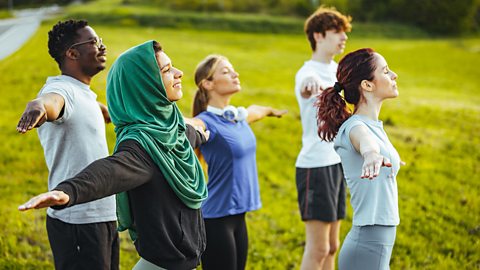
For example:
Mi padre encuentra su trabajo muy cansado y no se siente tranquilo. – My father finds his work very tiring and he doesn’t feel relaxed.
La actividad es muy importante para su salud mental. – Activity is very important for one’s mental health.
El amor y la confianza importan para sentirse feliz en la vida. - Love and trust are important for feeling happy in life.
Grammar – Using the imperfect tense

The imperfect tense is used:
to describe repeated or continuous actions in the past
to describe what something or someone was like in the past
to say what people used to do or what things used to be like
For example:
Iba a pie todos los días. - I walked/used to walk every day.
Cuando era joven, nunca comía verduras. – When I was young, I never ate vegetables.
En el pasado, jugaba al baloncesto. - In the past, I used to play basketball.
Forming the imperfect of regular verbs
The majority of Word used to describe an action, state of being or an occurrence. are Something that follows the usual or ‘regular’ pattern. in the imperfect tense.
The imperfect is formed by removing the ar, ir and er endings from the infinitive to form the The part of the verb that is left once the infinitive ending (ar/er/ir) has been taken off. It can also be called a radical. and adding the imperfect endings.
Click or tap on Show more to see the imperfect of regular verbs.
| ar verbs | er verbs | ir verbs |
|---|---|---|
| Check your connection, refresh the page and try again. - to play | Check your connection, refresh the page and try again. - to make/do | Check your connection, refresh the page and try again. - to sleep |
| Check your connection, refresh the page and try again. - I used to play | Check your connection, refresh the page and try again. - I used to do | Check your connection, refresh the page and try again. - I used to sleep |
| Check your connection, refresh the page and try again. - you (singular) used to play | Check your connection, refresh the page and try again. - you (singular) used to do | Check your connection, refresh the page and try again. - you (singular) used to sleep |
| Check your connection, refresh the page and try again. - he/she used to play | Check your connection, refresh the page and try again. - he/she used to do | Check your connection, refresh the page and try again. - he/she used to sleep |
Note that the endings for er and ir verbs are the same.
Examples of verbs in the imperfect tense:
Mi hermano jugaba en el parque. - My brother used to play in the park.
De niño, siempre comía caramelos. - As a child, I always used to eat sweets.
Forming the imperfect of regular verbs
There are only three Something that does not follow the usual or ‘regular’ pattern. verbs in the imperfect tense in Spanish.
Click or tap on Show more to see how these are conjugated.
| Check your connection, refresh the page and try again. - to go | Check your connection, refresh the page and try again. - to be | Check your connection, refresh the page and try again. - to see |
|---|---|---|
| Check your connection, refresh the page and try again. - I used to go | Check your connection, refresh the page and try again. - I used to be | Check your connection, refresh the page and try again. - I used to see |
| Check your connection, refresh the page and try again. - you (singular) used to go | Check your connection, refresh the page and try again. - you (singular) used to be | Check your connection, refresh the page and try again. - you (singular) used to see |
| Check your connection, refresh the page and try again. - he/she used to go | Check your connection, refresh the page and try again. - he/she used to be | Check your connection, refresh the page and try again. - he/she used to see |
The imperfect of hay (there is/there are) is había (there was/there were/there used to be).
Había is used frequently for describing things in the past.
For example:
En mi pueblo había un club de jóvenes. - In my village, there used to be a youth club.
Comparing the imperfect and present tenses
The imperfect tense and present tense can be used together to contrast what used to happen and what happens now.
| Imperfect tense | Present tense |
|---|---|
| De niño comía mucho chocolate. – As a child I used to eat a lot of chocolate. | Ahora Antonio se mueve mucho más. – Now Antonio moves a lot more. |
| Ahora como muchas fruta y verduras. – Now I eat lots of fruit and vegetables. | El año pasado no dormía bien porque me sentía muy nerviosa. – Last year I did not sleep well because I was very anxious. |
| Antes Antonio veía mucha televisión. – Before Antonio used to watch a lot of TV. | Ahora duermo mucho mejor porque me siento más tranquila. – Now I sleep much better becaúcar.use I feel more relaxed. |
The imperfect tense - Mini quiz
Complete the following sentences in Spanish.
_______ mucho azúcar.
I used to eat lots of sugar.
Comer is the infinitive of the verb, meaning ‘to eat’.
It is a regular er verb, so you take the stem, com and add ía which is the ending in the ‘I’ form.
Gaby ______ demasiado tiempo en las redes sociales.
Gaby spends too much time on social media.
pasar = to spend time
Gaby pasa demasiado tiempo en las redes sociales.
This verb is in the present tense. Pasar, to spend time, is a regular ar verb and the ending is a, which is in the ‘she’ form.
______ más feliz.
I used to be happier.
estar = to be
Estaba más feliz.
Estar is a regular ar verb, so the ending in the imperfect tense ‘I’ form is aba.
Find out more about using the imperfect tense in the Imperfect tense in Spanish guide.
Reading practice
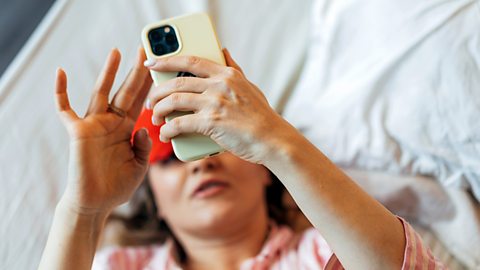
Indra has written a blog about how she has changed some aspects of her life to improve her mental health.
Read the blog and answer the questions below.
Cuando tenía doce, trece años mi salud mental era mala. Pasaba demasiado tiempo en las redes sociales mirando fotos que colgaban personas famosas.
Siempre comparaba mi ropa, mi pelo, mi cara a estas personas, y por resultado no me sentía contenta.
Ahora no miro estas aplicaciones porque no vale la pena compararse con otros y sentir triste.
En el pasado si tenía un examen, no podía descansar y me preocupaba mucho. Ahora hablo con mis amigas, mi madre o a veces con mis profesores.
- Indra used to…
| A | post too many photos on social media. |
| B | spend too long on social media. |
| C | buy clothes that she did not need. |
The answer is B.
The text says - Pasaba demasiado tiempo en las redes sociales mirando fotos que colgaban personas famosas. - I used to spend too much time on social media looking at photos posted by famous people.
- Now Indra…
| A | has stopped looking at these apps. |
| B | feels happier because she doesn’t compare herself to others. |
| C | has changed her hair and clothes so she feels happier. |
The answer is A.
The text says - Ahora no miro estas aplicaciones porque no vale la pena compararse con otros y sentir triste. - Now I don't look at these apps because it's not worth comparing yourself to others and feeling sad.
- Indra used to…
| A | not worry about exams. |
| B | always pass exams. |
| C | not be able to relax if she had an exam. |
The answer is C.
The text says - En el pasado si tenía un examen, no podía descansar y me preocupaba mucho. - In the past if I had an exam, I couldn't rest and I worried a lot.
- Now Indra…
| A | talks to people about her issues. |
| B | works harder for her exams. |
| C | rests more during exams. |
The answer is A.
The text says - Ahora hablo con mis amigas, mi madre o a veces con mis profesores. - Now I talk with my friends, my mother or sometimes with my teachers.
Click or tap on Show more to read a translation.
When I was twelve, thirteen years old my mental health was bad. I used to spend too much time on social media looking at photos posted by famous people.
I always compared my clothes, my hair, my face to these people, and as a result I didn't feel happy.
Now I don't look at these apps because it's not worth comparing yourself to others and feeling sad.
In the past if I had an exam, I couldn't rest and I worried a lot. Now I talk with my friends, my mother or sometimes with my teachers.
Vocabulary - Verbs to describe mental wellbeing
Useful verbs to describe mental health and wellbeing include:
| Spanish | English | Spanish | English |
|---|---|---|---|
| ayudar | to help | dormir, dormirse | to sleep, to fall asleep |
| comparar | to compare | llorar | to cry |
| chatear | to chat | mover(se) | to move |
| colgar | to post (online) | pasear | to go for a walk, ride |
| descansar | to rest | reír(se) | to laugh |
| disfrutar | to enjoy | relajarse | to relax |
| divertirse | to enjoy oneself | sonreír | to smile |
For example:
Si estoy triste, paseo my perro en el bosque. – If I’m sad I walk my dog in the forest.
All Foundation Tier vocabulary listed in this guide can be found on the vocabulary sheet below.
Forming negatives in Spanish

The easiest way to make a sentence negative in Spanish is to put no in front of the verb. For example:
No me gusta preocuparme. - I don’t like worrying.
No es bueno para la salud mental. - It’s not good for mental health.
No es feliz. - He’s not happy.
When answering a question, no is often repeated for emphasis.
For example:
Tienes que relajarse más, ¿no? – You have relax more, don’t you?
There are a number of negative expressions that work with no:
nada - nothing
nadie - nobody, no one
nunca - never
These negative words can be used in two different ways:
- Place no in front of the verb and the negative word after it. For example:
No hay nada en la cocina. - There’s nothing in the kitchen.
No hay nadie en la fiesta. - There’s no one at the party.
María no trabaja nunca para los exámenes. - María never works for exams.
- Place the negative word in front of the verb and drop the no. For example:
Nada va a pasar. - Nothing is going to happen.
Nadie fue a la fiesta. - Nobody went to the party.
Nunca hago ejercicio. - I never do exercise.
The position of the negative
No must go after the subject and before the verb. For example:
Mi hermano no es nervioso. - My brother is not anxious.
Los jóvenes no están contentos. - The young people are not happy.
Never separate direct or indirect object pronouns from the verb. Place the negative word in front of the pronoun.
For example:
No lo conozco. - I don’t know him.
No lo he visto. - I haven’t seen it.
Using negatives – Mini quiz
Translate the following sentences into Spanish.
Iván _____ come verduras.
Iván doesn’t eat vegetables.
Iván no come verduras.
No is the word used to make this sentence negative and it goes in front of the verb, come.
_____ hago ejercicio.
I never do exercise.
Nunca hago ejercicio.
Nunca is the negative word meaning ‘never’ and it goes in front of the noun, hago.
Tienes que ________ más, ¿___?
You have enjoy yourself more, don’t you?
Tienes que divertirse más, ¿no?
This question is formed as a sentence, using the verb divertirse, to enjoy oneself, and ends with a ‘no’ to show that it is a question.
Don’t forget the inverted question mark before no, and the question mark after no.
Find out more about using negatives in the Negative forms in Spanish guide.
Listening practice
Listen to three podcast extracts where young people discuss ways to improve mental health and complete the activity below.
Choose the three issues that are discussed.
| A | Screen time |
| B | Reducing stress |
| C | Workload at school |
| D | Exercise |
| E | Talking to friends |
| F | Sleep |
Answers:
A – screen time
D – exercise
F - sleep
Transcript and translation
Cris
En mi opinión se debería reducir el tiempo que los jóvenes pasan frente a la pantalla para mejorar la salud mental. Muchas de mis amigas se comparan con otras personas en línea y no se sienten felices.
In my opinion, the time that young people spend in front of the screen should be reduced to improve mental health. Many of my friends compare themselves to other people online and don't feel happy.
Diego
Creo que hacer el ejercicio físico regularmente es lo más importante para la salud mental. Se puede practicar deportes o simplemente salir a pasear a menudo.
I believe that doing physical exercise regularly is the most important thing for mental health. You can play sports or just go for a walk often.
Karima
Segun los expertos el sueño es esencial para la buena salud mental. Se debe dormir entre siete y ocho horas por noche y eso te ayudará el día siguiente cuando cuando podrás estudiar y trabajar bien.
According to experts, sleep is essential for good mental health. You should sleep between seven and eight hours a night and that will help you the next day when you can study and work well.
Vocabulary sheet
Click or tap on the image below for a list of useful vocabulary to use when talking about maintaining mental wellbeing.

Higher Tier – Vocabulary – Mental wellbeing
Useful nouns for describing mental wellbeing:
| Spanish | English |
|---|---|
| la alegría, la felicidad | joy, happiness |
| el comportamiento | behaviour |
| la confianza | trust, confidence |
| el daño | damage, harm |
| la mente | mind |
For example:
Se dice que la mente es tan importante que el cuerpo para estar sano. - It is said that the mind is as important as the body to be healthy.
Useful verbs for describing mental wellbeing:
| Spanish | English |
|---|---|
| andar/caminar | to walk |
| pelearse | to fight, argue |
| recuperarse | to get better, recover |
| sentirse | to feel |
All vocabulary listed in this guide can be found on the vocabulary sheet below.
Higher Tier – Grammar – The imperfect tense
The full conjugation of verbs in the imperfect is needed at Higher Tier only.
Click or tap on Show more to see the full conjugation of regular ar, er and ir verbs in the imperfect tense.
| ar verbs | er verbs | ir verbs |
|---|---|---|
| Check your connection, refresh the page and try again. - to play | Check your connection, refresh the page and try again. - to make/do | Check your connection, refresh the page and try again. - to sleep |
| Check your connection, refresh the page and try again. - I used to play | Check your connection, refresh the page and try again. - I used to do | Check your connection, refresh the page and try again. - I used to sleep |
| Check your connection, refresh the page and try again. - you (singular) used to play | Check your connection, refresh the page and try again. - you (singular) used to do | Check your connection, refresh the page and try again. - you (singular) used to sleep |
| Check your connection, refresh the page and try again. - he/she used to play | Check your connection, refresh the page and try again. - he/she used to do | Check your connection, refresh the page and try again. - he/she used to sleep |
| Check your connection, refresh the page and try again. - we used to play | Check your connection, refresh the page and try again. - we used to do | Check your connection, refresh the page and try again. - we used to sleep |
| Check your connection, refresh the page and try again. - you (plural) used to play | Check your connection, refresh the page and try again. - you (plural) used to do | Check your connection, refresh the page and try again. - you (plural) used to sleep |
| Check your connection, refresh the page and try again. - they used to play | Check your connection, refresh the page and try again. - they used to do | Check your connection, refresh the page and try again. - they used to sleep |
Higher Tier – Grammar - Negative phrases
Some useful Higher Tier phrases with no are:
| ya no - no longer, not anymore | Ana ya no come comida rápida - Ana doesn’t eat fast food anymore |
| (no) tampoco – neither | Tampoco tengo un hermano - I don’t have a brother either |
| ya no - no longer, not anymore | Ana ya no come comida rápida - Ana doesn’t eat fast food anymore |
| (no) ni … ni - neither … nor | No como ni fruta ni verduras - I eat neither fruit nor vegetables |
Find out more about using negative forms at Higher Tier in the Negative forms in Spanish guide.
Higher Tier - Vocabulary sheet
Click or tap on the image below for a list of useful Higher Tier vocabulary to use when talking about maintaining mental wellbeing.
Now you have practised the key vocabulary and grammar needed for talking about maintaining mental wellbeing, why not have a look at the Describing transport options in Spanish guide.
More on Lifestyle and wellbeing
Find out more by working through a topic
- count1 of 9

- count3 of 9