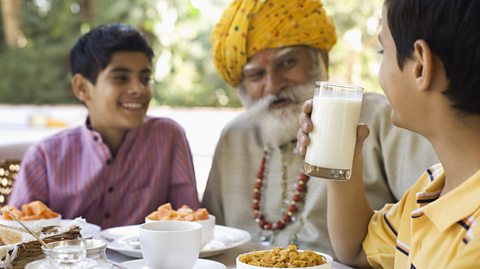
Key points about festivals in Spanish

There are many different festivals and celebrations in Spain and Spanish-speaking countries.
Use the A verb that describes an action that is happening now or that happens regularly, eg I eat breakfast. of Something that follows the usual or ‘regular’ pattern. verbs when describing festivals and celebrations.
Talking about dates is important when describing festivals and celebrations.
This guide contains two videos as well as reading and listening practice.
Video - Customs, traditions and celebrations
Watch the video of Denia talking about flamenco dancing and music in the region of Andalucía in southern Spain.
Denia describes flamenco dancing and music using impersonal verbs in the present tense
El flamenco es un tipo de baile muy especial que se originó en el sur de España, en la región de Andalucía. Es una mezcla de diferentes culturas, como la gitana, la árabe y la española.
Yo nací en Andalucía y puedo decir que el flamenco es muy importante para nosotros. Muchos de nosotros bailamos flamenco en algún momento en fiestas o con amigos. Yo tuve clases durante dos años, por ejemplo.
En el corazón del flamenco está la música. Se toca una guitarra española y se canta. El canto se llama 'cante', y expresa una gran variedad de sentimientos, como la alegría, el amor y la tristeza.
Los bailarines de flamenco son increíbles. Bailan con mucha pasión y emoción. Los movimientos son expresivos y también cuentan historias. Para el baile usan las manos, los pies y también tocan las palmas.
El flamenco es una forma de arte que se aprende y se practica durante toda la vida. Requiere mucha práctica y dedicación. Para ser un buen 'bailaor' de flamenco, debes entender la música y sentir las emociones.
En resumen, el flamenco es una hermosa tradición española que combina música, canto y baile. Es una forma apasionada de expresar emociones y contar historias.
Translation:
Flamenco is a very special type of dance that originated in the South of Spain, in the region of Andalusia. It is a mixture of Roma, Arabic and Spanish cultures.
I was born in Andalusia and I can say that flamenco is very important to us. Many of us dance flamenco at some point, at parties or with friends. I had classes for two years, for example.
At the heart of flamenco is music. A Spanish guitar is played and there is singing. The singing is called 'cante' and it expresses a wide range of feelings, such as joy, love, and sadness.
Flamenco dancers are incredible. They dance with a lot of passion and emotion. Their movements are expressive and also tell stories. They use their hands, feet and also clap their palms to dance.
Flamenco is an art form that is practised and learned throughout life. It requires practice and dedication. To be a good flamenco dancer, you must understand the music and feel the emotions.
In short, flamenco is a beautiful Spanish tradition that combines music, singing, and dancing. It's a passionate way of expressing emotions and telling stories.
Vocabulary - Celebrations and festivals
Useful nouns to describe annual celebrations include:
| Spanish | English |
|---|---|
| Check your connection, refresh the page and try again. | Christmas |
| Check your connection, refresh the page and try again. | Christmas Eve |
| Check your connection, refresh the page and try again. | New Year’s Eve |
| Check your connection, refresh the page and try again. | Spanish tomato festival |
Useful vocabulary to describe other celebrations includes:
| Spanish | English | Spanish | English |
|---|---|---|---|
| Check your connection, refresh the page and try again. | to dance | Check your connection, refresh the page and try again. | to amuse, entertain, to enjoy oneself |
| Check your connection, refresh the page and try again. | wedding | Check your connection, refresh the page and try again. | show |
| Check your connection, refresh the page and try again. | to celebrate | Check your connection, refresh the page and try again. | party, festival |
| Check your connection, refresh the page and try again. | flamenco (a dance and musical style from the south of Spain) | Check your connection, refresh the page and try again., Check your connection, refresh the page and try again. | costume(s), fancy dress |
| Check your connection, refresh the page and try again. | tradition |
Grammar - How to conjugate verbs in the present tense

All Spanish Word used to describe an action, state of being or an occurrence. end in either ar, er or ir. This form of the verb is called the infinitive. For example:
celebrar - to celebrate
comer - to eat
recibir - to receive
When using verbs you will need to be able to A verb that is not in the infinitive form but has been changed to match the subject of the verb, for example I go, he goes. them. In Spanish there is a unique verb ending for each Replaces a noun that is the subject of the verb., so the verb ending tells you who is doing the action. For this reason, you don’t always need to use subject pronouns in Spanish.
Click or tap on Show more to see how to conjugate regular ar, er and ir verbs in the present tense.
Regular ar verbs in the present tense
To conjugate regular verbs that end in ar in the infinitive, remove the ar ending from the Form of the verb that has not been conjugated. Usually translated with 'to' in English, eg to play. and add the unique ending that goes with each subject pronoun to the The part of the verb that is left once the infinitive ending (ar/er/ir) has been taken off. It can also be called a radical..
This is how to conjugate the verb celebrar (to celebrate) in Spanish.
| Subject pronoun | Stem | Ending | Conjugated verb | English |
|---|---|---|---|---|
| yo | celebr | -o | (yo) celebro | I celebrate |
| tú | celebr | -as | (tú) celebras | You (singular informal) celebrate |
| él/ella/usted | celebr | -a | (él/ella/ usted) celebra | He/she/you (singular formal) celebrates |
| nosotros/as | celebr | -amos | (nosotros/as) celebramos | We celebrate |
| vosotros/as | celebr | -áis | (vosotros/as) celebráis | You (plural informal) celebrate |
| ellos/ellas/ ustedes | celebr | -an | (ellos/ellas/ ustedes) celebran | They/you (plural formal) celebrate |
For example:
Celebran la tradición de flamenco. – They celebrate the tradition of flamenco.
Bailamos toda la noche. – We dance all night.
Regular er verbs in the present tense
To conjugate regular verbs that end in er in the infinitive, remove the er ending from the infinitive and add the unique ending that goes with each subject pronoun to the stem.
This is how to conjugate the verb comer (to eat) in Spanish:
| Subject pronoun | Stem | Ending | Conjugated verb | English |
|---|---|---|---|---|
| yo | com | -o | (yo) como | I eat |
| tú | com | -es | (tú) comes | You (singular informal) eat |
| él/ella/usted | com | -e | (él/ella/ usted) come | He/she/you (singular formal) eats |
| nosotros/as | com | -emos | (nosotros/as) comemos | We eat |
| vosotros/as | com | -éis | (vosotros/as) coméis | You (plural informal) eat |
| ellos/ellas/ustedes | com | -en | (ellos/ellas/ ustedes) comen | They/you (plural formal) eat |
For example:
Comen paella. – They eat paella.
Beben limonada. – They drink lemonade.
Regular ir verbs in the present tense
To conjugate regular verbs that end in ir in the infinitive, remove the ir ending from the infinitive and add the unique ending that goes with each subject pronoun to the stem.
This is how to conjugate the verb recibir (to receive) in Spanish:
| Subject pronoun | Stem | Ending | Conjugated verb | English |
|---|---|---|---|---|
| yo | recib | -o | (yo) recibo | I receive |
| tú | recib | -es | (tú) recibes | You (singular informal) receive |
| él/ella/usted | recib | -e | (él/ella/usted) recibe | He/she/you (singular formal) receives |
| nosotros/as | recib | -imos | (nosotros/as) recibimos | We receive |
| vosotros/as | recib | -ís | (vosotros/as) recibís | You (plural informal) receive |
| ellos/ellas/ustedes | recib | -en | (ellos/ellas/ustedes) reciben | They/you (plural formal) receive |
For example:
Reciben muchos regalos. – They receive lots of presents.
Comparto mi comida. – I share my food.
Mini quiz

Complete the following sentences:
______ durante la fiesta. (bailar)
We dance during the festival.
Bailamos
Bailar (to dance) is a regular ar verb. Take the stem bail and add amos, the ending for the ‘we’ form of the verb.
_______ limonada y agua. (beber)
They drink lemonade and water.
Beben
Beber (to drink) is a regular er verb. Take the stem beb and add en, the ending for the ‘they’ form of the verb.
Find out more about using the present tense with the Present tense of regular verbs in Spanish guide.
Reading practice
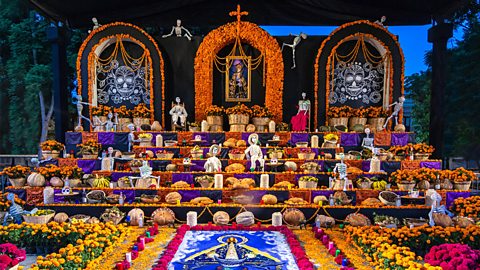
Read the following descriptions of different festivals then match the festival with the correct statement below.
El Día de los Muertos es una de las fiestas más conocidas de la cultura mexicana. La mayoría de la celebración tiene lugar durante dos días: el uno de noviembre es dedicado a los niños y el dos de noviembre a los adultos. Hay bailes y desfiles, comida tradicional y espectáculos mexicanos.
El Carnaval de Tenerife se considera el segundo más famoso del mundo después del de Río de Janeiro. Se encuentran disfraces, desfiles y música latina. Esta fiesta se celebra tres semanas después de Semana Santa y cada año se elige un tema diferente.
Sevilla es una ciudad muy especial, sobre todo durante la Feria de Abril. Sevilla se viste de color durante la feria para representar el estilo alegre de su gente. Tras una semana de fiesta y de baile flamenco, la Feria termina con un gran espectáculo de fuegos artificiales.
El burro tiene su día de festejo - El festival del burro - en la localidad de San Antero durante las celebraciones de Semana Santa. Durante el desfile, es todo un espectáculo ver a los burros disfrazados, muchas veces como personalidades famosas, compitiendo para ser el rey y la reina del año.
Extra vocabulary:
burro = donkey
concursar = to compete
Which festivals described above are these statements referring to?
This week-long festival is colourful and lively and ends with a fireworks display.
This festival represents the culture of its country and the main celebrations last for two days.
This festival sees processions and parades with animals dressed up as famous people.
This festival has a different theme every year and is considered one of the best festivals in the world.
Feria de Abril
El Día de los Muertos
El festival del burro
El Carnaval de Tenerife
Click or tap on Show more to read the translations of the festival descriptions.
El Día de los Muertos - the Day of the Dead - is one of the best-known festivals in Mexican culture. Most of the celebration takes place over two days: the first of November is dedicated to children and the second of November to adults. There are dances and parades, traditional food and Mexican shows.
El Carnaval de Tenerife is considered the second most famous in the world after Rio de Janeiro. There are costumes, parades and Latin music. This festival is celebrated three weeks after Easter and each year a different theme is chosen.
Seville is a very special city, especially during the Feria de Abril. Seville is dressed in colour during the fair to represent the cheerful style of its people. After a week of partying and flamenco dancing, the Feria ends with a big fireworks display.
The donkey has its day of celebration - El festival del burro - in the town of San Antero during the Holy Week celebrations. During the parade, it is quite a spectacle to see the donkeys dressed up, often as famous personalities, competing to be the king and queen of the year.
Vocabulary - Describing customs and celebrations
Useful vocabulary to describe festivals includes:
| Spanish | English | Spanish | English |
|---|---|---|---|
| Check your connection, refresh the page and try again. | lively | Check your connection, refresh the page and try again. | culture |
| Check your connection, refresh the page and try again. | (musical) band | Check your connection, refresh the page and try again. | gift |
| Check your connection, refresh the page and try again. | dance | Check your connection, refresh the page and try again. | grape |
| Check your connection, refresh the page and try again. | song | Check your connection, refresh the page and try again. | dress |
| Check your connection, refresh the page and try again. | kitchen, cooking |
Useful verbs include:
| Spanish | English |
|---|---|
| Check your connection, refresh the page and try again. | to sing |
| Check your connection, refresh the page and try again. | to share |
| Check your connection, refresh the page and try again. | to invite |
| Check your connection, refresh the page and try again. / Check your connection, refresh the page and try again. | to dress, get dressed |

Did you know?
The las Fallas de Valencia is a festival celebrated in the Spanish city of Valencia every year. It involves displays of large wooden and papier maché scupltures as well as parades and fireworks.
El Día de los Muertos, the Day of the Dead, is celebrated throughout Mexico, typically on 1 and 2 November each year.
Los Sanfermines is a festival in the Spanish town of Pamplona and involves the running of the bulls.
All Foundation Tier vocabulary listed in this guide can be found on the vocabulary sheet below.
Grammar - How to talk about the date

When talking about festivals and celebrations, it is useful to say when they take place.
To say the date in Spanish, use el (the), then the number, followed by de (of) and the month. For example:
el siete de julio - 7 July
el veinticinco de mayo - 25 May
There are two ways of talking about the first day of the month. The word uno is more common in Spain. For example:
uno de abril - 1 April
The word primero is more common in Latin America. For example:
primero de abril - 1 April
When saying or writing the date in Spanish, use numbers such as 1, 2, 3 and 4, without 'st', 'nd', 'rd' or 'th' at the end. For example:
2 enero
4 junio
8 agosto
When talking including the day of the week in the date, do not use el. For example:
Hoy es lunes, trece de mayo. - Today is Monday 13 May.
When you do not include the day of the week, you need to use el. For example:
Hoy es el treinta de mayo. - Today is 30 May.

Remember
When you do not include the day of the week, you need to use el. For example:
Hoy es el treinta de mayo. - Today is 30 May.
Months of the year
The months of the year do not start with capital letters in Spanish. For example:
febrero - February
julio - July
noviembre - November
Click or tap on Show more to revise the months of the year in Spanish.
| Spanish | English |
|---|---|
| Check your connection, refresh the page and try again. | January |
| Check your connection, refresh the page and try again. | February |
| Check your connection, refresh the page and try again. | March |
| Check your connection, refresh the page and try again. | April |
| Check your connection, refresh the page and try again. | May |
| Check your connection, refresh the page and try again. | June |
| Check your connection, refresh the page and try again. | July |
| Check your connection, refresh the page and try again. | August |
| Check your connection, refresh the page and try again. | September |
| Check your connection, refresh the page and try again. | October |
| Check your connection, refresh the page and try again. | November |
| Check your connection, refresh the page and try again. | December |
The date in Spanish - Mini quiz
Translate the following date into Spanish:
6 January
El seis de enero.
You need el at the start of this phrase.
The number seis needs to be followed by de.
Translate the following sentence into Spanish:
Today is Saturday 22 August.
Hoy es sábado veintidós de agosto.
When including the day of the week in the date, do not use el.
Find out more about using the date with the Dates in Spanish guide.
Listening practice
Listen to Mohamed talking about his recent experiences at a music festival then answer the questions.
Were Mohamed's experiences of the following features of the music festival positive (P), negative (N) or both positive and negative (P+N)?
Camping
Showers
Food
Music
Answer
- Camping - N (Negative)
Mohammed says tuvimos que acampar y no me gustó nada - we had to camp and I didn't like it at all.
- Showers - N (Negative)
He says los baños y las duchas estaban muy sucios - the toilets and showers were very dirty.
- Food - P and N (Positive and negative)
He says that the food was variada y sabrosa pero muy cara al mismo tiempo - varied and tasty but very expensive at the same time.
He also says había colas muy largas - there were very long queues.
- Music - P (Positive)
Mohammed says me encantó la música en vivo y lo pasé muy bien - I loved the live music and I had a really good time.
Click or tap on Show more to read the transcript and translation of what Mohammed says.
Transcript
Acabo de pasar tres días con mis amigos en un festival de música. Tuvimos que acampar y no me gustó nada porque los baños y las duchas estaban muy sucios. Había un espacio grande con muchas tiendas de comida. La comida que vendieron fue variada y sabrosa pero muy cara al mismo tiempo. Además, siempre había colas muy largas. Sin embargo, me encantó la música en vivo y lo pasé muy bien.
Translation
I have just spent three days with my friends at a music festival. We had to camp and I didn't like it at all because the toilets and showers were very dirty. There was a big space with lots of food shops. The food they sold was varied and tasty but very expensive at the same time. Also, there were always really long queues. However, I loved the live music and I had a very good time.
Video - Festivals in Spain
Spain has many different festivals including a tomato festival as well as colourful festivals in Valencia and Sevilla.
Watch the video to explore the advantages and disadvantages of these Spanish festivals and celebrations.
Laura talks about her favourite festivals
Hola. Soy Laura.
Me gustan mucho las fiestas tradicionales. Son importantes porque forman parte de nuestra historia y cultura. ¿Pero cuál es la fiesta tradicional perfecta para ti?
Aquí van cinco fiestas españolas.
Número uno: La Tomatina.
Fui a la Tomatina el año pasado. Se celebra en el pueblo de Buñol cerca de Valencia. Es muy divertida. Es una fiesta muy importante porque es única. Y te permite tirarles tomates a tus amigos. ¡Qué guay! Pero hay mucha gente. Demasiada gente. Puede ser muy claustrofóbica.
Número dos: Semana Santa.
Esta fiesta se celebra por toda España en el mes de abril. Es una fiesta religiosa. Pero no tienes que participar si no quieres. Creo que Málaga es el mejor sitio donde celebrarla porque las procesiones son increíbles. La última vez que fui, saqué miles de fotos.
Número tres: Las Fallas.
Esta fiesta es una fiesta tradicional de Valencia. Es uno espectáculo. Pero hay muchísimo ruido. Y es demasiado para mí y no tengo ganas de volver.
Número cuatro: la Feria de abril de Sevilla.
A pesar de su nombre, a veces se celebra en mayo. Aquí puedes cantar,comer, bailar… ¡toda la ciudad adopta un ambiente de fiesta! Se bailan y se cantan sevillanas - un estilo tradicional de la ciudad con unos vestidos super bonitos. Fui la primavera pasada y canté muchísimo. Y comí lo típico de la Feria – el ‘pescaíto frito’.
Número cinco: Nochevieja.
El treinta y uno de diciembre. Víspera de año nuevo. Yo vivo en Madrid, y creo que es el mejor sitio donde celebrarla. Puedes ver fuegos artificiales, quedar con tu familia y amigos. Tú decides. En España tienes que comer doce uvas con las campanadas.
Las fiestas tradicionales te ayudan a entender la cultura de España y te dan la oportunidad de ver sus costumbres diferentes.
Has decidido cuál es tu fiesta tradicional favorita? Para mí es La Tomatina porque es tan divertida pero a la vez extraña. ¡Qué locura.
Vale. ¡Tal vez nos veamos allí! Adiós.
Translation:
Hello. I'm Laura.
I really like traditional festivals. They are important because they are part of our history and culture. But which is the best traditional festival for you?
Here are five Spanish festivals
Number one: La Tomatina (The tomato festival)
I went to La Tomatina last year. It is celebrated in the village of Buñol near Valencia. It is really fun. It is a really important festival because it is unique. And it allows you to throw tomatoes at your friends. A lot of fun! But there are a lot of people. Too many people. It can be claustrophobic.
Number two: Semana Santa. (Holy Week)
This fiesta is celebrated throughout Spain in the month of April. It is a religious festival. But you do not have to take part if you don't want. I think Malaga is the best place to celebrate it as the processions are incredible. The last time I went I took thousands of photos.
Number three: Las Fallas.
This festival is a traditional festival in Valencia. It is a spectacle. But there is a lot of noise. And it is too much for me and I do not want to go back.
Number four: la Feria de abril de Sevilla. (The Seville April Fair)
Despite its name, it is sometimes celebrated in May. Here you can sing, eat, dance… The whole city adopts a festival atmosphere! People dance and sing sevillanas - a traditional style of the city with really beautiful dresses. I went last spring and sang a lot. And I ate the typical fair food - fried fish.
Number five: New Year's Eve.
The 31 December. The eve of the new year. I live in Madrid and I think it is the best place to celebrate it. You can watch fireworks, stay in with family and friends. You decide. In Spain you have to eat 12 grapes when the bells sound.
Traditional festivals help you to understand Spanish culture and give you the opportunity to see its different customs.
Have you decided which is your favourite traditional festival. For me it is La Tomatina because it is such fun but at the same time strange.
OK. Maybe we'll see each other there? Bye!
Vocabulary sheet
Click or tap on the image below to download a list of useful vocabulary to use when describing festivals, customs and celebrations around the world in Spanish.

Higher Tier - Vocabulary - Talking about festivals and celebrations
Useful Higher Tier vocabulary includes:
| Spanish | English |
|---|---|
| Check your connection, refresh the page and try again. | joy, happiness |
| Check your connection, refresh the page and try again. | to attend |
| Check your connection, refresh the page and try again. | custom, tradition, habit |
| Check your connection, refresh the page and try again. | procession, parade |
| Check your connection, refresh the page and try again. | suit, costume |
All vocabulary listed in this guide can be found on the vocabulary sheet below.
Higher Tier - Vocabulary sheet
Click or tap on the image below to download a list of Higher Tier useful vocabulary to use when talking about festivals, customs and celebrations
Now you have revised the important vocabulary and key grammar points for describing festivals, customs and celebrations why not have a look at the Talking about transport options guide?
Careers advice and tips from BBC Bitesize
Future careers, further studies and the world of work - we're here to help with advice from experts and from young people who've found their path.

More on Lifestyle and wellbeing
Find out more by working through a topic
- count3 of 9
- count5 of 9

- count6 of 9