Key points
- Time has various units of A measurement is the number assigned to an attribute of an object or event that allows for a comparison between different objects and events., eg seconds, minutes, hours or days.
- Knowing how to measure time is useful as it helps you to work out when your favourite TV show is on, how long to bake something in the oven for, or how to read a timetable to see which bus or train is the fastest to travel between two places.
- Clocks or stopwatches can be used to measure the amount of time something lasts, for example how long it takes an athlete to complete a race in an event or training.
- Time is measured using either the 12-hour clock or the 24-hour clock.
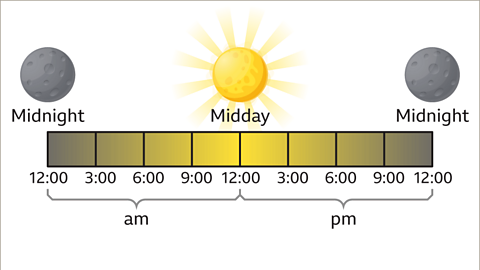
- The first 12 hours of the day, from midnight to midday are called The first 12 hours of the day - from midnight to midday - are called am. am is short for ante meridiem, which means 'before midday'. .
- The next 12 hours, from midday back to midnight, are called The second 12 hours of the day - from midday to midnight - are called pm. pm is short for post meridiem, meaning 'after midday'..
- A 24-hour clock doesn’t require am or pm and instead every hour is unique from 00:00 (midnight) through to 23:59
- Each time in am or pm will have a 24-hour clock equivalent, for example 11:59 pm is the same as 23:59 on a 24-hour clock.
How to measure in different units of time
Time can be measured using different units:
- seconds
- minutes
- hours
- days
- weeks
- years
Examples
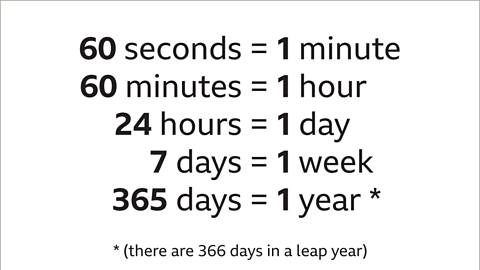
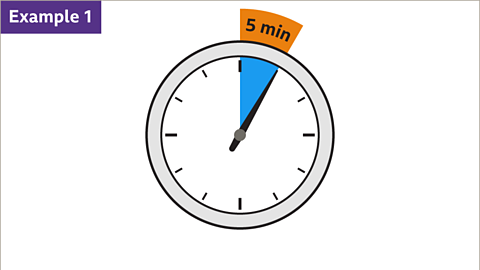
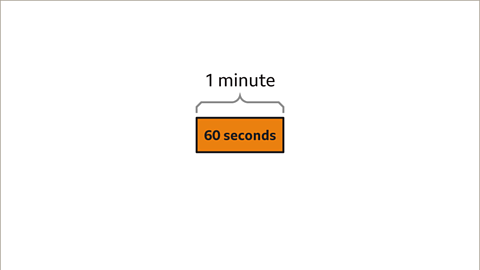
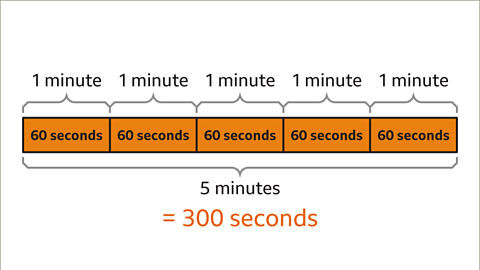
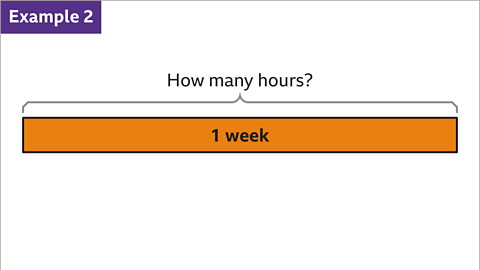
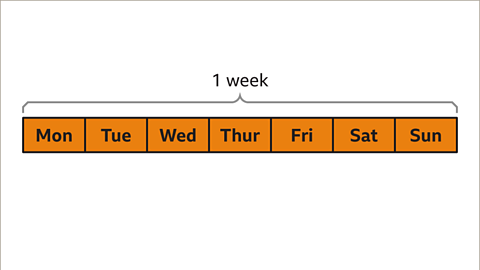
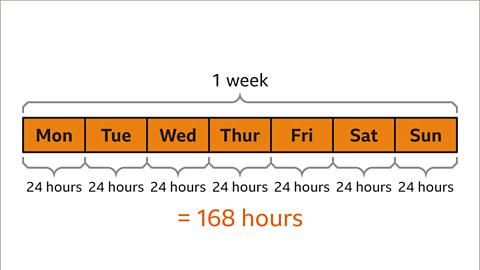
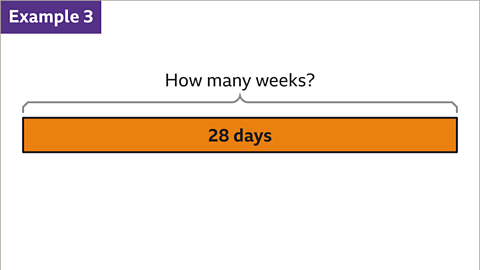
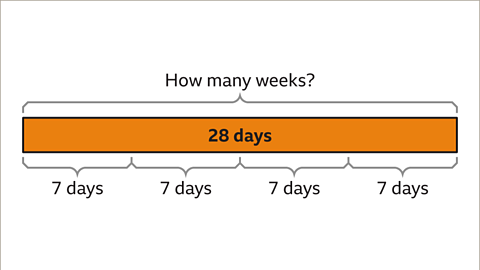
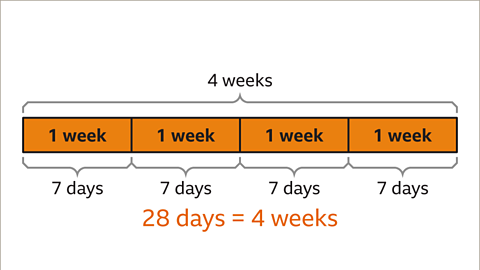
Image caption, Time is commonly measured in different units. Different conversions between one unit and another are also used. The choice of units used will depend on the timeframe being measured and what feels logical. For example, the record at a running club to run a 5 km course could be 16 minutes. If this time was written as 960 seconds instead, it would be more difficult to grasp quickly what that timeframe means.
1 of 10
Question
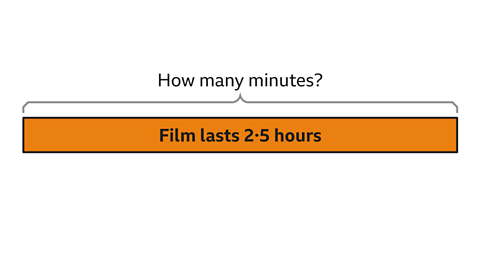
A film lasts for 2.5 hours.
How long is this in minutes?
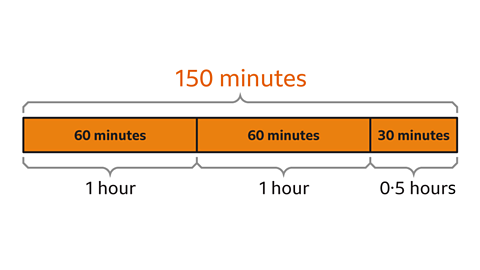
The film lasts for 150 minutes.
There are 60 minutes in 1 hour.
There are 30 minutes in ½ (or 0.5) hours.
2.5 x 60 = 150
How to use 12-hour and 24-hour clock notation
Time is measured using either the 12-hour clock or the 24-hour clock.The 12-hour clock notation uses The first 12 hours of the day - from midnight to midday - are called am. am is short for ante meridiem, which means 'before midday'. and The second 12 hours of the day - from midday to midnight - are called pm. pm is short for post meridiem, meaning 'after midday'. to indicate morning and afternoon.
- am is the time from 12 midnight and before 12 noon (12.00 pm is midday/noon).
- pm is the time from 12 midday and before 12 midnight (12.00 am is midnight).
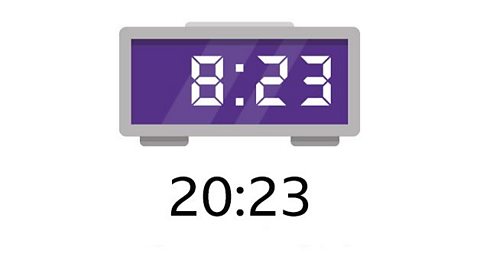
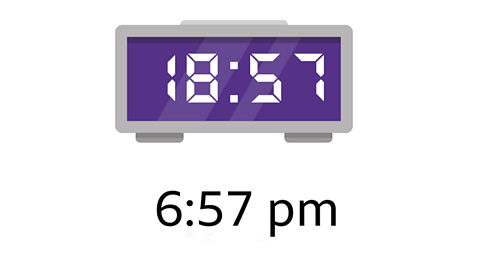
The 24-hour clock notation is the time shown as how many hours and minutes since midnight, eg 04:30 is 4 hours and 30 minutes past midnight (or 4.30 am).
- The 24-hour clock does not require the use of am or pm and it helps to avoid confusion (ie 07.00 is different to 19.00).
- There are a number of acceptable ways of recording times using 24-hour clock notation:
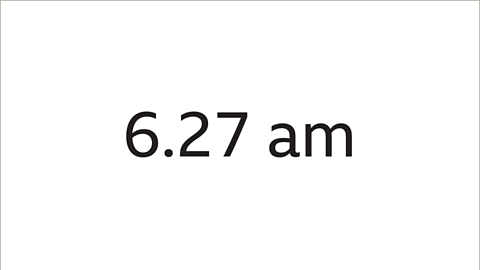
- 6.27 am could be written just using digits 0627
- Alternatively a separator can be used between the hours and minutes, such as 06:27 (with a colon) or 06.27 (with a full stop).
- Afternoon is indicated by a number bigger than 12
- Public transport times often show 24-hour clock notation.
Examples
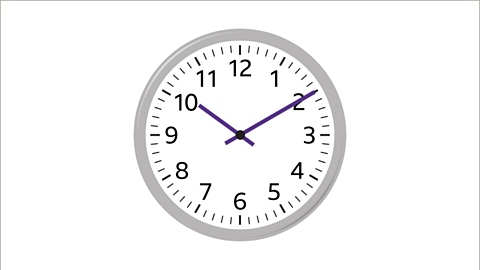
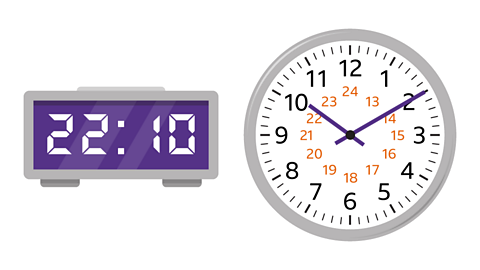
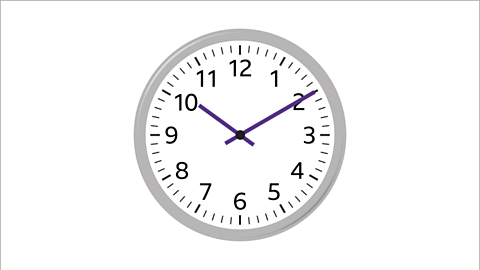
Image caption, Most clock faces show the digits from 1 to 12 around the perimeter . This clock reads as ‘ten past ten’.

1 of 7
Question
What is the time using 12-hour clock notation?
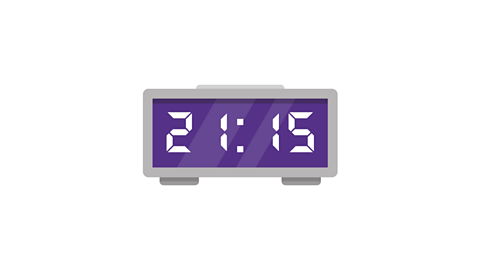
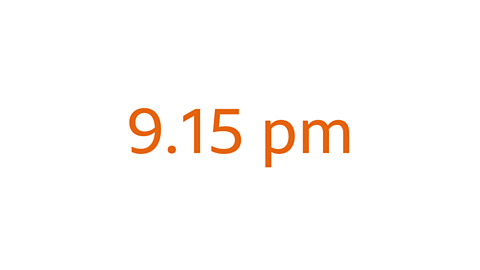
Using 12-hour clock notation, the time is 9.15 pm.
21:15 is between noon and midnight (indicated by the hours being greater than 12).
To convert this to 12-hour clock notation we subtract 12 hours, 21 – 12 = 9
21:15 is written as 9.15 pm.
How to read timetables
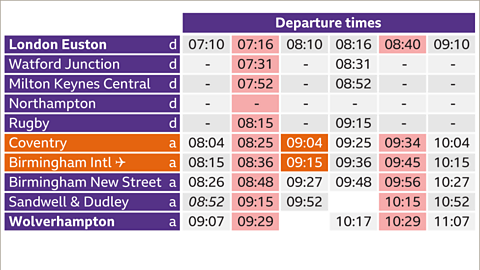
Public transport timetables indicate the frequency and duration of a specific journey. Bus, train, tram and underground transport systems use timetables like these to help customers choose the correct service.
- Timetables are usually written using 24-hour clock notation.
- The times are often recorded using four numbers without the : or . separator between the hours and minutes.
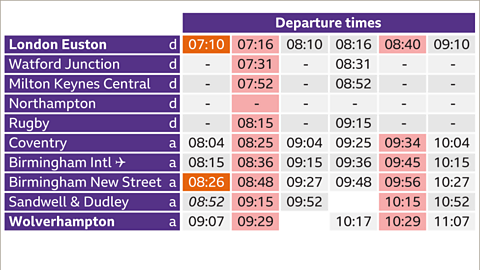
- A – symbol is used to indicate when the service does not stop at that particular location.
Examples
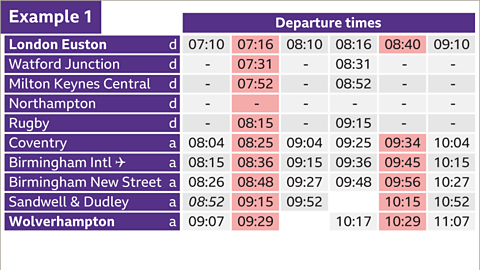
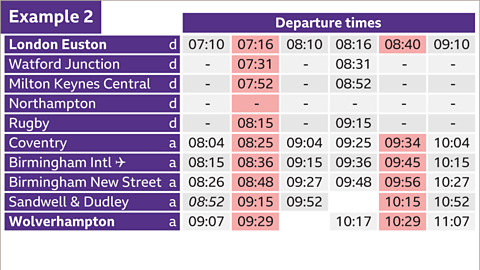
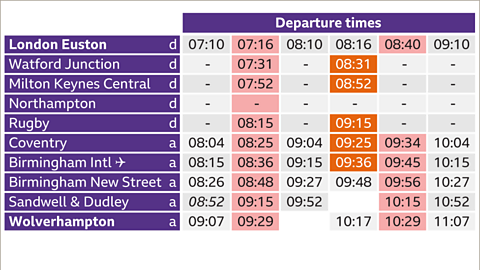
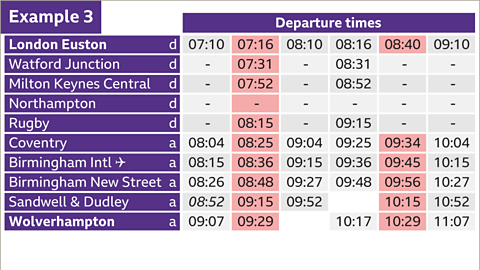
Image caption, The timetable shows the times of a train from London to Wolverhampton. How many stations does the 08:10 train stop at before reaching Birmingham New Street?
1 of 6
Question
A customer arrives at Randalstown at 1 pm and takes the first available service to Ballycastle.
What time are they due to arrive in Ballycastle?
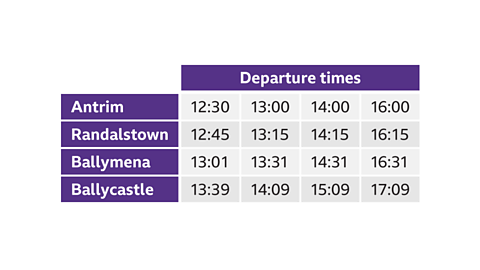
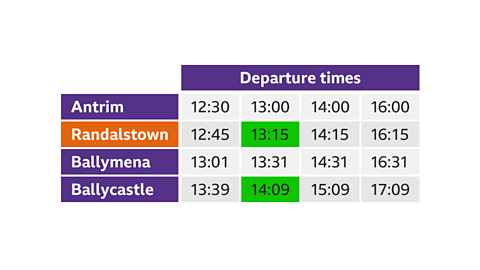
The customer is due to arrive at 14:09
1 pm is 13:00 using 24-hour clock notation (1 hour after 12.00).
The next service from Randalstown would leave at 13:15
This arrives in Ballycastle at 14:09
Practise time measurements and reading time
Practise using time measurements and reading and understanding time with this quiz. You may need a pen and paper to help you with your answers.
Quiz
Play Sudoku with BBC Bitesize!
Every weekday we release brand new easy, medium and hard Sudoku puzzles. Perfect for testing your skill with numbers and logic.

More on Measurement
Find out more by working through a topic
- count2 of 4
- count3 of 4