Key points
A measure of the size of any plane surface or 2D shape. Area is measured in square units, for example, square centimetres or square metres: cm² or m². and The amount of space occupied by a 3D shape, measured in cubic units, such as cm³, mm³ and m³. May also be referred to as capacity. are usually measured in metric units. An area can be measured in centimetres squared (cm²) or metres squared (m²). Volume is often measured in centimetres cubed (cm³) or metres cubed (m³).
When comparing or combining an area or volume it is important to measure the objects using the same units. Without converting the areas into the same unit, it might be difficult to tell, for example, whether 400cm² is bigger (or smaller) than 4m².
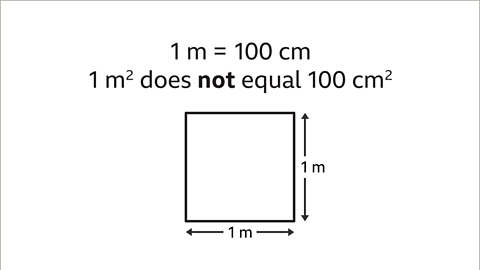
A common An opinion or view that is wrong based on incorrect thinking or understanding. could be when someone thinks that the conversion between two different lengths would be the same conversion between two different areas. For example, 1 m is the same as 100 cm but 1 m² is not the same as 100 cm².
Converting units for area
Objects can be measured in different units, depending on their size. It is important to know the conversions between metric units.
The method for converting between units for A measure of the size of any plane surface or 2D shape. Area is measured in square units, for example, square centimetres or square metres: cm² or m². works in a similar way to converting between units of length. However, it is important to remember that an area has two The length, width, height or depth of an object..
When you are converting one type of unit to another you need to know how many smaller units are needed to make one larger unit.
Examples
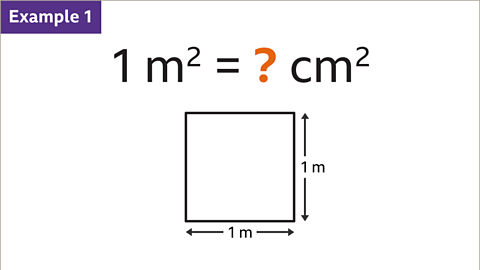
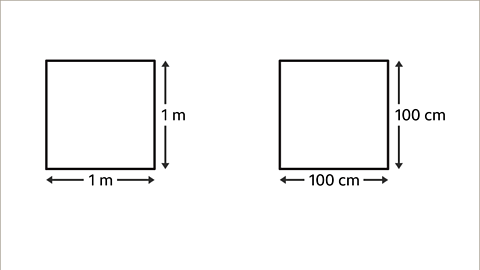
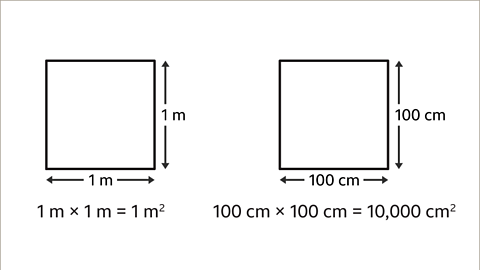
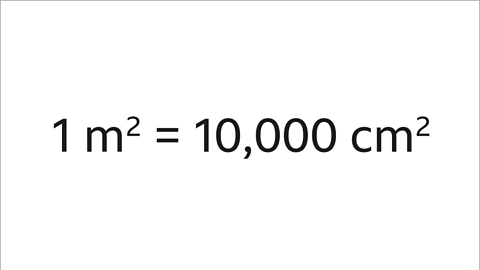
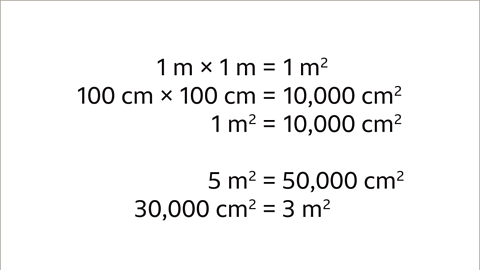
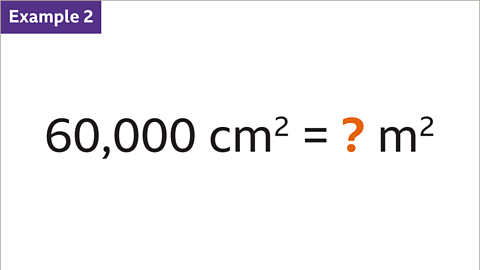
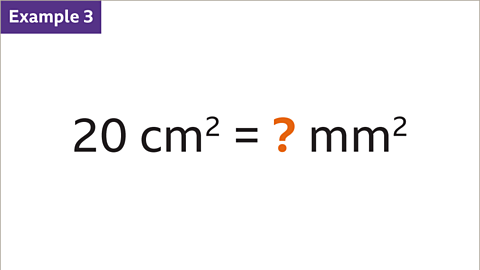
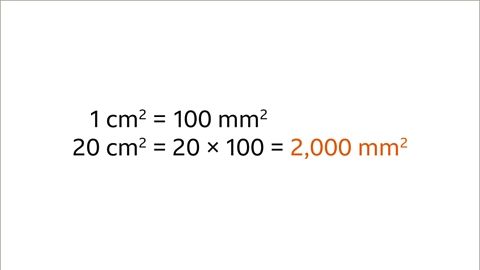
Image caption, Work out how many centimetres squared (cm²) would be needed to cover an area of 1 metre squared (1 m²)

1 of 10
Question
What is the area of a 3 m by 2 m rectangle in square centimetres?
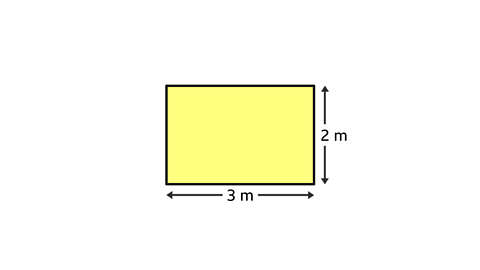
The area of the rectangle in square metres is 6 m².
Convert 6 m² into cm².
1 m = 100 cm
1 m² = 100 cm x 100 cm = 10,000 cm²
The conversion factor between m² and cm² is 10,000
The area of the rectangle in square centimetres is 6 × 10000 = 60,000 cm².
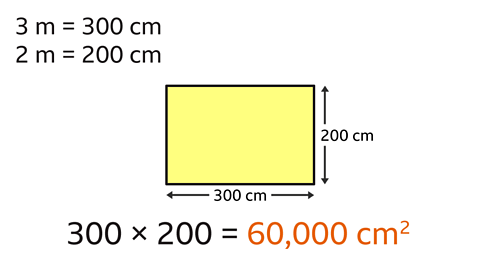
Or the length and width of the rectangle could be converted to cm first.
3 m = 300 cm
2 m = 200 cm
300 cm × 200 cm = 60,000 cm²
Converting units for volume
Objects can be measured in different units, depending on their size. It is important to know the conversions between metric units.
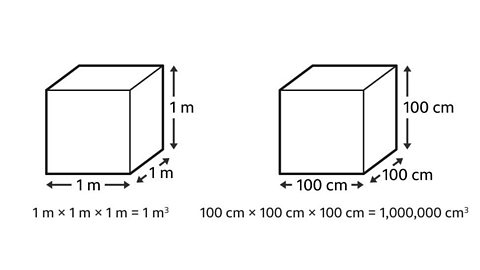
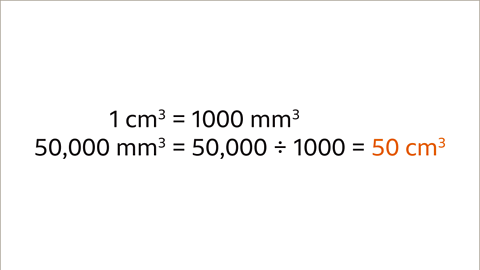
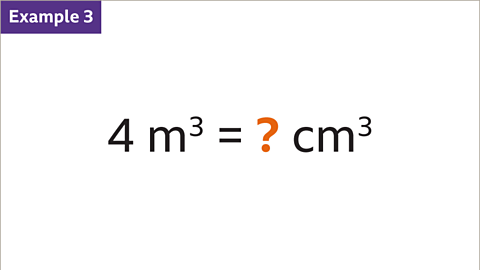
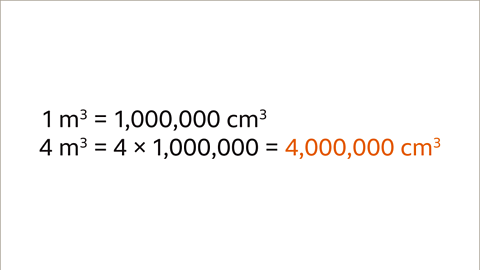
The method for converting between units for The amount of space occupied by a 3D shape, measured in cubic units, such as cm³, mm³ and m³. May also be referred to as capacity. works in a similar way to converting between units of length, however it is important to remember that a volume has three The length, width, height or depth of an object..
When you are converting one type of unit to another you need to know how many smaller units are needed to make 1 larger unit.
Examples
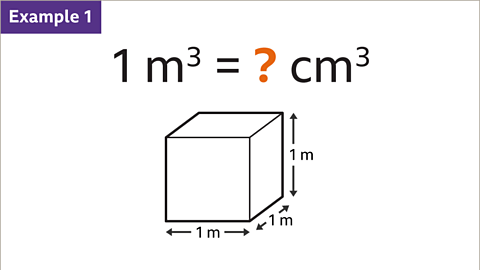
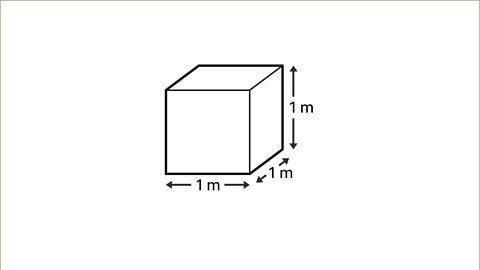
Image caption, Work out how many centimetres cubes would be needed to equal a volume of 1 metre cubed.
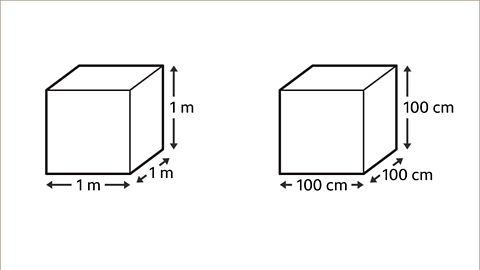

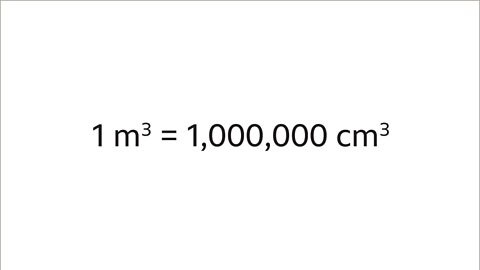
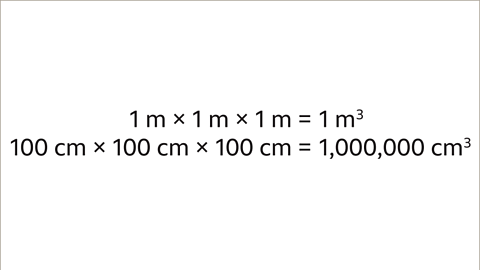
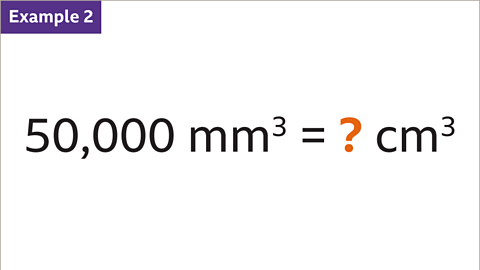
1 of 10
Question
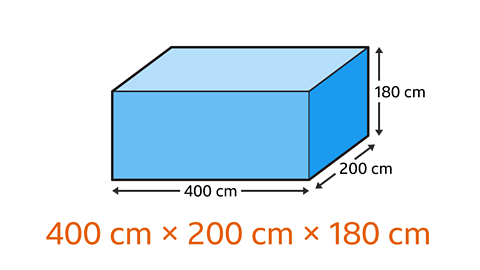
What would the dimensions of the cuboid be in centimetres?
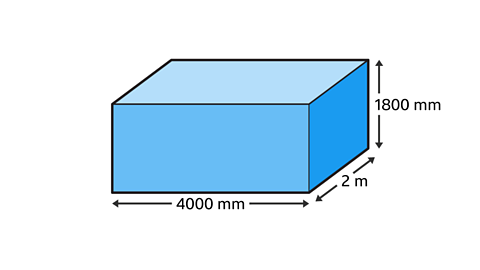
The dimensions of the cuboid in centimetres are 400 cm x 200 cm x 180 cm.
1 m = 100 cm
Length (4000 mm ÷ 10) = 400 cm
Width (2 m x 100) = 200 cm
Height (1800 mm ÷ 10) 180 cm
Practise working out how to convert metric units for area and volume
Practise working out how to convert metric units for area and volume with this quiz. You may need a pen and paper to help you with your answers.
Quiz
Play Sudoku with BBC Bitesize!
Every weekday we release brand new easy, medium and hard Sudoku puzzles. Perfect for testing your skill with numbers and logic.
More on Measurement
Find out more by working through a topic
- count3 of 4
- count4 of 4