What is light and where does it come from?
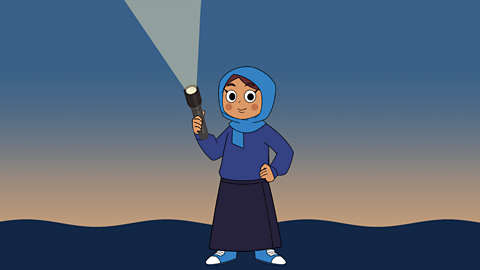
Light is a type of energy which comes from a light source (something which produces light energy).
We need light for our eyes in order to see, if they are able.
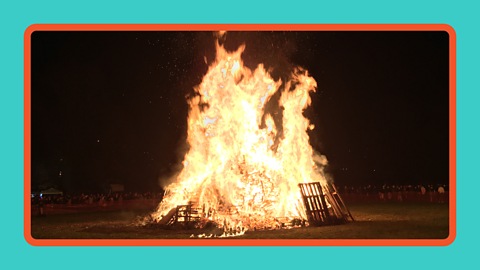
Light sources can be natural such as the Sun, which is our main source of natural light, or from things burning.
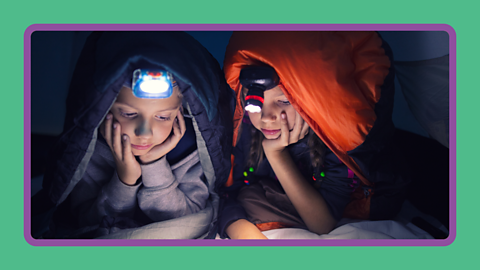
We also get light from man-made sources such as ceiling lights, lamps, torches, candles and even electronic devices like phones and televisions.
Light always travels in straight lines and it is the fastest moving thing in the universe.
Darkness is the absence of light. Unlike light, which is created by light sources, you can't create darkness. To make somewhere dark, you have to stop the light from coming in.
Watch: What is light?
Fran: We're going to learn about light.
Light is around us everywhere and there are lots of sources of light: lamps, streetlights, computers, traffic lights and candles.
Now, light sources are objects that emit – so give out – light.
And when they light up, we're able to see them because our eyes can detect their light.
These light sources also help us to see other things.
So, if I shine my torch over here, then we can see the tennis ball.
And that's because the light from the luminous object in this case the torch it reflects off the object – the ball – and into our eyes.
If we take away the light, then we can't see the ball anymore.
One of the biggest, most powerful sources of light is the Sun.
And the Sun is so powerful that it lights up the whole planet.
Now, we need light to see colours and the things around us.
But the light from the Sun also contains invisible ultraviolet or UV rays and these can damage our eyes.
But don't you worry, because there are things that you can do to protect yourself.
You can wear sunglasses that have got UV protection in them - cool, hey?
You can also wear a hat to shield your eyes.
But you must never look directly at the Sun, even on a cloudy day and even when wearing your UV sunglasses.
Now I think it's about time we catch up with one of my investigators, to see what they've found out about light.
Child: Today I'm looking for all the light sources around my house.
Come on, let's go see what we've got.
Lots of overhead lights, these help us to see when it's dark outside.
The light from my computer screen helps me see my game.
This lamp helps me see my homework.
We have torches, which we use if the light goes out to find things and candles!
And of course there's the Sun.
Well, sometimes.
Fran: So, what have we learned about light?
Well light is what helps us see.
When it's not there we have darkness.
And there are lots of different sources of light.
Watch: Seymour Science
Video transcript for ‘Light’
Seymour: Hello! Seymour Science here… today’s episode is all about where light comes from… with my expert friend, Albert!
Albert: Hi Seymour! Pleasure to be here! Light is what helps us see things. It can come from different places, like the Sun, or fire, or from electricity in lamps and torches. Light is all around us, like the sunlight in this kitchen…So what happens if we take all that away?
Seymour: We get darkness!
Albert: Darkness is when there is no light. It makes it very hard to see! So let’s bring the light back…Light can travel through air, and water, and even some solid objects…
Seymour: like this glass of water!
Albert: We call these objects transparent. But some objects block light…
Seymour: like this wooden spoon… or this bowl of cereal.
Albert: We call these objects opaque. If light can’t go through an object, it creates a shadow! But sometimes you get special objects that light bounces off…
Seymour: like this shiny metal spoon.
Albert: This is called a reflection! So now we know that light can come from different sources, and that some objects are transparent, some are opaque and cast a shadow, and some objects reflect light!
Mum: Seymour, did you eat all of the cereal!?
Seymour: Uh oh, got to go!
Fascinating facts
Light travels incredibly fast. It can travel nearly 300,000 km in just one second!
Even though light travels in a straight line, it is made up of light waves. Different colours of light have different wavelengths, with red having the longest wavelength and violet the shortest.
Plants can turn light into food, we call this process photosynthesis.
Telescopes and binoculars use lenses to help us see things that are far away by making them seem closer.
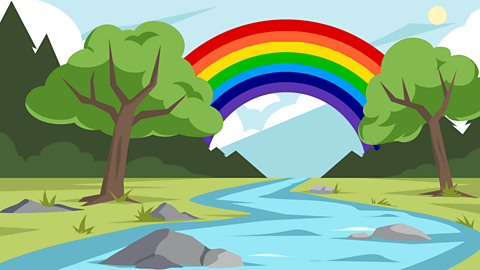
You can make a rainbow without it needing to rain. There is a piece of scientific apparatus called a prism which can show us all the colours that are found in white light.
The moon is not a light source. We only see the moon because it reflects the the light from the sun.
Some animals, like bees, birds and some fish, can see a type of light with a short wavelength called ultraviolet light that humans can't see.
Light sources
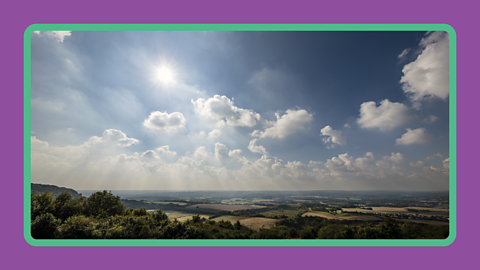
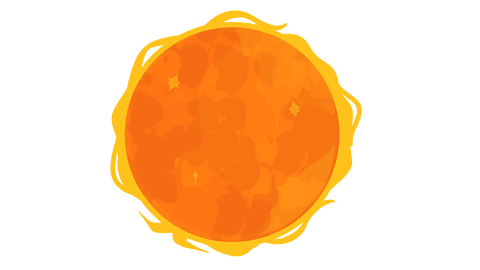
Image caption, The Sun
The Sun is a powerful light source. Even though it is far away, you should never look directly at the Sun as it can damage your eyes.
1 of 4
Did you know?
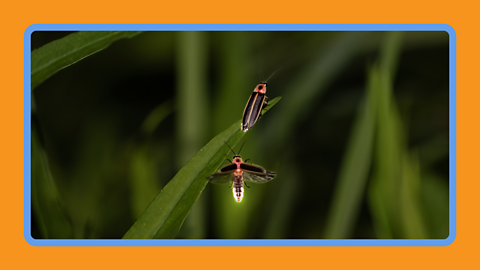
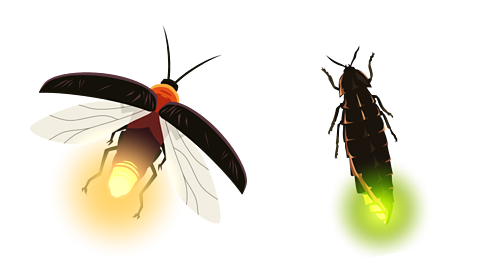
Some animals use a chemical process called bioluminescence to create their own light such as fireflies and glow-worms.
Despite their name, glow-worms are a type of insect. They can be found in the UK but are very rare.
Female glow-worms use a chemical reaction to generate light which they use to attract males.
Many species of fish, jellyfish, crustaceans and squids, as well as fungi and bacteria, are able to generate light too.
How can we see light?
Daylight from the Sun might look like it's white but light is made up of a rainbow of colours, we call the colour spectrum.
We can see light as it reflects off objects and enters our eye.
Special cells in our eyes called photoreceptors receive the light and convert it into electrical signals that travel through a nerve to the brain.
The brain interprets these signals into images of what we can see.
Important words
Chemical reaction – The way in which two or more chemicals interact to create a different substance.
Colour spectrum – The range of different colours that can be seen when white light is split up. A rainbow shows the colours of the spectrum.
Darkness – The absence of light.
Energy – Forces that power things in the universe.
Light – Beams that can be seen by the human eye. Light travels in straight lines and will keep going until it is blocked by a solid object.
Light source – A light source is the place or object where light comes from.
Man-made – A light source that is made by a human, like a torch, a TV screen or a lamp.
Natural – A light source that occurs in nature, like bioluminescent animals, lightning, or the Sun.
Photosynthesis - A process plants use to create food using sunlight.
Activities
Activity 1 – Fill in the gaps
Activity 2 – Quiz
Activity 3 – Light around you
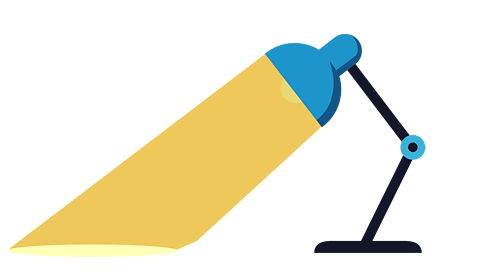
Have a look around wherever you are right now.
- How many sources of light can you see?
- Draw a source of light that you can see.
- Try to explain how this source gives off light.
- Does it use electricity? Or is it a natural light source, like the Sun?
- How many light sources are being used in your house right now?
- Could any of them be turned off to save energy?
Activity 4 – Natural or man-made light?
New game! Horrible Science: Stinky Space. game
Join Pipette on her epic mission and learn some revolting facts about space along the way.
More on Light
Find out more by working through a topic
- count2 of 5
- count3 of 5
- count4 of 5
- count5 of 5