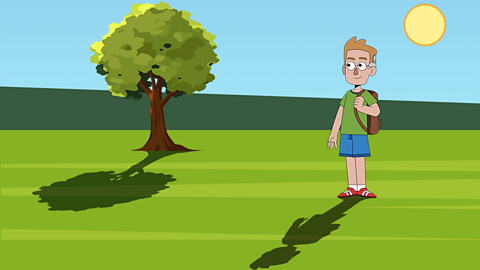
Light and objects
Light travels in straight lines.
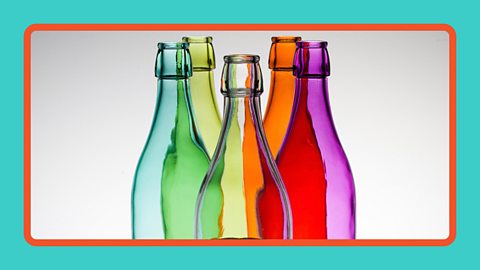
If an object is transparent, it means you can see through the object clearly as light passes through it.
There are objects that let some light through, but not enough to allow us to see through them clearly. We call these translucent or semi-transparent.
Objects that let no light through are called opaque.
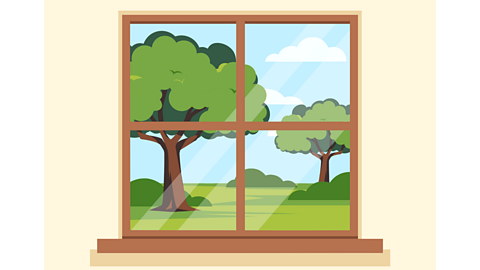
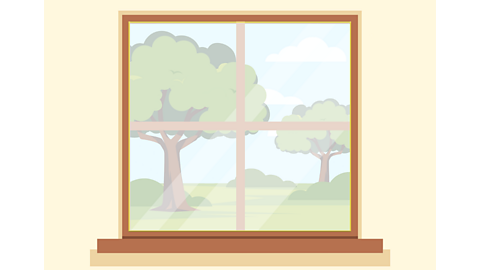
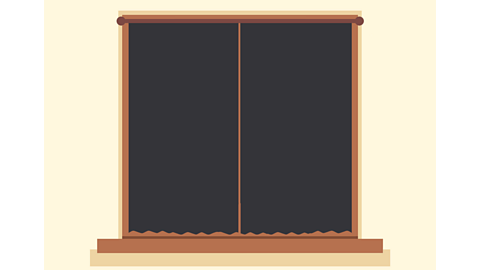
Slideshow: Light and shadow
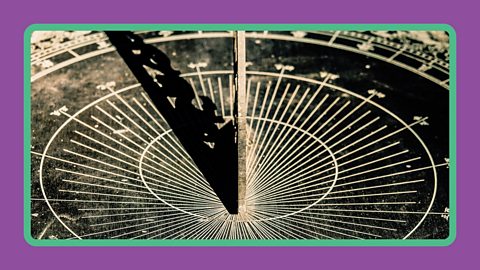
Image caption, Shadows
Light travels in straight lines. When the light source is to one side of an object, the shadow will appear on the opposite side. When the Sun shines a sundial it can be used to tell the time of day.
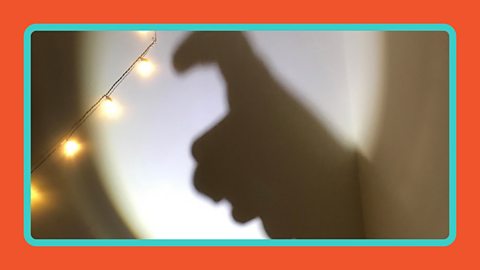
1 of 3
Did you know?
Light is the fastest thing in the universe.
It travels at around 186,282 miles every second.
According to Albert Einstein's theory of relativity, nothing in the universe can travel faster than light.
What is a shadow?
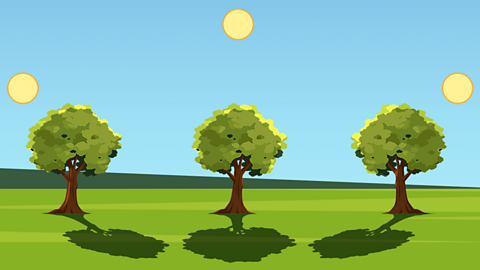
When an opaque object is placed in front of a light source, it prevents the light from passing through.
This absence of light creates a dark shape on the surface behind it.
This is called a shadow.
Watch: How shadows are made?
FRAN: A shadow is created when an object blocks the light from a light source.
Let me show you.
This torch is lighting up this board here.
And if I put my toy astronaut in front of the light… then we get a shadow. And this is because light travels in straight lines.
So, when the light reaches the astronaut, it can't go around the astronaut, and it can't go through it.
So instead, it blocks the light.
And behind the astronaut there is no light, and so we have a shadow.
And this works for many objects. We can use my hand, or we can use this toy spider, and the same happens.
But do you know what? I hate spiders!
So, let's check in with one of my investigators to see what they've found out about shadows.
INVESTIGATOR: I'm making shadow puppets! The light shines into the theatre.
I can put my puppets here to block the light and make shadows!
The sun is also a light source.
When the sun's light hits you, your body creates a shadow on the ground or wall behind you.
FRAN: Do you know what I really liked?
How you made the puppets look bigger and smaller by moving their position.
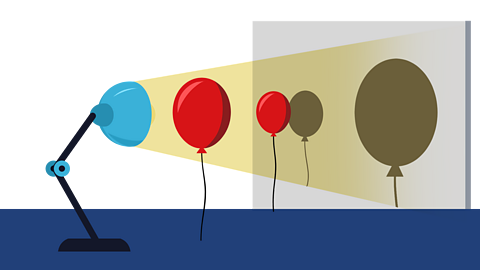
And I can do that too, by moving this object - this spider - closer to the light, then it blocks more light, so makes a bigger shadow.
And then if I move this object further away from the light, it blocks less light and makes the shadow smaller.
And it even works if I move the light source but not the object, look! It gets bigger and smaller.
Have you ever seen your shadow when it's all spread out in a pattern?
Well, that happens when there is more than one light source pointing at an object, and it creates multiple shadows.
So we have one light source and two light sources.
And look, multiple shadows!
Now that is cool!
Fascinating facts
Sunlight takes around eight minutes to reach the Earth, which may sound like a long time but remember that the Sun is 93 million miles away!
Clouds are thick enough that they block out some sunlight, which is why on a cloudy day it can be dark even in the daytime.
Half the world is always in shadow because the Earth travels around the Sun, rotating on its axis.
Light is a form of electromagnetic energy.
Human eyes can't see every type of light. There are many colours on the electromagnetic spectrum we can't identify such as infrared and ultraviolet, although many animals can.
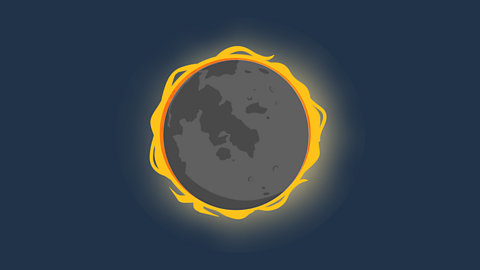
A solar eclipse occurs when the Moon passes between the Sun and Earth, blocking the Sun's light and forming a shadow.
When a shadow is cast by the Earth onto the Moon it is called a lunar eclipse.
Changing the size of shadows
When the position of the light source is changed, the size of the shadow. also changes
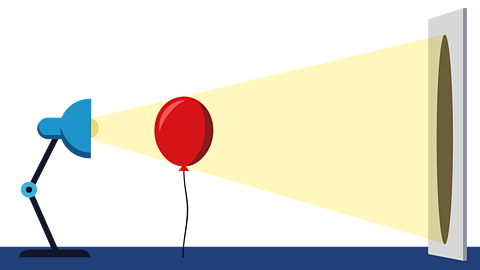
- The closer to the light source an object is, the bigger the shadow will be. This is because the object blocks more of the light.
- The further away from the light source an object is, the smaller the shadow will be. This is because the object blocks less of the light.
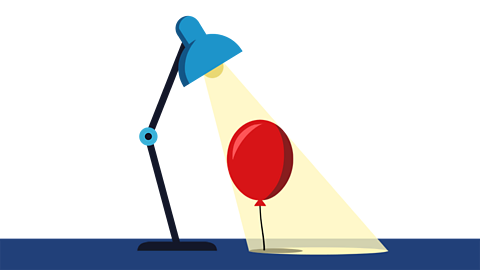
- When the light source moves directly above an object, the shadow will be directly below the object.
- When the light source is to one side of an object, the shadow will appear on the opposite side and the shadow will be longer.

Important words
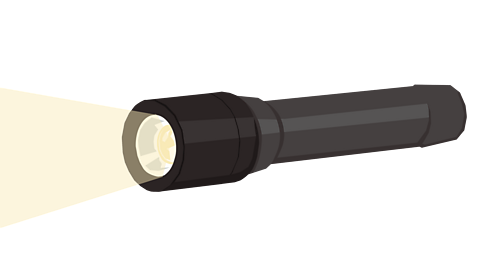
Light – A form of energy that allows our eyes to see things.
Opaque – Objects that let no light through.
Shadow – When an opaque object is placed in front of a light source it prevents the light from passing through it and creates a dark shape.
Translucent – Objects that let some light pass through.
Transparent – An object that allows light to pass through it.
Activities
Activity 1 – Shadows quiz
Activity 2 – Shadow puppets
Have a go at creating your own shadow puppets.
You will need: a light source, your hands and a wall or alternatively you could make some puppets out of card, a white sheet and a light source.
Watch this clip below to learn more about shadow puppets.
Watch this clip to see how shadow puppets are made.
This is the story of Mohan Singh who happened to live in the Indian Punjab.
Puppeteer: I'd never need again to moan and groan! If I could find someone to handle this all work alone!
Manju Gregory: All you need is a screen and a light - and your puppet comes between the screen and the light and throws a shadow on the screen.
You can use a torch, you can use a simple light, anything - any kind of light source, really. Very simple.
The puppets are made out of something solid, which will cast a good, dark shadow. This one for example, is made out of card and it might be made out of plastic. Or, on the other hand, this one here is made out of leather.
And this one casts a lighter shadow, is translucent.
Puppeteer: Mohan Singh set out for the wizard's abode for three days and three nights, through the dark forest in a row.
You see, Mohan Singh the farmer. He has got parts cut away for the eye, the eyebrow and here, the turban part is cut away. Insert some coloured gel and then the light will shine through.
You can do any kind of shapes of puppet, but always the shape you cut, the puppet you make, the shadow will be the same shape as the puppet.
Puppeteer: A demon appeared of magnificent strength. The great bird will swoop down, grab your family and YOU!
Manju Gregory: If you turn out the light, there's no more shadows, the show has ended.
[MUSIC]
Activity 3 – Investigating shadows
Experiment with different objects around your house to create shadows.
Which object makes the smallest shadow? Which object makes the biggest shadow?
You might want to:
- experiment with different light sources
- experiment with transparency of different objects
You could also make a list of all the transparent objects and translucent objects you can find around your house.
New game! Horrible Science: Stinky Space. game
Join Pipette on her epic mission and learn some revolting facts about space along the way.
More on Light
Find out more by working through a topic
- count1 of 5
- count2 of 5
- count3 of 5
- count4 of 5