Selective breeding
An artificial process in which organisms with desired characteristics are chosen as parents for the next generation. or artificial selection is when humans breed plants and animals to obtain desirable characteristics.
Humans have bred food crops from wild plants and domesticated animals for thousands of years.
Different crops have been developed from the wild plant, Brassica oleracea. All of these crops belong to the same A type of organism that is the basic unit of classification. Individuals of different species are not able to interbreed successfully..
Main steps involved
Selective breeding takes place over many generations. These are the main steps for both plants and animals:
- Decide which characteristics are important enough to select.
- Choose parents that show these characteristics from a mixed population.
- Breed these parents. Choose the best offspring, with the desired characteristics, to produce the next generation.
- Repeat the process continuously over many generations, until all offspring show the desired characteristics.
Farmers selectively breed different types of cows with highly desirable characteristics in order to produce the best meat and dairy.
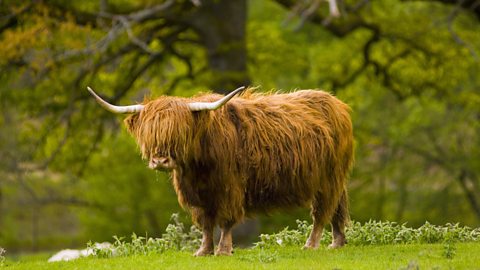
Image caption, Highland cows have been bred for their meat
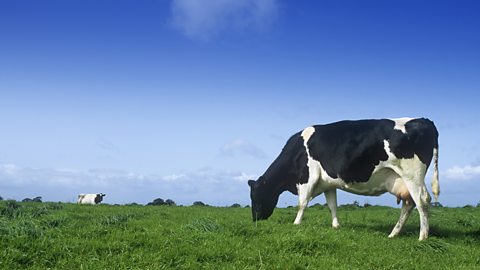
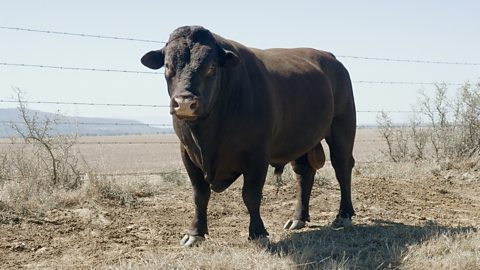
1 of 3
Characteristics can be chosen for usefulness or appearance:
Desired characteristics in plants:
- disease resistance in food crops
- crops that produce high The amount of a crop harvested, usually represented as the mass from a certain area.
- colourful, large or unusual flowers
Desired characteristics in animals:
- animals that produce lots of milk or meat
- chickens that lay large eggs
- domestic dogs that have a gentle nature
The new varieties may be economically important. For example, they may provide more or better quality food.
Benefits and risks of selective breeding
Because of selective breeding, future generations of selectively bred plants and animals will all share very similar The basic unit of genetic material inherited from our parents. A gene is a section of DNA which controls part of a cell's chemistry - particularly protein production. which will reduce Difference between individuals, distance from the norm.. Genes and their different Different forms of the same gene. within a population are known as its gene pool.
Inbreeding can lead to a reduced gene pool, making it more difficult to produce new varieties in the future. This also makes organisms prone to certain diseases or inherited defects.
Benefits of selective breeding:
- new varieties may be economically important by producing more or better quality food
- animals can be selected that cannot cause harm, eg cattle without horns
Risks of selective breeding:
- reduced genetic variation can lead to attack by specific insects or disease, which could be extremely destructive
- rare disease genes can be unknowingly selected as part of a positive trait, leading to problems with specific organisms, eg a high percentage of Dalmatian dogs are deaf
- can create physical problems in specific organisms, eg some breeds of dogs can have hip dysplasia due to hips not being formed correctly
Learn more about variation with Dr Alex Lathbridge.
Listen to the full series on BBC Sounds.
In this podcast, learn the key facts about variation. Listen to the full series on BBC Sounds.
