Charles Darwin
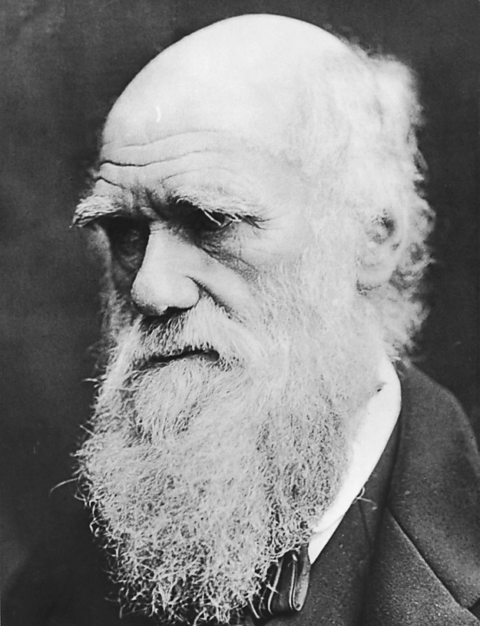
An English naturalist (1809-1882). In 1859 Darwin published On the Origin of Species, which outlined his theory of evolution. was an English naturalist who studied Difference between individuals, distance from the norm. in plants, animals and fossils during a five-year voyage around the world in the 19th century. Darwin visited four continents on the ship HMS Beagle.
Darwin observed many organisms including giant tortoises, mocking birds, finches and other unusual animals during his five week visit to the Islands in the Pacific Ocean, visited by Charles Darwin., off the coast of Ecuador in the Pacific Ocean. He continued to work and develop his ideas for many years after he returned from his voyages.
Finally, as a result of Darwin's world expedition and observations, which were backed by many years of experimentation, his discussions with like-minded scientists and his developing knowledge of geology and fossils, he proposed the theory of evolution by The natural process whereby the best-adapted individuals survive longer, have more offspring and thereby spread their characteristics. Sometimes referred to as 'survival of the fittest'..
Darwin proposed that:
- individual organisms within a particular A type of organism that is the basic unit of classification. Individuals of different species are not able to interbreed successfully. show a wide range of variation for a characteristic
- individuals with characteristics most suited to the environment are more likely to survive to breed successfully
- the characteristics that have enabled these individuals to survive are then passed on to the next generation
This theory is called natural selection.
Darwin's ideas were documented in the book On the Origin of Species, which was published in 1859. The naturalist's ideas created controversy in Victorian society.
Darwin's theory of evolution challenged the idea that God made all the animals and plants that live on Earth, which contradicted the commonly held Christian views of his era. He did not publish his scientific work and ideas until 28 years after his voyage.
The theory of evolution through the process of natural selection was only gradually accepted because:
- the theory challenged the idea that God made all animals and plants that live on Earth (creationism)
- there was insufficient evidence when the theory was published to convince many scientists
- the mechanism of inheritance and variation was not known until 50 years after the theory was published
Some scientists were reluctant to change their minds about the ideas of creationism, even when new evidence was discovered that contradicted their ideas.
Darwin's book, On the Origin of Species, was a world best-seller and is still in print today. With every new edition of his book, more evidence was discovered to support Darwin's ideas. This led to the development of his theory over time.
