Labour and capital
All production operations combine the two factors of labour and capital. The importance of labour and capital to a specific business are described in terms of their intensity.
Labour intensive
Labour intensive is when products are mainly produced by human workers. Machines and special tools may be used too, but overall it requires human creativity and effort to produce the product.

A busy kitchen is one example of labour intensive production
| Advantages | Disadvantages |
| Customised products are easier to make | Quality of products can vary due to expertise of the worker |
| Less expensive machinery costs | Skilled workers take time to train |
| Humans can use their own initiative and problem solve | Skilled workers will be paid more than unskilled workers |
| Advantages | Customised products are easier to make |
|---|---|
| Disadvantages | Quality of products can vary due to expertise of the worker |
| Advantages | Less expensive machinery costs |
|---|---|
| Disadvantages | Skilled workers take time to train |
| Advantages | Humans can use their own initiative and problem solve |
|---|---|
| Disadvantages | Skilled workers will be paid more than unskilled workers |
Capital intensive
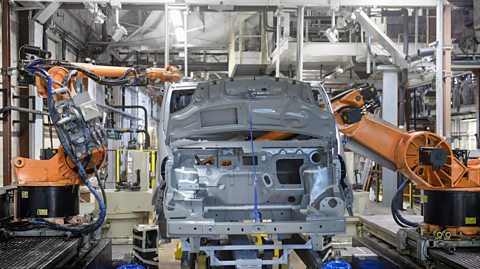
Robots at work - an example of capital intensive production
Capital intensive is when products are mainly produced by machines and robots, meaning the initial outlay and maintenance, will be very high.
| Advantages | Disadvantages |
| Less employee wages and costs | More difficult to customise orders |
| Quality can be standardised, the same every time | Breakdowns in production can be costly |
| Machines can work continuously, 24/7 | Initial set up costs of machinery are high |
| Advantages | Less employee wages and costs |
|---|---|
| Disadvantages | More difficult to customise orders |
| Advantages | Quality can be standardised, the same every time |
|---|---|
| Disadvantages | Breakdowns in production can be costly |
| Advantages | Machines can work continuously, 24/7 |
|---|---|
| Disadvantages | Initial set up costs of machinery are high |
