Batch production
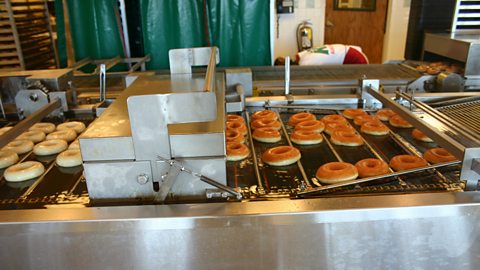
Doughnuts being made - an example of batch production
Batch production enables items to be created stage by stage in bulk (‘a batch’).
Generalist equipment is used to produce quantities of a product to meet a specific demand. The production process is stopped on the completion of each batch. A new batch, usually of a different product, is then produced using the same generalist equipment and workforce.
The workforce is usually divided into a group designated to work on a particular stage of the process. Batch production is commonly used in food production.
For example each morning a bakery will produce batches of the following products one after another:
- white bread loaves
- brown bread loaves
- rolls
- croissants
The equipment used to prepare and bake the different batches will require cleaning and minor adjustments by the workforce between each batch.
| Advantages | Disadvantages |
| Allows flexible production | Making many small batches can be expensive |
| Inventories of part-finished goods can be stored and completed later | If production runs are different there may be additional costs and delays in preparing equipment |
| Wider range of products that may appeal to different customer groups | Downtime between production of different batches can impact costs |
| Advantages | Allows flexible production |
|---|---|
| Disadvantages | Making many small batches can be expensive |
| Advantages | Inventories of part-finished goods can be stored and completed later |
|---|---|
| Disadvantages | If production runs are different there may be additional costs and delays in preparing equipment |
| Advantages | Wider range of products that may appeal to different customer groups |
|---|---|
| Disadvantages | Downtime between production of different batches can impact costs |
