What is the Welfare State?
Since the UK’s Welfare State was set up after World War Two, UK governments have used it to help those who are too young, too ill or too old to look after themselves. It also helps those who are out of work. Since 2016, the Scottish Parliament has been responsible for several welfare benefits in Scotland.
Some parts of the support the Welfare State offers cover everyone such as the National Health Service (NHS). Other support is aimed at specific groups for example the State Pension which gives older people an income.
Why have recent governments struggled to pay for the modern welfare state?
It has been difficult for recent governments to pay for the modern welfare state. There are three main reasons for this:
- Life expectancy for men and women has risen with consequences for the cost of pensions, health care and social care for elderly people. In 2023, around 20% of the Scottish population (just over one million) were aged over 65 years in 2022. (Source: National Records of Scotland)
- The population has been rising. The UK population now stands at 67.8m (2023) up from 64.3m (2013), a rise of 3.4m people in 10 years.
- A rise in inflation and an increase in food and energy bills since 2021, has caused the continuing cost of living crisis in the UK, leaving the country and people poorer.
How does the government provide for pensioners?
In the UK, all people aged over 66 years of age are entitled to the State Pension. The State Pension aims to provide all elderly people with enough money to cover basic needs. Since April 2024 the full State Pension rate is £221.20 per week.
As well as the State Pension, elderly people, depending on their circumstances, may be able to access other support including help with winter fuel payments (Winter Fuel Payment), Cold Weather Payments, free travel, free TV licence and help to pay the Council Tax.
What Welfare State support is available for working-age adults?
Governments believe the best way for adults of working-age (usually 16-66 years of age) to get out of poverty is through work. For this reason, the government provides a range of services within Jobcentre Plus to help working-age adults who can work to secure employment.
For example help may include:
- preparing a CV
- attending training courses
- applying for vacancies
- applying for vacancies
For those able to work but unemployed, benefits are usually tied to actively looking for a job.
Many adults of working-age are not able to work. For that reason, the UK government’s Department of Work and Pensions (DWP) provides a different range of support to assist people. The main benefit to working-age adults who unemployed and looking for work is Universal Credit. For other working-age adults, depending on their circumstances, they may be entitled to Employment and Support Allowance (ESA) or Personal Independence Payment (PIP).
For working-age adults on low pay, the Welfare State also tops up income to make people in work better off.
How does the government provide for families and children?
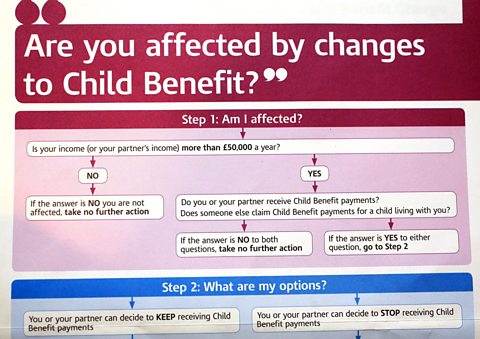
Both the UK and Scottish governments provide benefits to assist families with children who are living in poverty.
What is child benefit?
Child benefit is a tax-free payment that is aimed at helping parents cope with the cost of bringing up children.
Most children (up to 18 years and in full-time education) in the UK qualify for Child Benefit which was worth £25.60 per week to the oldest child in 2024. Second and subsequent children receive £16.95 in 2024.
What is the Early Years Framework?
To stop poverty and unemployment affecting the next generation, the Scottish Government has decided to make improving the early years of a child's life a priority.
The Early Years Framework is an attempt to identify children who are most vulnerable to a poor upbringing and intervene to improve their life as early as possible.
What is the Scottish Child Payment?
Since February 2021, the Scottish Child Payment has been paid to low income families in Scotland. The payments are part of the Scottish Government strategy to tackle child poverty. It is a weekly payment of £25 that you can get for every child you look after who's under 16 years of age. In 2023, around 300,000 children in Scotland were supported with the Scottish Child Payment. (Source: Security Scotland)
From 2022, young people in Scotland under the age of 22 years are also entitled to free bus travel and free period products in 2021.
What is the baby box?
Every baby born in Scotland is entitled to a baby box which is full of essentials. The box can also become a safe sleep space for a baby. The box includes items such as: clothes, thermometer for the baby and the bath, books, and a bath towel and changing mat.
What support is provided in schools?
There is a range of support within schools to reduce the consequences of poverty on children. This support includes free school meals and school clothing grants. Young people who stay in school beyond 16 years of age may be entitled to financial support through the Educational Maintenance Allowance (EMA).
Many schools also receive additional Scottish Government funding to reduce the impact of poverty on the school day i.e. to provide for free financial support for visits or to pay for cooking in Home Economics. This additional money for schools is known as Pupil Equity Funding or PEF.
Who pays for the Welfare State?
The Welfare State is paid for from taxation. When most people work or purchase goods or services a proportion of the money goes to the government to pay for healthcare, education and many other services. Most working people also pay National Insurance (NI) which also goes to the government to help pay for the cost of the Welfare State.
The role of voluntary organisations
It is important to recognise the role of voluntary organisations (charities) in supporting people across Scotland and the UK. Groups such as Age UK (elderly people), Shelter (homeless people) and Barnardo’s (children), for example, help hundreds of thousands of people across the UK every year. There are other charities which support those with disabilities or those requiring help to find work.
