What is income inequality?
Watch this video explaining what economic inequality is and what strategies have been put in place to tackle it.
What is economic inequality?
What is income inequality like in Scotland?
There is a great deal of income inequality in Scotland. According to the Scottish Government, the top ten percent of Scottish households with the highest incomes had an income of £1044 per week (before housing costs) compared to the lowest ten percent of households who had an income of £267 per week.
What is the difference between absolute and relative poverty?
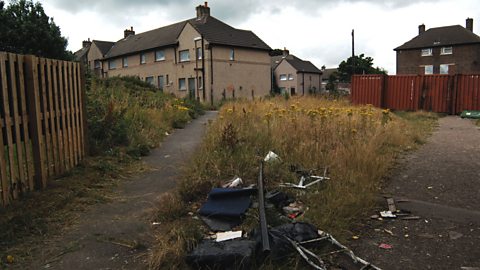
There is a difference between absolute poverty, which can be seen in developing countries where people struggle to get hold of the most basic needs, and relative poverty where people are poor in relation to other people, which is more common in Scotland and the UK.
In Scotland there is no one single definition of relative poverty. One common measure is where people living in households with an income below 60% of the median (half way) income in that year. According to Scottish Government statistics, 21% of Scotland’s population between 2019-22 lived in poverty (1.1 million people) after housing costs.
In 2022, the poverty charity the Joseph Rowntree Foundation estimated that a single person now needed to earn £25,500 a year to reach the minimum income standard. A dual-earner couple with two children needed to earn £43,400 between them.
