The Metropolitan Police by the late 19th century
The Metropolitan Police was set up in 1829. It was paid for by local London authorities but controlled by the Home Secretary.
Public attitudes towards the Metropolitan Police
In 1842, the Detective Branch of the Metropolitan Police was formed. Some people were worried that police detectives would be used to spy on ordinary people. Plain-clothed policemen were therefore ordered to reveal their identity during any confrontations with the public.
From 1870, the new The most senior role in the police force at this time. The Police Commissioner would report to the Home Secretary. Edmund Henderson, introduced rules to increase the quality of recruits into the police and to raise standards of reading and writing. There were growing concerns that there were not enough Metropolitan Police officers for the growing size of London.
In 1877, a large corruption scandal, known as the Trial of the Detectives, occurred. A court case revealed corruption among senior officers at the Detective Branch in an international gambling fraud conspiracy. This scandal was reported in the newspapers and increased suspicion and distrust of the police among ordinary people. The following year, barrister Sir Howard Vincent reformed this branch into the Criminal Investigation Department (CID), which had 216 officers. The CID made a clear public distinction between units for crime prevention and units for crime detection.
Commissioner Charles Warren
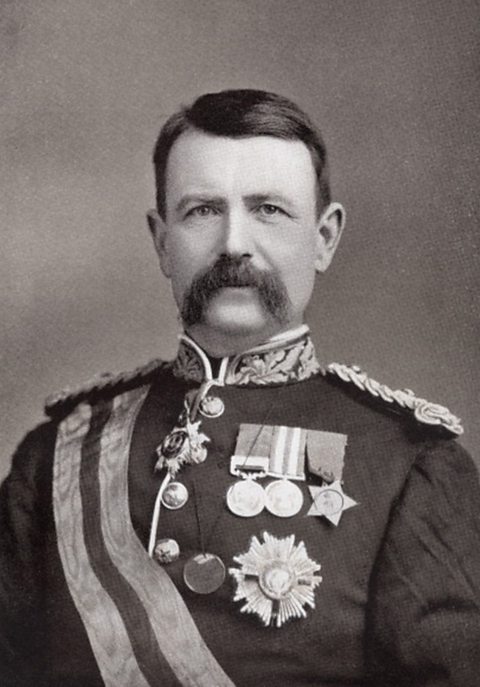
In January 1886, Edmund Henderson was replaced by Charles Warren as commissioner. Before joining the Metropolitan Police, Warren had served in the army. He used his experience of the military in his new role.
He wanted to raise standards in the Metropolitan Police and did this by:
- increasing the frequency of military drill practice
- tightening up the rules for recruitment
- bringing more ex-soldiers into the police force
Warren’s military focus worried some people, as they thought that the police force was turning into an army and would be used to control the people.
In 1887, a protest took place at Trafalgar Square. People gathered to protest about issues, including unemployment and the use of new laws, particularly their use in Ireland, which gave the authorities more powers to control or punish what they judged to be acts of disorder or discontent. When protesters, the police and the army clashed many people were injured. This event came to be known as Bloody Sunday.
Criticism of Warren and his police force were centred around these events:
| Bloody Sunday | The police were criticised by the press for using excessive force on the protesters. |
| Whitechapel Murders | Warren was criticised in 1888 when the Metropolitan Police were unsuccessful in catching the murderer known as Jack the Ripper. |
| Bloody Sunday |
| The police were criticised by the press for using excessive force on the protesters. |
| Whitechapel Murders |
| Warren was criticised in 1888 when the Metropolitan Police were unsuccessful in catching the murderer known as Jack the Ripper. |
In November 1888, Warren wrote an article for a popular publication, Murray’s Magazine, criticising the government for not stopping the protests and riots. Warren resigned in 1888.
More guides on this topic
- Crime and punishment in Britain overview - Edexcel
- Crime and punishment in medieval England, c.1000-c.1500 - Edexcel
- Crime and punishment in early modern England, c.1500-c.1700 - Edexcel
- Crime and punishment in 18th- and 19th-century Britain - Edexcel
- Crime and punishment in modern Britain, c.1900 - Edexcel
