Measuring abiotic factors
Non-living elements of an ecosystem, such as climate, temperature, water, and soil type. factors are non-living variables that can influence where organisms can live.
Examples of abiotic factors include:
- light intensity
- temperature
- soil pH
- soil moisture
Light intensity
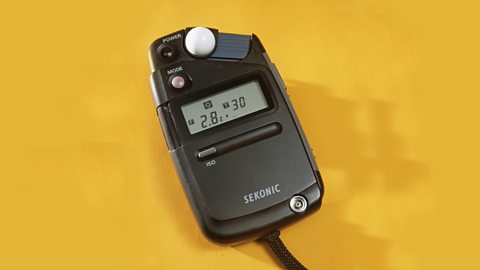
Light intensity can be measured using a light meter. Its light-sensitive panel contains sensors that trap the light to measure it, displaying the reading on its screen.
In order to work properly, care must be taken to keep the sensor steady, keep the meter out of shade and to make sure that the panel is facing the maximum sunlight available.
Temperature
Air temperature can be measured using a standard thermometer to provide useful environmental information.
In order to work properly, care must be taken to keep it out of full shade.
Soil pH and moisture
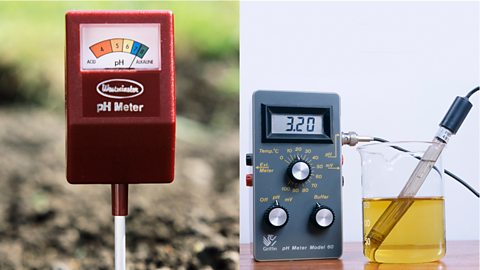
The Scale of acidity or alkalinity. A pH (power of hydrogen) value below 7 is acidic, a pH value above 7 is alkaline. of soil, rainwater, and water in rivers and ponds can be measured using a soil pH meter.
Soil moisture levels can be measured using a soil moisture meter.
In both cases, a probe is pushed into the soil and the reading is displayed on its screen.
In order to work properly, care must be taken to make sure the probe is clean and dry before use and to keep the depth at which it is inserted into the ground consistent.
Equipment summary table
| Abiotic factors | Equipment | Tips to avoid errors |
| Temperature | Standard thermometer | Don't shade it. |
| Light intensity | Light meter | Don't shade it. Position it facing maximum sunlight. Keep it steady. |
| Soil pH | Soil pH meter | Make sure the probe is dry and clean before use. Keep the probe at a consistent depth. |
| Soil moisture | Soil moisture meter | Make sure the probe is dry and clean before use. Keep the probe at a consistent depth. |
| Abiotic factors | Temperature |
|---|---|
| Equipment | Standard thermometer |
| Tips to avoid errors | Don't shade it. |
| Abiotic factors | Light intensity |
|---|---|
| Equipment | Light meter |
| Tips to avoid errors | Don't shade it. Position it facing maximum sunlight. Keep it steady. |
| Abiotic factors | Soil pH |
|---|---|
| Equipment | Soil pH meter |
| Tips to avoid errors | Make sure the probe is dry and clean before use. Keep the probe at a consistent depth. |
| Abiotic factors | Soil moisture |
|---|---|
| Equipment | Soil moisture meter |
| Tips to avoid errors | Make sure the probe is dry and clean before use. Keep the probe at a consistent depth. |
