Continuity and change in crime in the 20th century
The start of the 20th century saw a decrease in the amount of crime reported. However, since the mid-20th century, instances of reported crime in Britain have increased. There are several reasons for this change:
- More households have telephones, so it is easier to report crime.
- People need to report crimes in order to claim A sum of money paid to make up for suffering, injury or loss. from their insurance company.
- Violent crimes and sexual offences are reported more, and police training improved.
- The police record crime more consistently due to advances in technology.
Continuity
Some crimes continued into the 20th century:
- Crimes against the person continued, including murder and assault.
- Crimes against property continued, including petty theft, shoplifting and vandalism.
- Crimes against authority continued, including To betray or plot against the government or monarchy.The use of violence and threats to intimidate or coerce, especially for political purposes. and rioting.
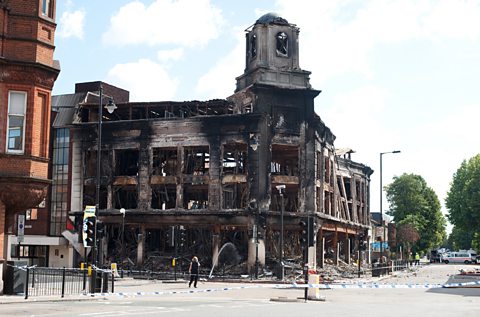
Change
However, some crimes have taken on new forms since c.1900.
Theft
Developments in technology, in particular computers, have given criminals new ways of committing the old crime of theft.
| Type of crime | Description |
| Identity theft | When someone’s personal data, such as their bank account details or a credit card number, are stolen and used to purchase goods online or take money from a bank account. |
| Digital piracy | When the internet is used to illegally copy and share music and films. |
| Cybercrime | Carried out using the internet, often on a large scale, to steal data, records and information from large companies, security services and governments. |
| Extortion | Using the internet to make someone pay money by using threats and/or blackmail. Some criminals extort money by threatening to hack or share information they have hacked from large businesses and databases unless the victim pays a ransom. |
| Online fraud | Online fraud and phishing have become among the most common crimes in Britain. Such crimes can involve imitating people or businesses, to get hold of their banking information and passwords in order to steal their money. |
| Type of crime | Identity theft |
|---|---|
| Description | When someone’s personal data, such as their bank account details or a credit card number, are stolen and used to purchase goods online or take money from a bank account. |
| Type of crime | Digital piracy |
|---|---|
| Description | When the internet is used to illegally copy and share music and films. |
| Type of crime | Cybercrime |
|---|---|
| Description | Carried out using the internet, often on a large scale, to steal data, records and information from large companies, security services and governments. |
| Type of crime | Extortion |
|---|---|
| Description | Using the internet to make someone pay money by using threats and/or blackmail. Some criminals extort money by threatening to hack or share information they have hacked from large businesses and databases unless the victim pays a ransom. |
| Type of crime | Online fraud |
|---|---|
| Description | Online fraud and phishing have become among the most common crimes in Britain. Such crimes can involve imitating people or businesses, to get hold of their banking information and passwords in order to steal their money. |
Smuggling
Smuggling also continues in modern Britain but the nature of the goods smuggled has changed. Whereas in the past it mainly involved brandy, tea and cloth, now it mainly involves drugs, alcohol and people-trafficking.
Developments in transport since c.1900 have made smuggling increasingly difficult to prevent. Millions of people travel by land, sea and air, which makes it difficult to detect smugglers.
- Smugglers typically buy goods in other countries at a cheaper price than they would be for sale in Britain.
- They then avoid paying the required taxes when they smuggle the goods into Britain.
- In Britain, the goods are sold to customers at a cheaper price than goods that have not been smuggled into the country.
- Demand for the goods increases as cheap, smuggled goods become readily available.
- Some people choose to ignore the smuggling of goods such as tobacco and alcohol because they benefit financially.
Terrorism
Since the 1960s, the terrorist threat to the UK has developed significantly. Terrorists use violence and threats of violence as a means to achieve their goals and publicise their actions. Often terrorist groups or individuals are influenced by extremist ideologies.
The Terrorism Act, passed in 2000, states that terrorism is defined by:
‘The use or threat of action which is designed to influence the government or an international governmental organisation, or to intimidate the public or a section of the public, and which is used to advance a political, religious or ideological cause.’
In the UK, counter terrorist police units collaborate across forces and work with the UK intelligence community (including MI5 and other partners) to help protect the public and maintain national security by preventing, deterring and investigating terrorist activity. It is possible to categorise this activity in the following ways:
- International terrorism that goes beyond national boundaries in terms of the methods used, the people that are targeted or the places from which the terrorists operate. For example, in Britain, terrorist attacks have been committed by members of and inspired by, Islamist extremist terrorist groups which initially originated in other countries.
- Northern Ireland related terrorism - in the late 1970s, 1980s and 1990s acts of terrorism were carried out by loyalist and republican paramilitary groups. The signing of the 1998 Belfast Agreement (also known as the Good Friday Agreement) agreement helped to bring to an end much of the conflict in Northern Ireland, although there have been fatal attacks and instances of violence since then, and a threat from terrorist groups linked to Northern Ireland remains.
- Right wing terrorism - Right wing terrorists are motivated by factors such as racism, extreme nationalism or the desire to remove people of different nationalities, religions and cultures from Britain.
- Other types of terrorist groups or individuals have been active in Britain. Sometimes they have planned or committed attacks, raised money or recruited people into their groups. Some of the groups have been mainly non-religious; others have had both political and religious motivations or are focused on single issues.
More guides on this topic
- Crime and punishment in Britain overview - Edexcel
- Crime and punishment in medieval England, c.1000-c.1500 - Edexcel
- Crime and punishment in early modern England, c.1500-c.1700 - Edexcel
- Crime and punishment in 18th- and 19th-century Britain - Edexcel
- Crime and punishment in Whitechapel, c.1870-c.1900 - Edexcel
