Rituals
Devotional rituals
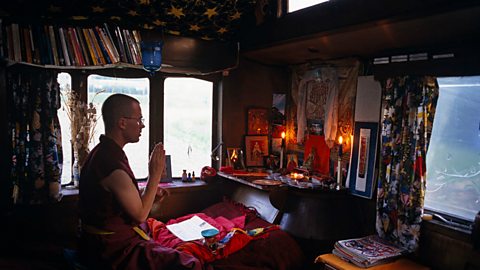
Buddhists use a variety of objects and actions during Ceremonies that involve meditation, prayer and offerings. Also known as devotional ritual.. They use images of the The founder of Buddhism, Siddhartha Gautama, after his enlightenment. It is a title which means the enlightened or awakened one. or In Mahayana Buddhism the bodhisattva is one who has vowed to obtain enlightenment for the benefit of all beings.. They also use images of lotus flowers, which symbolise The realisation of the truth about life. In Buddhism it releases a person from the cycle of rebirth.. A Buddhist Wheel, which represents the Dhamma is Buddhist doctrine about the nature of existence and includes the teachings of the Buddha., may also be present.
Meaning ‘teachings of the elders'. It is primarily focused on the Arhat path to enlightenment. This branch of Buddhism can be found in Sri Lanka and South East Asia. traditions focus on ‘making merit’. Ways of doing this include earning positive Actions, and the consequences of actions. An important concept in Buddhism, Hinduism and Sikhism., making offerings to monks and nuns or a monastery, Repeating religious phrases or quotations from sacred texts.A sacred (holy) prayer or word which often is chanted or sung rather than just spoken. and reciting Buddhist texts.
Meaning ‘Great Vehicle’; primarily follows the Bodhisattva path to enlightenment; in regions North of the Buddha’s birthplace. traditions include confessing bad actions, wishing others well and celebrating the good in the world.
During puja, many Buddhists will prostrate (kneel with forehead, hands, knees and feet touching the floor) towards a Buddha image to show commitment and to request blessings.
Meaning
Rituals help Buddhists to gain a deeper understanding of the true nature of reality. This can be through showing commitment to the Dhamma, giving thanks to the community of monks and nuns (the The Buddhist community of people who practice the faith, usually used to mean the community of monks and nuns. ), requesting blessings or making merit. Artefacts, chants and rituals develop understanding. Showing respect to the Buddha and Bodhisattvas reinforces commitment to the Buddhist path of wisdom, compassion and insight. It helps Buddhists to achieve the goal of ending Suffering, illness, dissatisfaction or imperfection. An unavoidable fact of existence according to the first Noble Truth of Buddhism. (suffering).
Question
What does a lotus flower represent?
Enlightenment.
