Polymers
Types of polymers and their uses
Most polymers are formed by processing Mixture of hydrocarbons, mainly alkanes, formed over millions of years from the remains of ancient dead marine organisms.. Rubber is a plastic that is found naturally.
Thermoforming polymers
Also called ‘thermoplastic’. Can be reformed when heated, and therefore can often be recycled. polymers can be heated and formed repeatedly. They are Flexible and easy to bend. and The ability to process into something else..
| Thermoforming polymer | Physical properties | Working properties |
| Acrylic (PMMA) | Hard, brittle, shiny, available in a wide range of colours | Resists weather well, can be cut, folded and polished well, scratches easily, used for car lights, visors and baths |
| High impact polystyrene (HIPS) | Rigid, cheap, available in a lot of colours | Can be cut and vacuum formed easily, food safe but toxic when burned, used for CD cases and yoghurt pots |
| High density polythene (HDPE) | Stiff, strong, lightweight | Lightweight and flexible, can be recycled well, used for washing baskets, pipes and chairs |
| Polypropylene (PP) | Easily coloured, available in sheets | Tough and flexible, used for plastic chairs and casings |
| Polyvinyl chloride (PVC) | Cheap, can be matt or high gloss | Brittle but durable, can be extruded or in flat sheets, used in blister packs and window frames |
| Polyethylene terephthalate (PET) | Clear, smooth finish | Light, strong and tough, used for clothing and drinks bottles |
| Thermoforming polymer | Acrylic (PMMA) |
|---|---|
| Physical properties | Hard, brittle, shiny, available in a wide range of colours |
| Working properties | Resists weather well, can be cut, folded and polished well, scratches easily, used for car lights, visors and baths |
| Thermoforming polymer | High impact polystyrene (HIPS) |
|---|---|
| Physical properties | Rigid, cheap, available in a lot of colours |
| Working properties | Can be cut and vacuum formed easily, food safe but toxic when burned, used for CD cases and yoghurt pots |
| Thermoforming polymer | High density polythene (HDPE) |
|---|---|
| Physical properties | Stiff, strong, lightweight |
| Working properties | Lightweight and flexible, can be recycled well, used for washing baskets, pipes and chairs |
| Thermoforming polymer | Polypropylene (PP) |
|---|---|
| Physical properties | Easily coloured, available in sheets |
| Working properties | Tough and flexible, used for plastic chairs and casings |
| Thermoforming polymer | Polyvinyl chloride (PVC) |
|---|---|
| Physical properties | Cheap, can be matt or high gloss |
| Working properties | Brittle but durable, can be extruded or in flat sheets, used in blister packs and window frames |
| Thermoforming polymer | Polyethylene terephthalate (PET) |
|---|---|
| Physical properties | Clear, smooth finish |
| Working properties | Light, strong and tough, used for clothing and drinks bottles |
Thermosetting polymers
Also called ‘thermoset’. Can only be formed once as it cannot be reheated and therefore cannot be recycled. polymers are If something is brittle it is easily broken. and can only be formed once. They are hard to recycle. They are good Material that is a poor conductor of electricity or heat. and are resistant to heat and chemicals.
| Thermosetting polymer | Physical properties | Working properties |
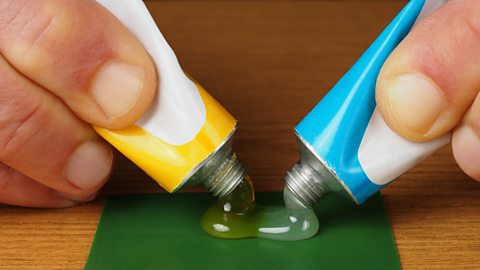
| Epoxy resin (ER) | Supplied as two parts, one resin and one hardener (see image) - the resin and hardener combine to create an extra-strong adhesive | Rigid and durable, strong, expensive and heat resistant, used to bond materials, waterproof coatings and lamination |
| Melamine formaldehyde (MF) | Hard, brittle | Food safe, printable surface, used for picnic wear |
| Phenol formaldehyde (PF) | Rigid and brittle | Easily injection moulded, good insulator, used for snooker balls and bottle caps |
| Polyester resin (PR) | A resin and a hardener, sets clear and smooth | Strong, heat resistant and good insulator, used as waterproofing and for encapsulating items |
| Urea formaldehyde (UF) | Smooth finish, available in limited colours | Heat resistant, hard, brittle and easily injection moulded, used for electrical fittings |
| Thermosetting polymer | Epoxy resin (ER) |
|---|---|
| Physical properties | Supplied as two parts, one resin and one hardener (see image) - the resin and hardener combine to create an extra-strong adhesive |
| Working properties | Rigid and durable, strong, expensive and heat resistant, used to bond materials, waterproof coatings and lamination |
| Thermosetting polymer | Melamine formaldehyde (MF) |
|---|---|
| Physical properties | Hard, brittle |
| Working properties | Food safe, printable surface, used for picnic wear |
| Thermosetting polymer | Phenol formaldehyde (PF) |
|---|---|
| Physical properties | Rigid and brittle |
| Working properties | Easily injection moulded, good insulator, used for snooker balls and bottle caps |
| Thermosetting polymer | Polyester resin (PR) |
|---|---|
| Physical properties | A resin and a hardener, sets clear and smooth |
| Working properties | Strong, heat resistant and good insulator, used as waterproofing and for encapsulating items |
| Thermosetting polymer | Urea formaldehyde (UF) |
|---|---|
| Physical properties | Smooth finish, available in limited colours |
| Working properties | Heat resistant, hard, brittle and easily injection moulded, used for electrical fittings |