Papers and boards
Types of papers and boards and their uses
Papers and boards are formed from wood pulp, which comes from trees. This squishy wood pulp is rolled out into thin sheets in paper mill factories to form the papers and boards that we use.
Paper
Papers are made from Wood fibres processed and reduced down with chemicals or mechanically broken down into smaller parts to make paper.. Their Compactness of a material. is measured by their weight, in grams per square metre (gsm) - the thinner the paper the lower the gsm.
| Paper | Physical properties | Working properties |
| Bleed proof paper | White, can be textured, thin | Coated to stop colour seeping, ink stays bright on the surface |
| Cartridge paper | Thick, textured, rough | Expensive and opaque, used for ink and watercolour |
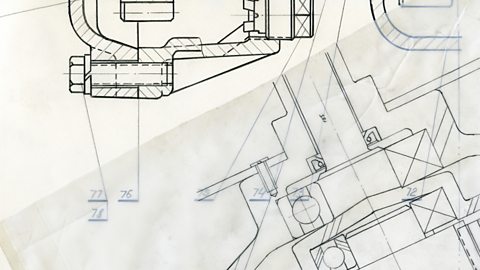
| Grid paper | White paper printed with a variety of grids, eg isometric, graph etc | Lines are usually blue but can be darker to trace through |
| Layout paper | Smooth finish, off-white colour, translucent (see-through) | Takes most media well |
| Tracing paper | Translucent (see-through), smooth | Shiny, takes pencil well |
| Paper | Bleed proof paper |
|---|---|
| Physical properties | White, can be textured, thin |
| Working properties | Coated to stop colour seeping, ink stays bright on the surface |
| Paper | Cartridge paper |
|---|---|
| Physical properties | Thick, textured, rough |
| Working properties | Expensive and opaque, used for ink and watercolour |
| Paper | Grid paper |
|---|---|
| Physical properties | White paper printed with a variety of grids, eg isometric, graph etc |
| Working properties | Lines are usually blue but can be darker to trace through |
| Paper | Layout paper |
|---|---|
| Physical properties | Smooth finish, off-white colour, translucent (see-through) |
| Working properties | Takes most media well |
| Paper | Tracing paper |
|---|---|
| Physical properties | Translucent (see-through), smooth |
| Working properties | Shiny, takes pencil well |
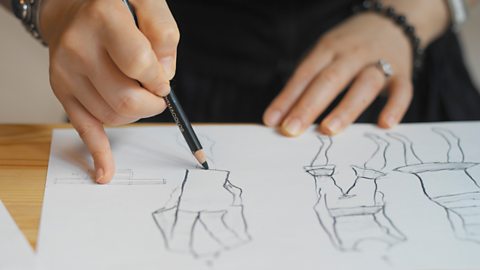
Image caption, Bleed proof paper
1 of 2
End of image gallery
Board
Board thickness is measured in microns or grams per square metre (gsm) - the thinner the card the lower the microns or gsm.
| Board | Physical properties | Working properties |
| Corrugated card | Paper bonded to the outside | Corrugations make it strong, protective and insulating; used in packaging |
| Duplex board | Two layers of card bonded together | Stiff, lightweight and printable for packaging |
| Foil-lined board | White card with foil backing | Stiff and oil resistant, foil backing reflects heat, used for food containers |
| Foam core board | Smooth surface, laminated with white board | Thick and rigid, available in a variety of thicknesses, prone to creasing and cracking, used for models and mounting photographs |
| Inkjet card | Bright white and smooth on both sides | Deep colours as the photographic ink sits on the surface |
| Solid white board | Smooth on both sides | Stiff, can be cut or scored |
| Board | Corrugated card |
|---|---|
| Physical properties | Paper bonded to the outside |
| Working properties | Corrugations make it strong, protective and insulating; used in packaging |
| Board | Duplex board |
|---|---|
| Physical properties | Two layers of card bonded together |
| Working properties | Stiff, lightweight and printable for packaging |
| Board | Foil-lined board |
|---|---|
| Physical properties | White card with foil backing |
| Working properties | Stiff and oil resistant, foil backing reflects heat, used for food containers |
| Board | Foam core board |
|---|---|
| Physical properties | Smooth surface, laminated with white board |
| Working properties | Thick and rigid, available in a variety of thicknesses, prone to creasing and cracking, used for models and mounting photographs |
| Board | Inkjet card |
|---|---|
| Physical properties | Bright white and smooth on both sides |
| Working properties | Deep colours as the photographic ink sits on the surface |
| Board | Solid white board |
|---|---|
| Physical properties | Smooth on both sides |
| Working properties | Stiff, can be cut or scored |
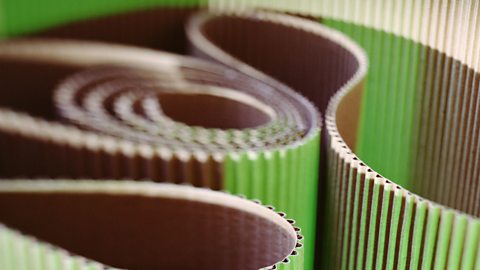
Corrugated card
