Stock forms, types and sizes
Stock forms
Textiles are sold as different Standard sizes for a material, component or product., depending on the standard sizes and thicknesses:
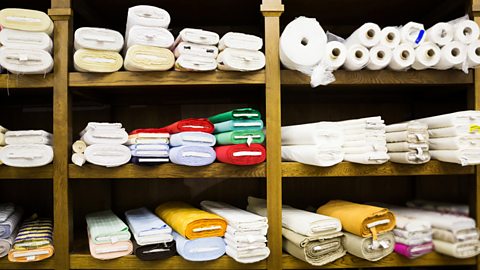
- rolls and bolts - fabric is sold by the metre in the roll (circular) or bolt (flat roll) and standard sizes are 90 cm, 137 cm and 154 cm
- denier - the unit of weight that measures fineness, used to describe the thickness of tights, where 30 denier is thin and 100 is thick, increasing commonly in increments of 10
- ply - yarn (wool) is sold in coils, reels or balls, and ply is the number of threads spun together to create a yarn
Fastenings
- buttons - available in a range of sizes, colours and materials, such as plastic, wood and metal
- zips - fabric sides with plastic or metal teeth, sold in a variety of lengths with open (for coats) or closed (for trousers) ends
- eyelets - usually made of metal and used as a strengthening edge to small holes like lace holes in shoes
- buckles - an adjustable fastening made of plastic or metal for straps
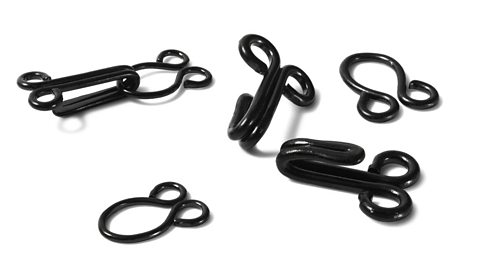
- hook and eye - a two-piece fastening usually made of metal for either side of a join, such as at the top of a zip
- velcro - hook and loop fastening that is usually made from nylon and can be repeatedly ripped open and closed
- press studs - a two-piece fastening made from plastic or metal
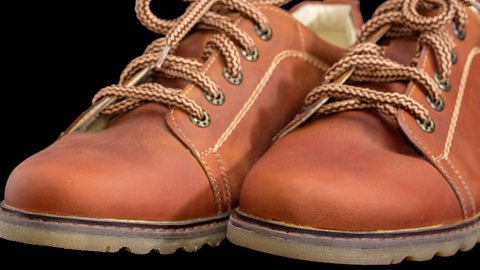
Image caption, Eyelets on shoes
1 of 2
End of image gallery
