Sources and origins
The Basic material that goods are made from such as crops, metals, wood and animal products such as wool and leather. needed to create textiles come from all over the world. They can be natural, grown from plants or taken from animals, or synthetic, Remove unwanted substances from a substance. from oil.
Natural fibres
Plant based
- cotton - harvested from cotton plants from China, USA and Pakistan, the fibres are cleaned, Staple fibres are combed by rows of teeth to clean and lay in lines. between wire brushes to lie in the same direction and spun into yarn
- bamboo - grown in China and Japan and is Materials that are wet and mashed together. and crushed, softened and carded before being spun into yarn
- linen - made from the flax plant grown in Canada, France and Russia, and processed in the same way as bamboo
Animal based
- wool - fleeces are sheared from animals such as sheep, alpaca and goats in UK, Australia and New Zealand; the short, Short, usually natural, fibres before they are spun into threads. are cleaned, carded and spun into a yarn
- silk - silkmoth cocoons are harvested in China and India, heated to undo the filament bonds and then spun into a filament fibre
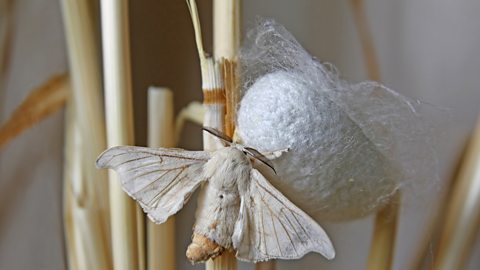
Silkmoth on cocoon
Synthetic fibres
Oil based
- polyester - polymer chains are extracted from oil and are then forced through a small hole into a filament fibre
- acrylic - polymer chains of A common thermoforming polymer. (a Also called ‘thermoplastic’. Can be reformed when heated, and therefore can often be recycled. polymer) are extracted from oil into a filament fibre
Regenerated
- viscose - wood pulp from Canada or European forests is dissolved by chemicals to extract the cellulose, which is then Shaped by being forced through an opening. through a spinneret to make a fine filament fibre
- acetate - wood pulp from Canada or European forests is dissolved by acetic acid and then extruded through a spinneret to make a filament fibre
