Belief in British superiority and embracing Social Darwinism
Expansion and empire
During the 19th century there was new confidence amongst British people who believed Britain was in a powerful position with respect to her interactions with the rest of the world. It was widely accepted in Britain that Christians who broke away from the Roman Catholic Church during the Reformation. They believe in the teachings of the Bible but reject the authority of the Pope. Christianity was the superior religion and that British culture and government were the superior forms of life and rule. These ideas were important in directing the policies of British businesses, churches and the government in pushing forward the expansion of the All the territory across the world that was ruled by Britain. At its height in the 1920s it covered near a quarter of the world's land and included one fifth of the world's population. in Asia and Africa especially.
By the middle of the 19th century the missionary and explorer, David Livingstone, was explaining Britain’s ideas in terms of 3 Cs:
- Christianity: Many Christians in Britain had campaigned against the slave trade at the start of the 19th century, and they continued their moral crusade against slavery on the continent itself. They also wanted to bring Christianity to the African people.
- Commerce: Many merchants saw the chance to develop trade links with African rulers and peoples. Africans were not always given a fair deal in trade with Britain.
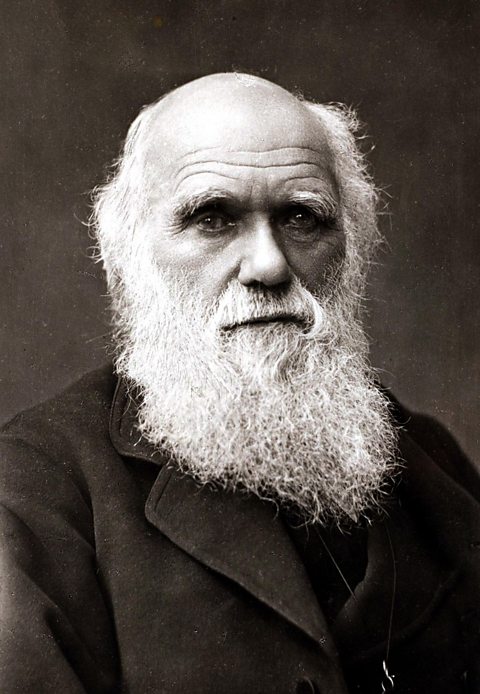
- Civilisation: The British developed a strong sense of their superiority over other races. This was greatly helped by the development of Charles Darwin’s misunderstood 'The process of change in the inherited traits of a population of organisms from one generation to the next.'. Other writers took Darwin’s ideas and then turned them into something he had never intended: ‘Social Darwinism’.
Livingstone’s ideas became popular and respected. An ideology developed that would support the greatest expansion of British imperialism, which embraced:
Social Darwinism
Charles Darwin developed his Theory of Evolution during the mid-19th century as a way of understanding how different species changed over vast timespans. Other people, like Francis Galton, then applied the idea that species survived by adaptation to human beings. This ‘Social Darwinism’ was to be the basis for ideas of racial domination and to justify the inferiority of the non-white peoples of the globe to Europeans.
The white man's burden
The superiority of white Europeans was seen to bestow a responsibility on European nations to bring civilisation to the rest of the world. As a result colonial ambition was considered a 'duty' for European powers.
More guides on this topic
- Britain, migration and empire overview, c790 - present day
- Motives for migration to and from Britain - economics and commerce
- Motives for migration to and from Britain - religion and ideas
- Motives for migration to and from Britain - war and government
- Motives for migration to and from Britain - geographical summary
- Migration's effect on Britain - economics and commerce
- Migration's effect on Britain - religion and ideas
- Migration's effect on Britain - government
- How Britain gained an empire - economics and commerce
- How Britain gained an empire - war
- How Britain gained an empire - government
- How Britain gained an empire - geographical summary
- How Britain lost an empire - ideas, race and culture
- How Britain lost an empire - war and government
- How Britain lost an empire - geographical summary
- Britain: Migration, empires and the people - exam preparation
