Technological factors
Technological factors refers to the ways new practices and equipment can affect businesses. These include:
- ICT
- Research and development (R&D)
- Automation
- E-commerce (online shopping)
- AI (Artificial Intelligence)
ICT
Information Communication Technology can make processes and communication within a business quicker and more efficient. Firms also need to keep their software and hardware up to date. If they don’t, they risk being seen as old fashioned by customers and in danger of becoming obsolete.
Research and development
Research and development (R & D) refers to the steps businesses take in the innovation of new products, systems and services. It has led to the introduction of 3D printers, smart phones, tablets and a multitude of apps.
Innovations can have a major impact on firms and sometimes can destroy a traditional business. For example Kodak used to produce and sell 80% of the world’s film for cameras. But the invention of digital cameras has caused the market for camera film to shrink dramatically.
Automation
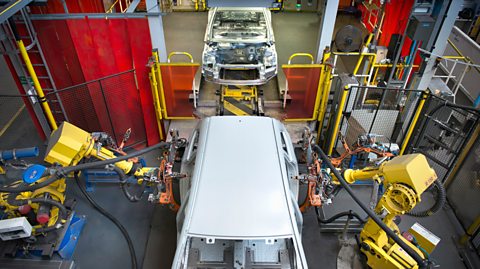
Automation refers to the introduction of machines to do work that was previously done by people.
For example the introduction of self-scan checkouts in supermarkets means that fewer employees are needed on the tills. With driverless cars and deliveries by drone on the way, businesses will need to think about how many people they employ and which new jobs will be needed to support advances in technology.
For example, a growth area of the future is expected to be nanotechnology – which will see devices, such as electronic circuits, being built from single atoms and molecules.
E-commerce
More and more firms are online. This widens the number of customers and lowers the costs of production but it is highly competitive.
