Hotel facilities
If you want to choose the most suitable hotel, you need to know some additional vocabulary.
Hilfsvokabeln– Helpful vocabulary
- die Hotelbeschreibung (f) – hotel description
- direkt am See – right by the lake
- der Parkplatz (m) – car park
- der Fahrstuhl (m) – lift
- die Klimaanlage (f) – air con
- der Haartrockner (m) – hairdryer
- die Dusche (f) – shower
- das Sat-TV (nt) – satellite TV
- der Fitnessraum (m) – gym
- ausgestattet (adj) – equipped
- kostenlos (adj) – free, without cost
- das WLAN (nt) – wifi
- der Zugang (m) – access
- zur Verfügung stehen – to be available, to be at someone's disposal
Here is a short paragraph describing a hotel.
Hotelbeschreibung – Seehotel
Unser drei-Sterne Hotel mit privatem Parkplatz liegt direkt am See. Die 40 Zimmer sind alle mit Dusche, WC, Sat-TV, Haartrockner und Klimaanlage ausgestattet. Die Zimmer haben auch Telefon und kostenlosen WLAN-Zugang. Für unsere sportlichen Gäste stehen auch ein Fitnessraum und eine Sauna zur Verfügung, aber es gibt keinen Fahrstuhl.
Question
Look at this information about the Strandhotel and write a description based on the details given.
Use the paragraph about the Seehotel above as a guide.
Hotelbeschreibung – Strandhotel
Unser drei-Sterne Hotel mit privatem Parkplatz liegt direkt am Strand. Die 50 Zimmer sind alle mit Dusche, WC, Minibar, TV und Haartrockner ausgestattet. Die Zimmer haben auch WLAN-Zugang1, aber es gibt keine2Klimaanlage. Für unsere sportlichen Gäste steht3ein Schwimmbad zur Verfügung. Das Hotel hat auch einen Fahrstuhl und ein Restaurant4.
Did you remember?
- The leaflet does not say the wifi is free, so you don't need to include the word kostenlos.
- Klimaanlage is feminine (die Klimaanlage), so you have to change keinen to keine in the accusative case after es gibt.
- Schwimmbad is singular, so you have to use the singular form of stehen, which is steht.
- Fahrstuhl is der Fahrstuhl (m) and Restaurant is das Restaurant (nt). When used after haben, they must be in the accusative case.
If you wanted to, you could swap the verbs haben and sein around, but you must make sure you change the verbs and the cases to match them, eg
- Die 50 Zimmer haben alle Dusche, WC, Minibar, TV und Haartrockner.
- Die Zimmer sind mit WLAN-Zugang ausgestattet.
- Die Zimmer haben keine Klimaanlage./Die Zimmer sind nicht mit Klimaanlage ausgestattet.
- Es gibt ein Schwimmbad./Das Hotel hat ein Schwimmbad.
- Das Hotel ist auch mit Fahrstuhl und ein Restaurant ausgestattet./Es gibt auch einen Fahrstuhl und ein Restaurant.
Did you know?
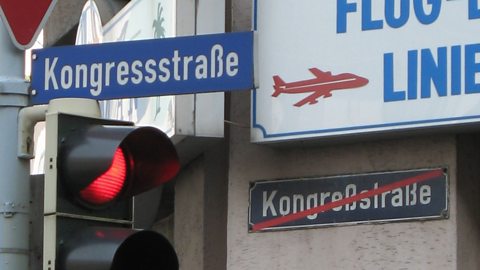
When you write in German, spelling matters. In 1996, Germany introduced a spelling reform – die Rechtschreibung – to try to simplify German spelling.
For example, the letter ß, known as scharfes S or Eszett (originally a mixture of s and z), was replaced by the letters ss in some words, eg daß (that) has become dass and muß (must) has become muss.
However, the words Straße and groß have both kept the letter ß, as ß is required after a long vowel sound. The scharfes S is also maintained when it follows two vowels together, eg ich heiße (I'm called), außer (except), schließlich (eventually, in the end). In Swiss German, ß is not used at all – only ss is used.
Previously, if double letters were followed by the same letter again, one letter was dropped to avoid three of the same consecutive letters. But this is now allowed, so you will see strange looking words like Schifffahrt (from Schiff + Fahrt – journey by boat) or Teeernte (from Tee + Ernte – tea harvest).
One of the simplest reforms was to replace ph with f in borrowed words, so Photo is now Foto and Telephon is spelt Telefon.