Enforcing law and order - new technology and new courts
Advances in technology have allowed the police to identify and track criminals more easily. They can also now use data more effectively.
Impact of new technology
Identification of criminals
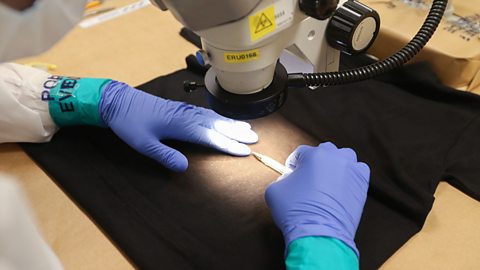
Since the early 1900s, the police have been able to use fingerprints and blood groups to assist them in eliminating suspects and identifying criminals. Since 1984, A method used to identify an individual from their unique sequence of DNA base pairs has also been used. Since every individual’s DNA is unique, this method allows for much more accurate identification of suspects if there are traces of skin or hair left behind at a crime scene.
Data and communication
Developments in technology have allowed police communication to improve:
- A kiosk with a telephone inside, used by police officers or members of the public to contact the police. were used in Glasgow from 1891 and then London after 1929. They allowed officers to call for back-up much more quickly.
- Radios have been used in patrol cars since the 1960s, and portable radios since 1969.
- The police have national databases of fingerprints, missing persons and criminal records that can be accessed by all local forces. Information can be shared and obtained quickly and easily.
Surveillance
The police regularly use Closed-circuit television (CCTV) is the use of cameras to observe different locations, usually for security reasons. to track the movement of suspects on the road and in public places. Some officers also wear small cameras on their uniforms to record incidents that happen while they are on duty. The police can make requests to monitor the emails, text messages and internet use of their suspects.
Courts and juries
Changes to the court system
After 1971, the use of the assizes and quarter sessions ended. In England and Wales, the Crown Court was set up to try the most serious criminal cases in 90 locations (Scotland and Northern Ireland operate their own systems).
A judge who hears cases in court. (previously known as Justices of the Peace, or JPs) preside over magistrates courts’ and hear less serious cases. Magistrates are still unpaid volunteers from within the community, although there are legal advisers in the court to ensure they follow the right procedures. Over half of magistrates are now female. Magistrates hear cases such as:
- minor assaults
- motoring offences
- theft
- handling stolen goods
- TV licence evasion
They can issue fines, unpaid work within the community and prison sentences for up to 12 months. They pass more serious crimes up to the Crown Court.
Juvenile courts
From 1908, specific courts for children aged between 7 and 16 were set up. These are known as juvenile courts.
Juries
Juries now more closely reflect British society as a whole. Women were allowed to sit on juries after 1919 and property qualifications were abolished in 1974. This meant it was no longer a requirement to own property of a certain value in order to be a juror.
However, governments have attempted to restrict the number of trials by jury. The use of a jury in a trial is expensive. Additionally, since information has become widely accessible on the internet, it is difficult to prevent juries from finding out too much about the trial, witnesses and suspects online.
The Crown Prosecution Service
From 1986, the Crown Prosecution Service (CPS) was given the responsibility of bringing cases to trial, something previously done by the police.
