Enforcing law and order - changes to the police force
The range of police activity had widened considerably over the 20th century, but the reputation of the police declined.
Changing image of the police
The period between c.1900 and around the 1960s is often described as a golden age of policing, when the police had a high amount of public confidence and respect. The A slang term for a British police officer, named after Sir Robert (Bobby) Peel, who created the Metropolitan Police Force in 1829. on the beat’ was seen as a trusted authority figure in the local community.
Since the 1970s, there has been a shift in some people’s opinion of the police. Some stopped seeing the police as a positive influence on society and instead believed they had become impersonal, Strict; severe. and, in some cases, corrupt. This has been put down to a number of factors:
- More police officers patrol the streets in patrol cars today as opposed to on foot, as they have bigger areas to cover. This is arguably more effective and efficient, but some people miss the reassurance and visibility of the local ‘bobby’.
- Some people resent the police for punishing what they consider to be petty offences, such as speeding.
- The police have used what some people perceive to be unnecessary force in their efforts to control crowds during A situation when workers refuse to work - as an act of protest - often because of disagreements about pay or working conditions. and protests, such as the miners’ strikes in the 1980s.
- A series of scandals have resulted in the police being accused of cover-ups.
Changing roles and methods of the police
Organisation
- In 1900, Britain had around 200 local police forces.
- After 1964, these were merged to form just 43 police forces in England and Wales.
- Scotland has one national police force, which formed in 2013.
Role of the police
- Police officers in 1900 were already doing more than simply catching criminals. They offered practical help to people and listened to their local issues.
- In the 21st century, the police still handle a wide range of community issues, though many forces no longer routinely deal with lost‑property reporting.
- A police officer's work also includes providing education and writing up reports.
Powers of the police
- Core tasks of the police have stayed the same since 1900.
- These include powers to question and arrest suspects, report or impose fines for minor offences such as speeding (or impose fines), and search property (with a warrant from a A judge who hears cases in court. ).
- But the police powers have been reshaped by major legislation, including PACE 1984 and successive Terrorism Acts.
Specialisation
- The work of the police has increased and become very specialised, so it would be impossible for officers to be trained in every area.
- There are now special police squads in areas such as A false representation of facts made for personal gain. riots, The use of violence and threats to intimidate or coerce, especially for political purposes. prevention and The use of scientific knowledge in solving crimes.
Working with the community
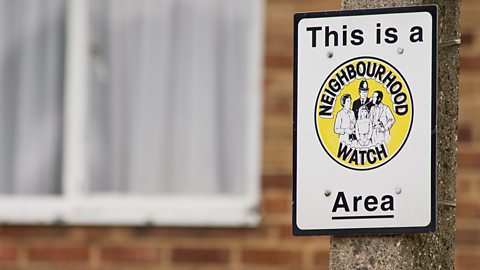
Despite a reduction in the number of police officers on patrol, the police have continued to work with local communities to reduce crime.
- They visit schools and shops, and support When a local community helps one another combat crime in their area. schemes to develop relationships with local people.
- Neighbourhood policing teams are usually made up of small groups of officers who are dedicated to small areas.
- This encourages interaction between the police and citizens. It also allows officers to build up local knowledge.
Use of weapons
- Most police officers continue to operate unarmed. Since 2000, some officers who patrol areas where there has been serious gun crime have been armed, but this is quite rare.
- Overall, only 5 per cent of the police officers in England and Wales are authorised firearms officers. This means they are trained to carry and use firearms.
- Police officers have a range of other weapons to protect themselves, such as A short, thick stick carried by a police officer.An irritant spray that uses chilli based chemicals to subdue a person or group. and An electronic device used by the police to subdue a criminal.
Training and background
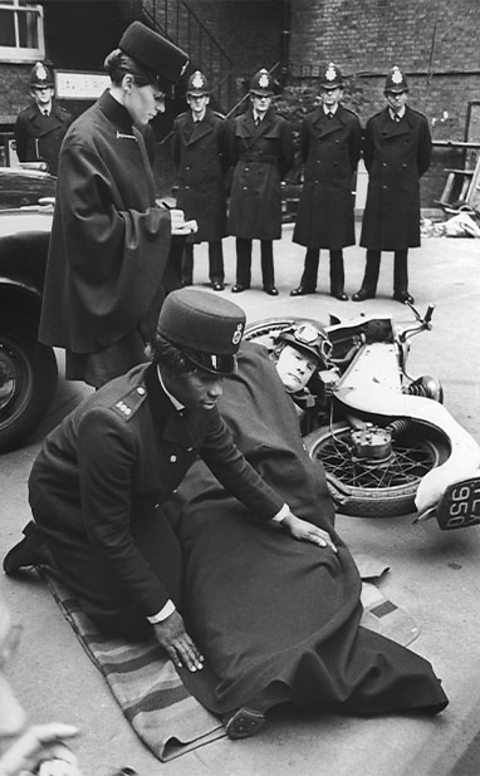
In 1900, police officers tended to be working-class men who received only limited training. Since then, more work has been done to attract candidates from a range of backgrounds.
- The number of female officers increased from 226 in 1939 to over 43,000 in 2021.
- Since 1947, a national police college has offered at least 14 weeks’ training to new recruits.
- A national police training college was set up in 1947.
- In the present day, police recruits now receive more guidance and typically undertake around 18–22 weeks of classroom-based training as well as other additional training before serving as officers.
- Serving officers continue their training throughout their careers.
- Starting salaries for new recruits have increased and candidates need to have a good standard of education.
