The Eucharist
The A service celebrating the sacrificial death and resurrection of Jesus Christ, using elements of bread and wine. is a Religious ceremonies or acts, such as baptism. that commemorates the The meal that Jesus had with his disciples the night before he died where he gave them bread and wine to symbolise his body and blood.. Most, but not all, Christians celebrate this sacrament. The most important elements of the Eucharist are the bread and wine.
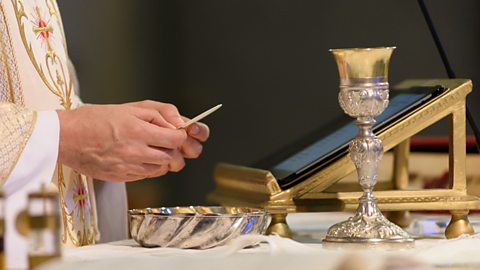
There are many very different Christian beliefs about the significance of the bread and wine in the Eucharist:
- Transubstantiation - A group of Christians who accept the Pope in Rome as their leader. believe that during the Eucharist (which they call Holy Communion) the bread and wine are transformed into the actual flesh and blood of Jesus Christ.
- Commemoration - Some Christians believe that the Eucharist is a re-enactment of the Last Supper. The bread and wine are seen as emblems of Jesus’ sacrifice.
- Symbolic - A member of the Baptist Church, or a Christian who practices believers' baptism. believe that the bread and wine are symbols that can be used to bring people together as a community. Baptists use non-alcoholic wine and the bread is offered from person to person.
- Mystical - Groups of Christians, especially found in eastern Europe, who rejected the idea of the Bishop of Rome being the sole leader of the Christian Church. believe that Jesus is mystically present in the bread and wine.
- Consubstantiation - The Church of England (C of E) is the official Protestant state religion of England. Its supreme governor is the monarch of the UK, with the Archbishop of Canterbury as the most senior priest. Christians believe that the bread and wine contain Jesus’ spiritual presence but do not literally transform into his body and blood (transubstantiation).
Question
What do Catholic Christians believe about the bread and wine in the Eucharist?
They believe that it is transubstantiated. This means that although it appears the same, it has miraculously become the body and blood of Jesus.
