Selecting the set
It’s important that the choice of set suits the style of production and enhances it. The set designer must have an excellent working knowledge of the needs of the play. Their work involves creating multiple locations, sightlines for the audience and entrances and exits for the actors as well as dealing with any set changes that are needed. They must design to support the action rather than for design’s sake. A set that is overly cluttered might detract from the action and make the actors’ job more difficult, rather than supporting them onstage.
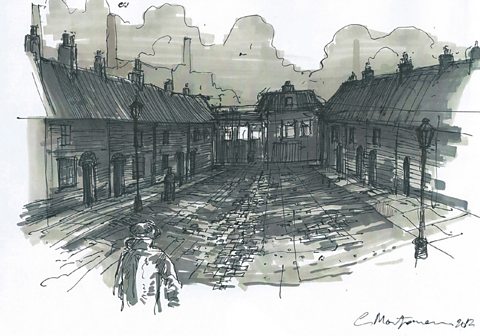
The set designer usually starts by discussing sketches of their ideas with the director (and sometimes the cast). When the choices have been made, they may build a scale model of the set, which is called a model box. This gives them an idea of what the real set would look like and lets them make any necessary adjustments.
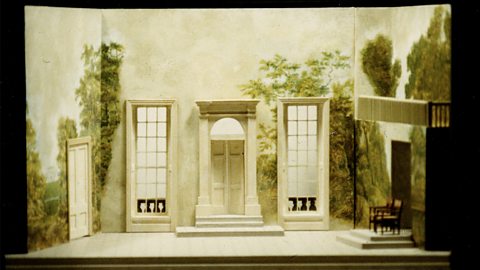
If you're writing about your set choices or the set of a production you've seen, remember to note the colour, texture, shape, scale and style in your review.
Working with a model box
A stage designer explains how she works with a model of the set in this clip from
