Do you find yourself watching hours or fast-paced, sharply-edited videos on social media that you might think of as 'brain rot' content? Maybe you've heard people talking about brain rot and wondered what it means?
If words like 'rizz', 'sigma' and 'skibidi' leave you feeling 'sus' or even 'delulu', read on to find out more!
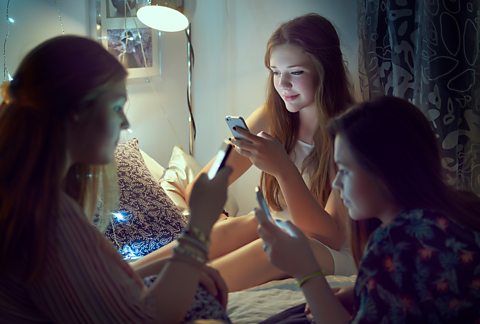
What does brain rot mean?
The Oxford English Dictionary defines 'brain rot' as:
A perceived loss of intelligence or critical thinking skills… [due] to the overconsumption of unchallenging or inane content or material.
'Brain rot' was named the Oxford Word of the Year 2024, showing that concerns around this topic have become a mainstream talking point.
However, the latest report from Ofcom's Children’s Media Lives project suggests children see brain rot not only as a sensation or feeling, but also as a genre. The millions of posts under the 'brainrot' hashtag on TikTok gives some weight to this view.
The children surveyed by Ofcom struggled to define brain rot as a type of video but they are usually short clips, energetically paced, with loud volume, and often incorporate other footage or audio taken out of context.
Is brain rot bad for you?
It's important to remember that, through the centuries, popular entertainment form always change and evolve. Some people may judge current social media videos negatively because they are different from the content that person is used to experiencing.
In fact, one of the earliest recorded uses of the term 'brain-rot' was by Henry David Thoreau in his memoir Walden, published in 1854. We can only imagine what Thoreau would make of our modern world!
However, numerous children cited in Ofcom's report describe "dizzy" and "grumpy" as a result of watching hours of short form online video. They also describe finding it harder now to concentrate on films or longer programming, with a desire to look at their phones.
Read our advice on how to balance your screen time or look at this Newsround article to find out other children's screen time rules.
Parents may be interested in our article which asks, how much screen time is too much?

What is the science behind brain rot?
This article in Science Focus investigated a study by a team of scientists based at a university in China. The study indicated that habitual viewers of short form video content could develop differences in their brain structure. Participants also registered higher levels of envy while watching short reels.
However, the article highlights some limits of the study, which didn't scan participants' brains before and after watching social content, making it impossible to register changes in brain activity or structure.
When technology develops quickly, it can take some time for us to understand how it impacts us and the science behind that.
It's always good advice to think about how you feel when watching online videos or using social media. If you have any worries, speak to a parent, teacher or a trustworthy adult. Check out our online safety: health, wellbeing and lifestyle page for more advice.
What are brain rot words and what do they mean?
Another way to identify brain rot content is to consider the words and terms used in the videos.
Much like general TikTok words and phrases, there are many slang terms specific to the brain rot genre. These phrases are often based on memes and in-jokes. They can become popular quickly but just as easily fall out of use.
What does '6 7' mean?
6-7 emerged as a popular slang term in 2025, rising to prominence through TikTok and Instagram reels. Originating in rap song 'Doot Doot', the phrase really ballooned in popularity when the song was used for edits of basketball player LaMelo Ball, whose official height is listed at 6ft 7.
Despite this, the phrase is essentially meaningless, continuing a time-honoured tradition of young people revelling in that which confuses their elders. The phrase has also been linked to a hand gesture, which resembles two sides of a weighing scale, sent viral in March 2025 by a boy dubbed '67 kid' - one for the CV, eh?
Whilst seemingly pointless, and drawing the ire of many a teacher, some people have even managed to turn the craze into a thriving business.
What does rizz mean?
'Rizz' is a previous winner of the Oxford Word of the Year back in December 2023. A shortened form of the word 'charisma', having 'rizz' indicates charm, attractiveness and the ability to attract a romantic partner.
What does delulu mean?
'Delulu' comes from the word 'delusional' and has a similar meaning: when a person has a strongly held belief which can't be shaken despite evidence to the contrary.
Originally an insult targeted at obsessive K-pop fans, 'delulu' has since, in some cases, taken on a self-affirming meaning: ignoring negativity to strive for your personal goals.
If this sounds 'sus' to you… there's another brain rot slang word! 'Sus' means 'suspicious' or 'suspect' behaviour.
What does sigma mean?
In brain rot slang, a 'sigma' is a confident, independent-minded person, usually a man. Much like 'alpha' males, seen as high status and dominant, and 'beta' males, seen as lower status, 'sigmas' are part of a supposed hierarchy.
These terms are controversial as they have been linked to misogyny. Some schools are keen to ban the terms from being used in classrooms.
What does skibidi mean?
The word 'skibidi' comes from an animated web series about a war between toilets and humanoids!
As slang, 'Skibidi' is interesting because it is essentially meaningless, or to put it another way, it can mean anything depending on the context in which it's used: a sign of joy, disappointment, excitement or even just as a filler sound.
What is Italian brainrot?
Demonstrating how quickly meme culture can develop, 'Italian brainrot' is a sub-genre of 'brain rot' which features exaggerated AI characters with Italian-sounding names and audio.
Silly and surreal on the surface, there are concerns that the characters and videos contain racist and other offensive material.
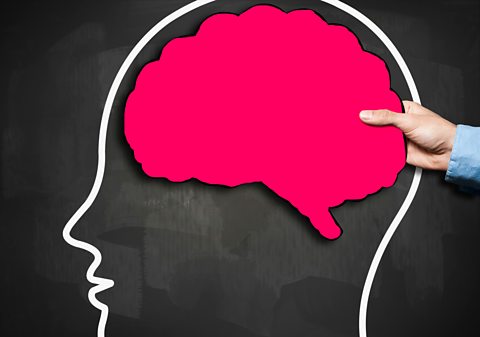
What other concerns are there around brain rot?
Brain rot videos often incorporate footage, audio and text from other sources, but heavily edited and presented out of context. This can lead to the original intended meaning being lost or even replaced, accidentally or purposefully, with a different meaning.
It's important to use critical thinking when watching videos online. BBC Bitesize's Other Side of the Story site is full of tips and advice to improve your media skills.
Find out whether social media biased and learn how to spot a deepfake.
Presenting videos without their original context has contributed to the rise in fake news. Discover the history of fake news, how fake news spreads, then learn more about conspiracy theories and why they're so popular.
Where can I learn more about social media?
Newsround dives into the debate: should children be banned from using social media? with a vote and comments from children.
BBC Radio 4's Word of Mouth explores the language of social media including terms like 'rizz', 'skibidi' and 'IYKYK'.
For advice on how to reduce screen time, take a look at the best alternatives, scaling back screen time and how to enjoy a screen free week as a family.
If you're interested in the content creators making videos for social media, you might enjoy our article: what is an influencer?
Remember to look at all of our online safety tips for advice on staying safe while using social media.
