The Elizabethan theatre
At the beginning of the 16th century many plays were based upon religious themes. These were called ‘morality plays’ and showed good and bad conduct. Others, called ‘miracle plays’ showed scenes from the Bible.
The main exception to this were the plays put on by wandering groups of actors, known as ‘strolling players’. The plays put on by these groups were often far from religious and the authorities tried to ban them.
The themes of plays changed during Elizabeth’s reign and English playwrights began to write comedies and tragedies. By the end of her reign playwrights such as Marlowe, Johnson and Shakespeare were writing the plays for which they are now famous.
As the watching of plays became more popular, theatres were built instead of using the courtyards of inns. The popularity of stage plays led to the building of the Rose, Swan and Globe Theatres in London between 1587 and 1598.
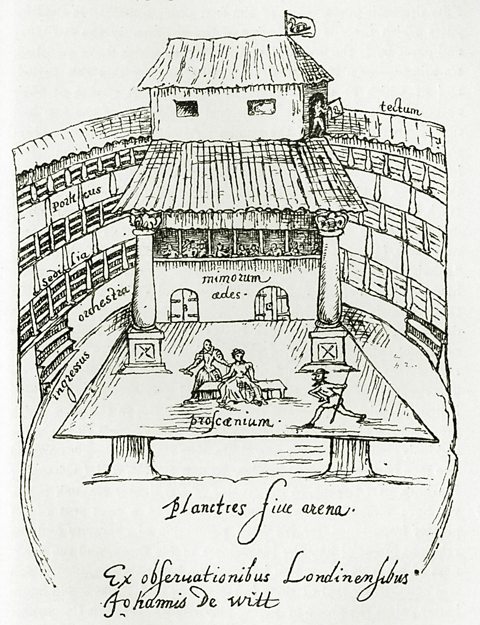
The main features of an Elizabethan theatre
- The theatre was open and plays had to be performed in daylight.
- A flag would be flown from the top of the theatre to show a play was going to be performed.
- People sat around the stage in galleries.
- The cheapest place was in front of the stage where ordinary people stood. They were known as ‘groundlings’.
- There was very little scenery – a character would tell the audience where the scene was set.
- Women’s parts were played by boys.
- Long speeches gave actors a chance to change their clothes.
- There was generally plenty of violence in the plays – Tudor audiences loved it.
