This article was first published in November 2020.
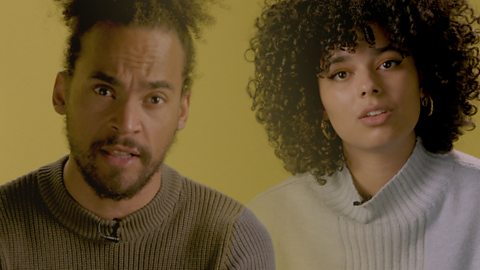
What advice would you give to your younger self if you could meet them now you’re a bit older and wiser? We asked this question to 12 super-talented performers and broadcasters who have all experienced direct or indirect racism.
In this series, they share their stories and talk about how they were judged as teenagers. Here we have Breis and Julie Adenuga telling us about what it was like growing up and how they deal with what they see in the news and on social media today.
We also spoke to psychotherapist, Kemi Omijeh, for some advice on what you can do to take care of yourself from a psychological perspective if you're affected by prejudice or racism. Look out for her tips further down the page.
Julie: She never had any direct experiences of racism. She'd never had face-to-face, sort of upfront, blatant insults thrown at her, so everything was almost like a rumour. It was like Twitter before Twitter – you were sort of reading X, Y or Z person got arrested the other day for nothing, you know, so and so got stopped for driving this car. And the only, sort of, common factor between those people, the common denominator was all of those people were black.
Breis: I think he understood what racism was to the point where he actually became invisible. I think he walked around his estate like a ninja. So the wrong eyes wouldn't see him.
Julie: There was one time that her friend was assaulted by a group of men who had said they were NF members or National Front members. She had to go to the hospital because they had hit him in the head with a brick. The place that they felt safe wasn't as safe as they thought it was.
Breis: As a teenager you don't wanna be invisible, you wanna be seen, but you want to be seen in the right light and you want to be seen by the right people. I don't think self-care was even a concept in his mind. It's all about what's the next adventure. I guess adventure was the self-care, you know, cos you're feeding your soul.
Julie: She tried to not ruffle any feathers, not step on anyone's toes, not say a joke, not be who she was because people always made her feel that was the wrong thing. And that continued to make her angry, because she never had anywhere she could express herself… until she started going raving.
Reporter: Events like this continue in London.
Breis: If you can spot that something is triggering you, something is upsetting you, the best thing is to not go there again. I know many young people who've suffered just by consuming so much of it.
Julie: You have to put yourself in a position where you… something that I love to do, I remove myself from the rat race. I see the rat race, but I also understand that it doesn't serve me well, and so I have to do what I need to do to remove myself from it and to give myself space to be exactly who I'm going to be. It's easier said than done, but it's very important.
Breis: There's something very addictive about consuming these images and these videos once you see them, and it's hard sometimes to cut away from it, because you kind of want to know what happens next or what happened next, or you want to find out more about this. When you're kind of born into it, it's part and parcel of life and existence so, I think it's hard, I think it's very difficult.
Julie: I'll never forget the time I switched off my phone and Frank Ocean released an album. I just wanna say I was really fuming about that. So I do understand. I understand what that might mean, but there's a really, really wonderful feeling that comes with knowing that "cool, yeah, that thing happened" and missing out on that one thing from turning off my phone… The world didn't end.

Breis
Breis (pronounced Breeze) is a rapper who grew up in London and Lagos in Nigeria, and his style of music is a mixture of afrobeats, hip hop and jazz. Breis had a passion for music and words from a young age, but it wasn’t until he finished university that he realised he could have a career in the industry.
Education and learning is something that’s really important to Breis. He’s the author of an interactive rap book and also founded an organisation called Student of Life, where hip hop, rap and poetry are used to inspire schoolchildren and college students.
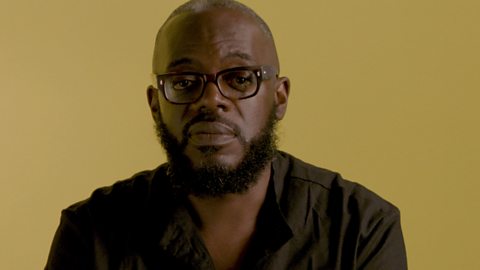
Present Breis on teenage Breis:
I think he walked around his estate like a ninja, so the wrong eyes wouldn’t see him.
Julie Adenuga
Julie Adenuga is a broadcaster who’s hosted radio shows on Rinse FM and the Apple radio station, Beats 1. She was born in London and comes from a creative family. Julie’s two older brothers are British grime artists, Skepta and Jme.
Julie's love of rap and grime saw her present a documentary about Skepta called, Greatness Only. She also hosts her own YouTube show called Julie’s Top 5, where Julie and a panel of special guests take part in a debate about the top five songs of some of their favourite music artists.
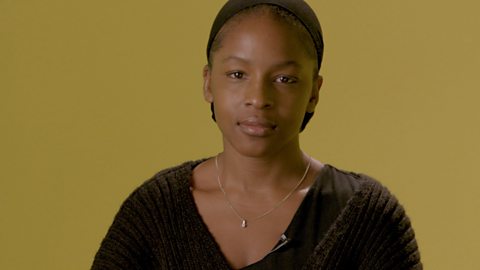
Present Julie on teenage Julie:
She tried to not ruffle any feathers, not step on anyone’s toes, not say a joke, not be who she was – because people always made her feel like that was the wrong thing
What can you do to take care of yourself if you're affected by racism?
We asked psychotherapist, Kemi Omijeh, to take a look at Breis and Julie's film and share her thoughts from a mental health perspective.
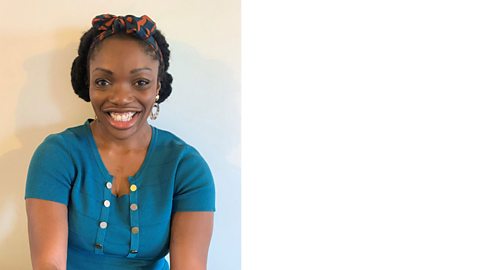
Kemi: There are times when you might feel like you stand out in a way that is not always positive. You don’t have a choice in this visibility, and this could be emotionally overwhelming. If you’re feeling increased alertness, you can be hyper-vigilant. On an ongoing and long-term basis, this is not good for your mental health.
Here are some things you can do to look after your mental health:
Be yourself – don’t change or shrink your personality in order to fit in or make yourself invisible. The truth is, a lot of people invest a lot of time and energy trying to fit in when it would be so much better if we were all simply ourselves. Be your true self, the world needs your qualities. Be sure to set yourself clear boundaries, and don’t sacrifice your mental health for others
Ensure you’re getting enough sleep – prioritising your sleep is prioritising your mental health. Don’t underestimate the impact of sleep on emotional wellbeing. We simply don’t function at our best or make the best judgments when we’re tired
Participate in things that bring you joy – you could do this by finding a hobby or exploring an interest. Try creating a project about something you’re really passionate about or excited by.
If you need support
You should always tell someone about the things you’re worried about. You can tell a friend, parent, guardian, teacher, or another trusted adult. If you're struggling with your mental health, going to your GP can be a good place to start to find help. Your GP can let you know what support is available to you, suggest different types of treatment and offer regular check-ups to see how you’re doing.
If you’re in need of in-the-moment support you can contact Childline, where you can speak to a counsellor. Their lines are open 24 hours a day, 7 days a week.
There are more links to helpful organisations on the BBC Bitesize Action Line page for young people.
Notes to my teenage self: Danny Sapani and Abubakar Salim
Danny Sapani and Abubakar Salim talk about the racism they saw as teenagers and what they've learnt over the years.
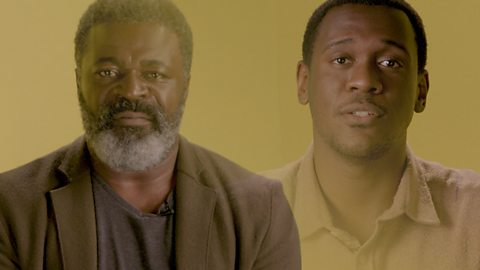
Notes to my teenage self: Percelle Ascott and Remel London
Percelle Ascott and Remel London talk about the racism they experienced as teenagers and what they've learnt over the years.

Notes to my teenage self: Dev Griffin and Sèverine Howell-Meri
Dev Griffin and Sèverine Howell-Meri talk about the racism they experienced as teenagers and what they've learnt over the years.