This article was first published in November 2020.
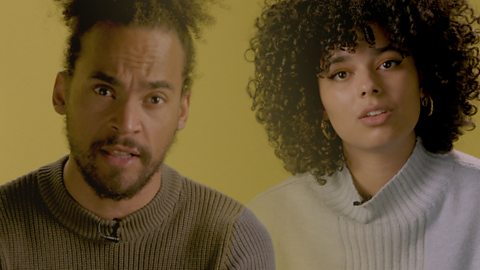
What advice would you give to your younger self if you could meet them now you’re a bit older and wiser? We asked this question to 12 super-talented performers and broadcasters who have all experienced direct or indirect racism.
In this series, they share their stories and talk about how they were judged as teenagers. Here we have Danny Sapani and Abubakar Salim telling us about what it was like growing up and how they deal with what they see in the news and on social media today.
We also spoke to psychotherapist, Kemi Omijeh, for some advice on what you can do to take care of yourself from a psychological perspective, if you're affected by prejudice or racism. Look out for her tips further down the page.
Danny: Racism was all around, it was a part of the fabric of the school, it was part of the fabric of society and it was a danger like many dangers. And you didn’t know where it was coming from but you knew it was there.
Abubakar: I think he started recognising and realising it when he left home and he was a lot more attuned to what was going on via social media. He was angry, he was upset at the fact that this was the one thing he couldn’t change – who he is or what he is. It was frustrating.
Danny: One incident that I can remember is where, somebody would roll down a window and shout insults, and a sense that you had to be twice as good to get by.
Abubakar: He began noticing the representation of people like him in the media when he was going through drama school. He could see the struggling of casting for him, it became very clear that this was another obstacle course that he had to fight.
Danny: If people spoke too loud or drew too much attention to themselves, or their Africanness or their blackness. Knowing that didn’t feel comfortable – could be dangerous and then the police, dealing with stop and search as a 15-year-old, I remember that. My older brother, they beat him within an inch of his life, dropped him off at the doorstep and what followed was a case, eventually he won compensation, but that was commonplace – that was the stories.
Archive footage: Waterloo Station this evening
Archive footage: Don’t shoot
Reporter: A hundred arrests, another six officers injured
Danny: The torrent of images that show the really ugly sides to humanity in the name of news and entertainment – that must be very hard for you to navigate.
Abubakar: The internet is amazing in the sense that it gives you access to everything. There are ways of guarding yourself, protecting yourself and actually being able to process what is happening.
Danny: Trust in your teachers, trust in the people that love you, trust in each other and support each other and find support.
Abubakar: Form a community you feel safe in expressing your feelings and emotions to but also learning and educating yourself as to what is going on.
Danny: Nobody knows how to navigate their way through this, nobody has the book – the blueprint. You are the first generation having to deal with this, I would call it mental abuse.
Abubakar: Maybe your form of protest is aiming to educate yourself and it starts with you and your mind and your health and your feelings.
Danny: When I think of social media to also be a tool for change, we wouldn’t be where we are without it, so you’re holding a very powerful tool in your hand. Be safe.

Danny Sapani
Danny Sapani is an award-winning British actor across film, television, audio drama and stage. He was born in London in the 1970s and has appeared in Black Panther, Star Wars Episode VIII and Killing Eve.
Danny believes in the power of support and thinks it’s important to find trustworthy people to turn to.
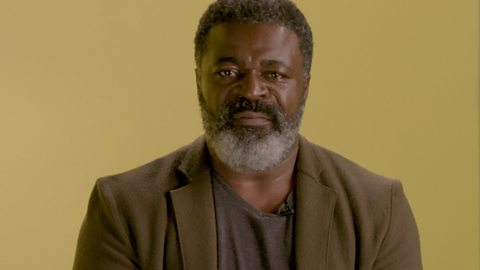
I can remember where somebody would roll down a window and shout insults, and a sense that you had to be twice as good to get by.
Abubakar Salim
Abubakar is an actor and producer from Hertfordshire. He’s appeared in television programmes like, Raised by Wolves, Jamestown, Black Mirror and Fortitude. Abubakar also has a passion for video game development and was the voice of Bayek in Assassin’s Creed Origins.
Abubakar thinks that protecting your mental wellbeing is a step towards protecting yourself against racism.
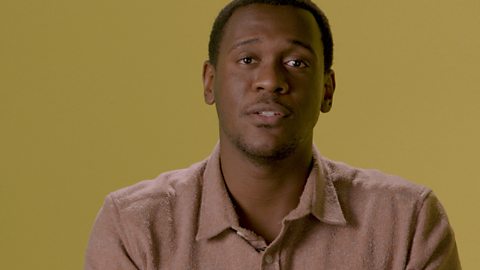
Present Abubakar on teenage Abubakar:
He was upset at the fact that this was the one thing he couldn’t change – who he is, or what he is
What can you do to take care of yourself if you're affected by racism?
We asked psychotherapist, Kemi Omijeh, to take a look at Danny and Abubakar's film and share her thoughts from a mental health perspective.
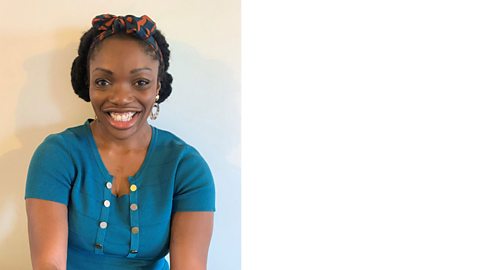
Kemi: In this video, Danny speaks about racism being a part of his entire life, adding that it is “woven into the fabric of our society”. I think this is an important point to pause and reflect on. Racism is everywhere, whether it’s overt or covert, whether we acknowledge it or not. Part of looking after your mental health and protecting yourself against racism is acknowledging that racism exists within our society in so many ways. It may, at times, feel like you are powerless against such a big system that’s not designed with your best interests in mind. I imagine this can bring up a lot of anger and frustration, particularly as you may feel like you are unable to control it. However, you do have the power: there is power in the choices you make.
Here are some things that you can do that are within your control:
There is power in knowledge – know yourself and learn about your history. Our history includes many trials and tribulations but also shows our triumphs, resilience and how far we’ve come. It can motivate us to keep going, to push on
Find your voice – know when to speak up and when not to. Finding your voice will be different for different people. Your voice is unique to you and your personality – it can be a creative expression through art, for example
Trust yourself – and trust your instincts and capabilities. It is important to know that you matter. You deserve to be yourself, freely, and to exist without discrimination – to be allowed to shine.
If you need support
You should always tell someone about the things you’re worried about. You can tell a friend, parent, guardian, teacher, or another trusted adult. If you're struggling with your mental health, going to your GP can be a good place to start to find help. Your GP can let you know what support is available to you, suggest different types of treatment and offer regular check-ups to see how you’re doing.
If you’re in need of in-the-moment support you can contact Childline, where you can speak to a counsellor. Their lines are open 24 hours a day, 7 days a week.
There are more links to helpful organisations on the BBC Bitesize Action Line page for young people.
Notes to my teenage self: Sir Lenny Henry and Kadeem Ramsay
Sir Lenny Henry and Kadeem Ramsay talk about the racism they experienced as teenagers and what they've learnt over the years.
Notes to my teenage self: Breis and Julie Adenuga
Breis and Julie Adenuga talk about the racism they experienced as teenagers and what they've learnt over the years.
Notes to my teenage self: Dev Griffin and Sèverine Howell-Meri
Dev Griffin and Sèverine Howell-Meri talk about the racism they experienced as teenagers and what they've learnt over the years.