This article was first published in November 2020.
What advice would you give to your younger self if you could meet them now you’re a bit older and wiser? We asked this question to 12 super-talented performers and broadcasters who have all experienced direct or indirect racism.
In this series, they share their stories and talk about how they were judged as teenagers. First up, we hear from Sir Lenny Henry and Kadeem Ramsay about what it was like for them growing up and how they deal with what they see in the news and on social media today.
We also spoke to psychotherapist, Kemi Omijeh, for some advice on what you can do to take care of yourself from a psychological perspective if you're affected by prejudice or racism. Look out for her tips further down the page.
Lenny: He grew up with racism, his life from being born to this moment in time was suffused with racist comments, micro and macro-aggressions. He got beaten up over the park because of racism, he got called names almost every day going to school, because of racism, so he was dipped in it.
Kadeem: My parents always told me about racism, but I can’t really recall an experience that I was aware of it – at the time I might not have realised but I just think white society saw him as another statistic really, you know, another black boy from the area, up to no good but they’re wrong – they’re wrong.
Lenny: He was judged because of the way he looked, continually, and it was his decision to overcome that every day. And at school he might have to overcome it physically, or, as happened later, he might have to think of something clever or funny to say, to overcome it.
Kadeem: It was really my mum who I would go to and she would just show me that you cannot listen to these kids, why would you show them that it’s affecting you? The more you show that its affecting you, the more they’re going to do it. So it’s even gotten to the point where I even take the mick out of myself.
Lenny: If you’re angry, breathe – breathing’s a really good thing. I would also run, if you cant breathe, run.
Archive footage: They support Enoch Powell
Archive footage: Crowd chanting
Newsreader: At the moment there is really anger here, in fact it’s not just anger, it’s rage.
Lenny: It’s hard for today’s teenagers to because the world is much much smaller than it was when I was 14, 15, 16. There were three channels on television, so we didn’t see everything, it was just on the news at six or at ten o’clock. So you had time to process it, nowadays, we’re bombarded with news and I think when you’ve got that much access, of course it’s going to affect you.
Kadeem: You’re going to see a lot of information online, you’re going to see a lot of information on the TV, you have to do your own research.
Lenny: I was affected by what happened to George Floyd in an incredibly deep and triggering way, I saw a few minutes of it and it really really upset me, but, if you’ve watched it on your phone, 40 times, it’s going to really upset you.
Kadeem: You don’t have to go out and protest, you know what I’m saying, you can show your dedication in other ways. When you’re not calm, and you do things out of rash and out of anger, it won’t come out as the way you expect it – it’s not going to come out properly.
Lenny: Speaking as someone who sat on his hands for quite a long time before getting involved in any kind of activity that was about activism or protest, I feel that young people are a huge energy source – anger is an energy, caring is an energy, kindness is an energy.
Kadeem: You lot are the next lawyers, the next doctors, the next businessmen, the next actors, you lot have rally got to keep your head on.

Sir Lenny Henry
Sir Lenny Henry is a comedian, writer, presenter and actor who’s passionate about equality.Lenny didn't always have an easy time when he was growing up – he was called names at school and witnessed race riots near his hometown of Dudley in the West Midlands, but he’s worked hard to use his talent to help people all over the world.
Giving back is something that’s been important to Lenny throughout his career – he co-founded the charity Comic Relief and he’s the Chancellor at Birmingham City University. Lenny has become more and more involved with political activism in recent years and he wants to see better diversity in education and careers.
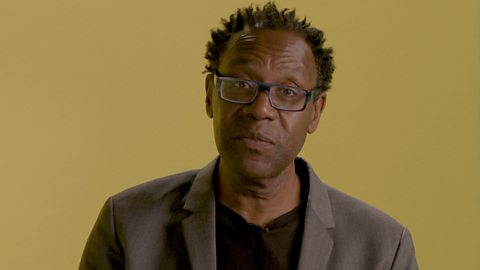
Present Lenny on teenage Lenny:
He was judged because of the way he looked continually, and it was his decision to overcome that every day.
Kadeem Ramsay
Kadeem Ramsay is an actor who’s been in shows like Top Boy, Sex Education and the YouTube series, Blue Story. He used comedy as a way of getting noticed in his early career by making sketches for his Instagram, Twitter and Facebook followers to watch.
He grew up in London and went to drama school before signing up to a talent agency. Kadeem is proud of being an independent thinker and wants young people to take time to think about their actions and not necessarily follow the crowd.
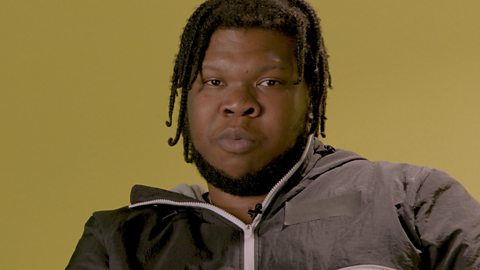
Present Kadeem on teenage Kadeem:
I just think white society saw him as another statistic – another black boy from the area, up to no good – but they’re wrong.
What can you do to take care of yourself if you're affected by racism?
We asked psychotherapist, Kemi Omijeh, to take a look at Lenny and Kadeem's film and share her thoughts from a mental health perspective.

Kemi: Listening to Lenny and Kadeem’s accounts of racism brings to mind how racist behaviour has changed over the years. The effect, however, is still the same. Racism is wrong. You have to continually remind yourself of this fact because it can feel personal and you need to protect yourself against that.
There are a number of ways you can protect yourself against micro and macro aggressions:
Notice and identify racism and your reactions to it – think about what’s happening to your feelings when you experience acts of racism. You can learn a lot by paying attention to your reactions, and this can help you feel more in control of how you might react in the future. You can be selective about what is worthy of your reactions and what isn’t – it's impossible to respond to every act of racism without it draining you
Think positively about yourself – really focus on celebrating your strengths and capabilities and try speaking about yourself in a positive way. A visual representation of your good qualities can help too – think about putting together a mood board or picture collage that reminds you of a happy time. Also, are there ways you can empower yourself? Consider reading up on history or when you're with friends, lift each other up and remind one another of your value
There's more than one way to fight – Lenny and Kadeem both talk about dealing with racism in different ways, remember that setting clear and firm boundaries for yourself is a way of fighting back. Keeping away from spaces and people that drain your energy or affect your mental health is also a way of fighting because you're protecting and looking after yourself
Reach out and be open – speaking to someone who understands the way you're feeling can be a great source of comfort. There will always be someone who is in your corner, so remember you're not alone. If you're still feeling overwhelmed then seek professional help. There are some links at the bottom of this page
It’s okay to feel angry – but think about what you can do with that anger. You can channel it into something positive and meaningful. Think about taking part in positive community-based activities – this can foster a sense of belonging and help you build a support network
Take regular breaks from social media and the news – with so many instant updates at our fingertips, it's good to be aware of the news, but don’t allow it to consume your day.
If you need support
You should always tell someone about the things you’re worried about. You can tell a friend, parent, guardian, teacher, or another trusted adult. If you're struggling with your mental health, going to your GP can be a good place to start to find help. Your GP can let you know what support is available to you, suggest different types of treatment and offer regular check-ups to see how you’re doing.
If you’re in need of in-the-moment support you can contact Childline, where you can speak to a counsellor. Their lines are open 24 hours a day, 7 days a week.
There are more links to helpful organisations on the BBC Bitesize Action Line page for young people.
Notes to my teenage self: Dev Griffin and Sèverine Howell-Meri
Dev Griffin and Sèverine Howell-Meri talk about the racism they experienced as teenagers and what they've learnt over the years.
Notes to my teenage self: Sir Lenny Henry and Kadeem Ramsay
Sir Lenny Henry and Kadeem Ramsay talk about the racism they experienced as teenagers and what they've learnt over the years.
Notes to my teenage self: Percelle Ascott and Remel London
Percelle Ascott and Remel London talk about the racism they experienced as teenagers and what they've learnt over the years.