It’s one of the most used websites in the world – but do you know what ChatGPT actually means?
The AI-platform’s name is commonly known by the initialism, without us always actually knowing what GPT stands for.
BBC (another initialism there, but hopefully you know we’re the British Broadcasting Corporation) Bitesize explores what some of the names of things we say every day actually mean.
ChatGPT
Love it or hate it – ChatGPT is now consistently in the global top-five most visited websites in the world, despite the fact that it doesn’t have all that snappy a name.
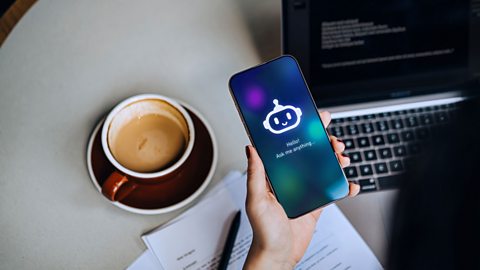
GPT in its name stands for Generative Pre-trained Transformer – we know it better as an AI chatbot. The artificial intelligence tool was first launched for public use in November 2022. It’s been trained on vast amounts of information from books, websites and articles and has been used to write content, answer questions and create images.
However, while its popularity and use is undoubtedly on the rise, ChatGPT is not without controversy. One thing its response models aren’t always taking into account is accuracy as it doesn’t always get things right first time and often seems to confirm the prompt rather than challenge. There are also ethical concerns over ChatGPT – particularly when it comes to the privacy of the things we’re asking it and its use within education.
Emoji
You probably send dozens of smiley faces, crying faces, hearts and ticks every day – but do you know why they’re called emojis?
The word emoji comes from the Japanese language – in kanji, it is written 絵文字. It comes from two separate words - e (絵) meaning picture and moji (文字) meaning character or letter, so emoji (絵文字) makes picture characters.
They take a Japanese name because the first emoji sets were created in the country. There’s some dispute over which tech giant created the first system, with Sharp, NEC and Softbank establishing emoji character sets in the 1990s. The first widely recognised set was created in 1999 by Shigetaka Kurita for the Japanese mobile phone service NTT DoCoMo.
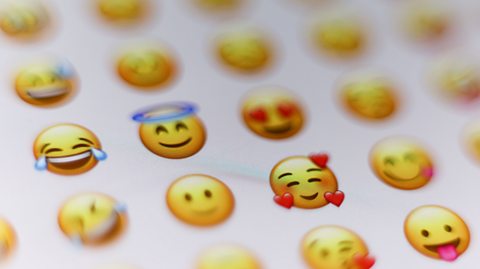
He designed 176 tiny pixel icons, symbols representing a heart, various weather, transport and faces – designed to take advantage of smaller screens and text message character limits.
The rival sets meant different networks had different emojis and led to compatibility issues. In 2010, emojis were added to the Unicode Standard – a system which allows text and symbols to work across different platforms and languages.
GPS
If you’ve ever used a map on your phone for directions, shared your location or even played Pokémon Go, then you’ve used GPS. But what is it?
GPS stands for Global Positioning System and was developed by the United States Armed Forces in the 1970s.
The system works by having a series of satellites orbit the Earth which can pinpoint the location of your device, such as a phone, smart watch or tablet.
While the system was developed in the 1970s, it wasn’t made available for public use until the 1990s – but it’s not the only system your phone will use.
While GPS is the US satellite system, there are also others used across the rest of the world as well – with several of these systems able to work together to produce more accurate results.
GPS has become a catch-all term for these systems, but technically, it only refers to the US version.
ASMR
Do you ever get a tingling feeling when you hear certain sounds or see some movements? Then it’s likely you experience ASMR.
ASMR stands for Autonomous Sensory Meridian Response. It’s a relatively new concept and describes the way some people’s brains respond to calming and often predictable sounds.

The term was proposed in an online forum in 2010 by Jennifer Allen – a cybersecurity manager in the United States who was an active participant in what became the ASMR community.
ASMR quickly became a huge trend on platforms such as YouTube or social media – particularly during the Covid-19 pandemic, as people looked for simple ways to relax, sleep better or improve sleep. Common ASMR triggers used in content include whispering, tapping or other soft repetitive noises - and it's enjoying a resurgence in social media cooking clips.
PIN
While contactless or mobile payments are the order of the day, there was a time where you couldn’t purchase anything with your card without remembering a special four-digit code.
(BBC Bitesize will spare older readers from the memories of credit card imprinters and cheque books)
That code is known as your PIN – but definitely not your ‘PIN number.’
PIN stands for Personal Identification Number (hence why PIN number is an unnecessary term) and was first introduced in 1967.
Barclays had the first ATM in London (again, never ATM machine as ATM stands for Automated Teller Machine) which initially processed cheques, rather than bank cards, using a customer’s PIN to verify the security. The system was designed by Scottish inventor James Goodfellow.
While the advent of contactless means your PIN isn’t used as frequently as it used to, it’s still a vital and important code to remember – ATMs still work on a Chip and PIN basis for you to withdraw cash.
This article was published in January 2026
Doodling - what are the hidden wellbeing benefits?
BBC Bitesize explores the hidden wellbeing benefits of picking up a pen and doodling

Five amazing robots aiming to help the planet
Discover more about the robots aiming to tackle environmental issues

Six things you might not know about emoticons :-)
Who invented the emoticon and did it exist before computers?