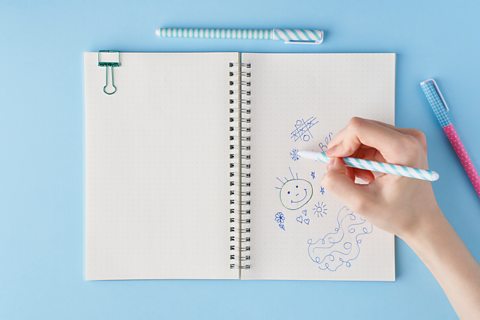
Have you ever found yourself listening to an important piece of information, pen in hand ready to make notes, but the first thing you ‘note down’ is actually a simple star shape instead of that all important info? Then, before you know it you, that scribbled star has become a galaxy across the page, and still none of the facts. It’s a classic case of doodling - one, details - nil!
It may seem like an unassuming artistic act, or a sign of distraction over detail, but might doodling actually be good for us? Is there more to it than just a fun looking drawing? Ahead of National Doodle Day, BBC Bitesize spoke to three people in the know, to find out just what is happening in our heads when we doodle, and the benefits of getting a little bit arty.

Why do we doodle?
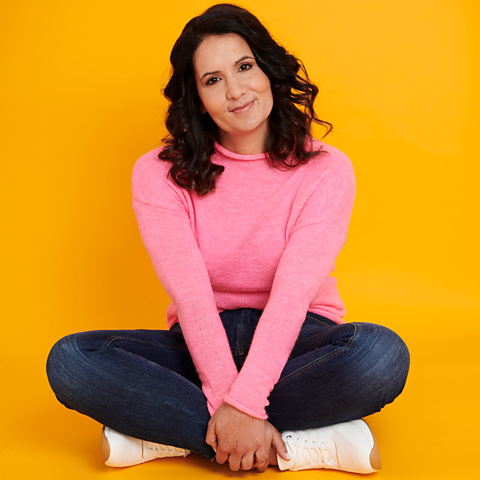
Dr Radha Modgil is no stranger to BBC Bitesize and is equally no stranger to doodling. She can often be found doodling images of her dog, flowers, trees, or her favourite animal - the elephant. But Dr Radha admitted that sometimes she “just doodles patterns or lines, with no form or shape or meaning which I really like.”
“I do it because I think it’s healthy to do things without ‘achievement’ or reason in mind…”
With a keen interest in art and creativity for health, Dr Radha told us that “doodling benefits people in so many ways - it can help us process feelings and thoughts as well as allowing some space for reflection.” And it doesn’t stop there. According to Dr Radha, the act of doodling “can allow us to connect more deeply with ourselves; our creative, imaginative and dreamy self.”
This might explain why many of us will have picked up a pen and doodled freely at some point, possibly without realising the underlying benefits.
 Image source, Emma Dearling
“It’s just so soothing”
One person who can relate to the benefits that doodling and drawing can provide is 29-year-old, Emma Dearling from Surrey. She uses her instagram account, @byemmadearling, to share doodles and illustrations of her experiences of epilepsy.
Emma was diagnosed with the medical condition in 2019, and now uses her vibrant illustrations to educate others. She explained “it’s not just seizures, that’s a massive thing that needs to be learned. In my own experience my sleep, and at times my levels of anxiety have also been affected.”
“I’ve got illustrations of me being in a hospital bed which sounds horrific but it was kind of therapeutic to draw”
When she was first diagnosed Emma took to drawing as a means to get through many visits to hospital. She described the act of getting out her iPad (she doodles digitally) as “almost a therapy” as it provided her with “a distraction” from what was going on. But it also gave Emma, who calls herself 'the Epileptic Illustrator' online “a way of working through the emotions” around what she was going through.
Now, nearly seven years on from her initial diagnosis, Emma explained that “alongside the epilepsy itself, the mental health side of it has been the biggest challenge, because it’s something that’s never going to go away.”
This is where Emma's illustrations, which she now also sells, have really helped. “When it comes to illustrations, I’m very much a cartoon kind of girl,” explained Emma. She cites TV series such as The Simpsons and American Dad, as inspirations not just stylistically, but “because they can talk about more taboo subjects.”
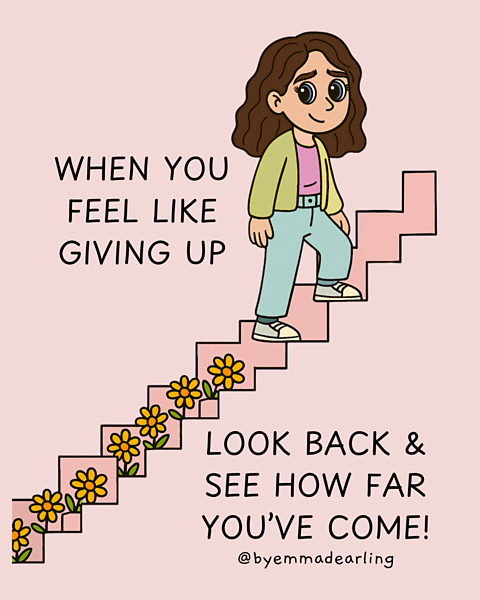 Image source, Instagram/Emma Dearling/@byeemmadearling
“Busy hands, quiet mind”
There’s no hiding from the fact that doodling and drawing, despite now being a job for Emma, also give her a lot on a personal level too. “Sometimes it just shuts out all the noise. You go from having a busy day and all of these thoughts, then as soon as you sit down and draw, it’s like all the noise just turns off, there’s a kind of peaceful silence,” she explained.
And as well as a calming quiet, getting creative also provides Emma with a lot of delight. She said, “no matter what you do there’s no wrong answer and that in itself is quite beautiful.”
Emma was speaking to us in the lead up to the 21st National Doodle Day, an annual event organised by the charity Epilepsy Action. This year it takes place on September 26th.
Emma’s top tips for getting started with doodling
- Don’t compare your stuff to anyone else's. Being unique is the best thing you can be.
- If you can, think about adding colours. People do amazing things in black and white, but for me, adding colour just adds that life, spark and excitement!
- Just do it - there is no wrong answer when it comes to being creative!
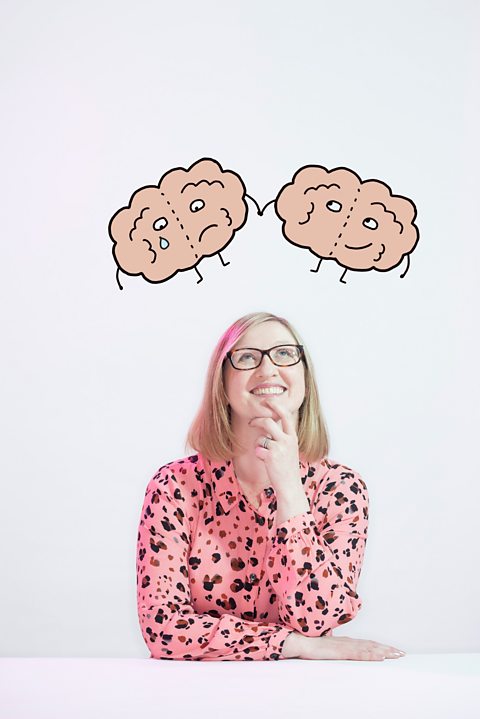 Image source, Emma Hepburn/Chris Close
Dr Emma Hepburn is both a clinical psychologist, author and (importantly) a doodler come illustrator. During the Covid-19 pandemic her doodling went viral. It helped many to make sense of what was going on in their minds, and how they might have been feeling during such a strange time.
With an interest in both camps Dr Emma, or 'The Psychology Mum' as she is known to her 147,000 instagram followers, seemed to be one of the most appropriate people to talk to about what might be going on in our heads when we doodle.
“When we switch off, we often have ideas”
Dr Emma has been doodling flowers and brains since she was a student. She explained that some research is shifting from thinking about the different parts of the brain, and toward researching different networks that exist. Though researchers are far from fully understanding these. Discussing recent findings she explained that “the default mode network in the brain has become this big thing everyone has been talking about.” This network is associated with “non-goal directed thinking… you’re not having to focus on the task to achieve it… and it is linked to creative thinking.” Further investigation is needed to determine if this network is used when we doodle. But as Emma explained “when we switch off, we often have ideas.”
“Doodling helps you switch off”
When mental health is talked about, one theme that regularly appears is stress. In terms of our bodies and brains “stress is linked to the firing of the sympathetic nervous system… our fight-or-flight response,” explained Dr Emma. “If we want to manage stress, it’s about down-regulating that response,” she continued
And that’s where the effect of doodling comes in. “It helps you switch off, it down regulates that stress response, because you’re no longer focussing on the stressful things, you’re doing something you enjoy,” explained Dr Emma.
Can doodling actually help you focus?
Doodling may be stress relieving, but what else? Some research has looked into the question of whether free-doodling can actually help you focus on a task. However, Dr Emma suggested an element of caution here. “Personally speaking it can keep my focus, but I think it depends on the nature of the person, the type of doodling, and the nature of the task as well,” she told us. But that’s not to say that perhaps for some people, doodling during a task might give them a break. “If I switch off for a moment with a doodle, it might help be get back into it,” she suggested.
“Adults love it as well”
Whilst Dr Emma suggests questioning studies around focus, one thing she does believe is that doodling is a great way of expression. She explained “some things can be difficult to express, like emotions and how you feel, but these can be more easily expressed in an image.”
Having used the doodling approach in her clinical work, she was quick to add that “we have this view that adults shouldn’t play or do these creative things, but adults engage with it just as much as children… they love it as well.”
Dr Emma’s top tips for doodling:
Think about the purpose of your doodling. If you just want to have fun, then do something free-flowing on the page and don’t think too much about it.
When doodling with the intention of making sense of your experiences, just start doing it rather than thinking about it too much.
Enjoy it. Don’t focus on the end result, focus on what you’re doing at that point in time.
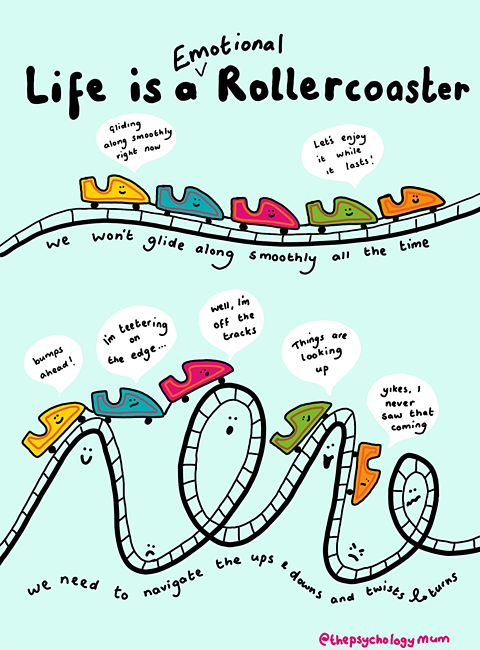 Image source, Instagram/Emma Hepburn/@thepsychologymum
If you need support
You should always tell someone about the things you’re worried about. You can tell a friend, parent, guardian, teacher, or another trusted adult. If you're struggling with your mental health, going to your GP can be a good place to start to find help. Your GP can let you know what support is available to you, suggest different types of treatment and offer regular check-ups to see how you’re doing.
If you’re in need of in-the-moment support you can contact Childline, where you can speak to a counsellor. Their lines are open 24 hours a day, 7 days a week.
There are more links to helpful organisations on the BBC Bitesize Action Line page for young people.
This article was published in September 2025

World of Wellbeing: What is wellbeing and how to tell if yours is good or bad?
Wellbeing and education influencer Kit Brown asks Dr T what is wellbeing? They reflect on their own wellbeing struggles and learn practical tools to improve their wellbeing.
Five must-see pieces of public art
From walls to train stations to entire villages – artists have taken ordinary surroundings and turned them into things of beauty