What you need to know about Mercury retrograde
It’s that time of year again, when posts about “Mercury in retrograde” or "Mercury retrograde" start appearing on socials.
In 2026, there are three Mercury retrograde periods - the most recent being 29 June until 23 July. You might have seen posts about it flash across your FYP or think you know all about the planets in our solar system - but what does Mercury retrograde actually mean?
Well, here at BBC Bitesize, we've put together this guide to break down some of the biggest questions around Mercury retrograde: What is it? How can you see it? What effect do some people believe it has on their lives?

What does Mercury retrograde mean?
Before we get into the details - what does retrograde mean? The word generally means moving backward, reversing direction or returning to a previous state.
But in astrology, 'Mercury retrograde' refers to a period when, due to an optical illusion, the planet Mercury appears to move backwards across the sky as seen from Earth.
Usually, planets move from west to east across the night sky - meaning if you look at the sky two nights in a row, the planets should have moved a little further east.
However, during periods of apparent retrograde motion, planets appear to do the opposite. So, when people refer to Mercury in retrograde, they're referring to the period when Mercury appears to move from east to west across the sky. During this time, the planet appears to be moving backwards, though this isn't actually the case…
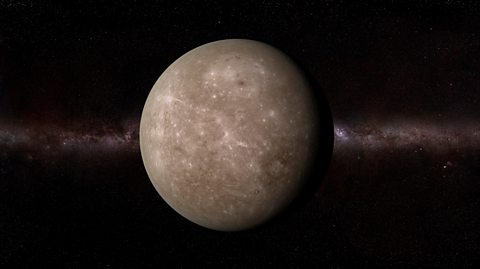
What causes Mercury retrograde?
All planets actually have periods of retrograde motion, caused by the different speeds at which they move around the sun.
You see, planets are never actually moving backwards, it simply looks like they are (which is why some prefer the term apparent retrograde motion). Think of two cars on the motorway, as one speeds past the other, the slower car appears to be going backwards, this is similar to planets in retrograde.
Mercury orbits the sun, completing a loop every 88 days. The Earth, on the other hand, takes 365.25 days to orbit the sun - meaning Mercury overtakes us three to four times per year.
During these periods, it can appear as though Mercury is going backwards - giving rise to the phrase Mercury retrograde.
More of a visual person?This BBC News article has a handy visual guide to Mercury retrograde!
Why does Mercury retrograde appear on socials?

Mercury retrograde has been observed and documented by humans for thousands of years, but recent years have seen it take on new life across social media.
Mercury takes its name from the Roman God - you guessed it - Mercury. In mythology, Mercury was a messenger god responsible for communication between the divine and mortal realms. As a result, the planet Mercury has taken on a strong astrological significance in matters of communication.
Astrologists believe that in periods of Mercury retrograde, communication technologies (like phones) are more likely to break, miscommunication is more likely, and relationships are liable to break down. Astrology followers view Mercury retrograde as a period of turbulence that should be approached with caution.
Astrology, which is the pseudoscientific belief that the position of stars and planets can affect events on Earth, is pretty popular on socials - which probably accounts for the spike in posts you might see around Mercury retrograde.
And it doesn't just end at posts, you can get Mercury retrograde T-shirts, tote bags and even pillows!
The term, if not the belief, has also spread beyond normal astrological circles - with celebs like Taylor Swift mentioning the phenomenon in past interviews.
When does Mercury appear to be in retrograde?
Mercury overtakes Earth in its orbit around the Sun about three or four times a year, which means Mercury appears in retrograde the same number of times.
2026 brought with it three instances of Mercury retrograde, two of which have already occurred:
- 26 February - 20 March
- 29 June - 23 July
- 24 October - 13 November
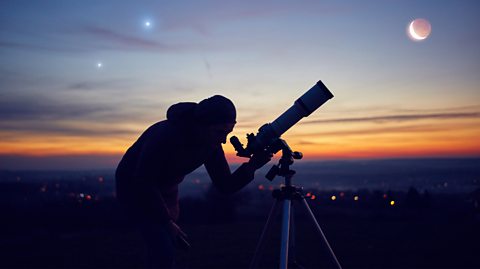
How does Mercury retrograde affect you?
For the most part, it won't have any effect on your daily life.
Despite popular myths in astrology saying that Mercury retrograde can have all sorts of negative effects - like grounding planes and breaking smartphones - there's no scientific backing for this.
Astrology itself is a pseudoscience, functioning more as a system of belief than anything else. So, we wouldn't waste too much time worrying about Mercury retrograde, as there's no scientific evidence that the position of Mercury - or any other planet, for that matter - has any predictable effect on human behaviour.
Do other planets go into retrograde?
There are eight planets in our solar system - celestial bodies that orbit a star and can be made up of rock, gas or a mix of both.
Mercury is one of four inner planets - it is a terrestrial planet, or rock planet, which is closer to the Sun so generally warmer. Mercury is the planet in our solar system that is closest to the Sun.
But an outer planet is further away from the Sun and generally colder. There are also four of those, known as gas giants.
But do all planets go into retrograde? The answer is yes they can - but the retrograde cycle will differ depending on the planet. So if you hear of, say, a Mars retrograde, Saturn retrograde or a Venus retrograde, don't dismiss it!
In case you wondered, the Sun and the Moon never go into retrograde. It is only our planets that appear to move backwards, which is known as planetary retrograde.
Challenge: Can you put the planets in order?
We've created a list of all eight planets in our solar system. But can you put them in order from the Sun, starting from nearest and working outward.
Test your knowledge and see if you can complete our Bitesize challenge. Good luck!
This article was published in February 2026 and updated in July 2026
