Key points about describing shops and shopping
Use the immediate future tense to talk about what you are going to buy in the future.
The immediate future tense is formed by using the A verb that describes an action that is happening now or that happens regularly, eg I eat breakfast. of ir (to go) and the Form of the verb that has not been conjugated. Usually translated with 'to' in English, eg to play..
The simple future tense is used to say what will happen and is less common than the immediate future.
This guide contains a video comprehension and reading practice.
Vocabulary – Talking about shopping in Spanish
Useful nouns for talking about shopping include:
| Spanish | English |
|---|---|
| Check your connection, refresh the page and try again. | size |
| Check your connection, refresh the page and try again. | colour |
| Check your connection, refresh the page and try again. | make, brand |
| Check your connection, refresh the page and try again. | till, box |
| Check your connection, refresh the page and try again. | shop |
| Check your connection, refresh the page and try again. | price, cost |
| Check your connection, refresh the page and try again. | money |
Useful verbs for talking about shopping include:
| Spanish | English |
|---|---|
| Check your connection, refresh the page and try again. | to buy (online) |
| Check your connection, refresh the page and try again. | to spend (money) |
| Check your connection, refresh the page and try again. | to wear |
| Check your connection, refresh the page and try again. | to change |
| Check your connection, refresh the page and try again. | to open |
| Check your connection, refresh the page and try again. | to close |
| Check your connection, refresh the page and try again. | to sell |
| Check your connection, refresh the page and try again. | to go shopping |
| Check your connection, refresh the page and try again. | to choose |
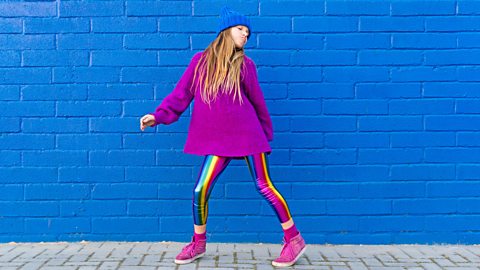
Useful adjectives for talking about items you might but include
| Spanish | English |
|---|---|
| barato/a | cheap |
| caro/a | expensive |
| cómodo/a | comfortable |
| corto/a | short |
| de marca | designer |
| de moda | fashionable |
| grande | big, large |
| largo/a | long |
| pequeño/a | small |
Remember
If you are describing the colour (el color) of an item of clothing, you can add vivo/a (bright), claro/a (light) and oscuro/a (dark) to add extra detail.
Note that you don't agree the colour with the noun if you use the words claro or oscuro.
For example:
los vaqueros azul claro – light blue jeans
la camisa verde oscuro – dark green shirt
Grammar - How to use and form the future tenses in Spanish
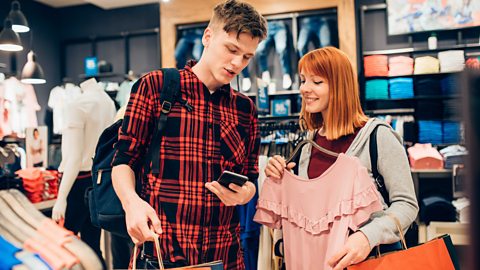
There are two main The verb formation that describes the time at which the action occurred, eg past, present or future. for talking about the future:
- The immediate future is used to say what you are going to do or what is going to happen.
For example:
Voy a comprar un nuevo vestido. - I’m going to buy a new dress
Va a ir de compras mañana. - He’s going to go shopping tomorrow.
- The simple future tense is used to say what will happen and is less common than the immediate future.
For example:
Iré a la ciudad con mis amigos. - I will go to town with my friends.
Llevará su nuevo vestido. - She will wear her new dress.
Find out more about using the simple future below.
The immediate future tense
The immediate future tense is the most common way of talking about future plans.
It is formed with the present tense of ir (to go), followed by a and the infinitive.
For example:
Voy a gastar mucho dinero - I’m going to spend a lot of money
Vamos a ir de compras este fin de semana - We are going to go shopping this weekend
¿Vais a comprar el videojuego? - Are you (plural informal) going to buy the computer game?
Click on Show more to see the conjugation of the verb ir - to go.
| Spanish | English |
|---|---|
| Check your connection, refresh the page and try again. | I am going |
| Check your connection, refresh the page and try again. | you (singular informal) are going |
| Check your connection, refresh the page and try again. | he/she/it/you (singular formal) is going |
| Check your connection, refresh the page and try again. | we are going |
| Check your connection, refresh the page and try again. | you (plural informal) are going |
| Check your connection, refresh the page and try again. | they/you (plural formal) are going |
Time phrases
Useful time phrases for talking about future plans include:
| Spanish | English |
|---|---|
| mañana | tomorrow |
| la semana que viene | next week |
| el año que viene | next year |
| en el futuro | in the future |
| después de mis exámenes | after my exams |
| en los próximos cinco años | in the next five years |
| más tarde | later on |
Immediate future tense – Mini quiz
Complete the following sentences in Spanish.
___________ una nueva chaqueta.
I am going to buy a new jacket.
Voy a comprar una nueva chaqueta.
To form a verb in the immediate future tense, take the correct conjugation of ‘ir’, ‘to go’. In this case it is voy, ‘I am going’.
Then add a followed by the infinitive of the verb comprar, to buy.
___________ su vestido rojo.
She is going to wear her red dress.
Va a llevar su vestido rojo. (She is going to wear her red dress.)
To form a verb in the immediate future tense, take the correct conjugation of ‘ir’, to go, she is going, which is va, then add ‘a’ then the infinitive verb, llevar, to wear.
___________ el sábado.
We are going to go shopping on Saturday.
Vamos a ir de compras el sábado. (We are going to go shopping on Saturday.)
To form a verb in the immediate future tense, take the correct conjugation of ‘ir’, to go, we are going, which is vamos, then add ‘a’ then the infinitive verb, ir de compras, to go shopping.
¿___________ la falda negra?
Are you (singular informal) going to buy the black skirt?
¿Vas a comprar la falda negra? (Are you (singular informal) going to buy the black skirt?)
To form a verb in the immediate future tense, take the correct conjugation of ‘ir’, to go, are you (singular informal) going, which is vas, then add ‘a’ then the infinitive verb, comprar, to buy.
To find out more about the immediate future tense, have a look at the Future tenses in Spanish guide.
Video comprehension
Watch the video then answer the questions below.
- Rafa usually buys clothes online because …
| A | it's cheaper and quicker |
| B | it's cheaper and there is more choice |
| C | it's quicker and there is more choice |
The answer is B
Rafa says: Suelo comprar ropa por internet. Normalmente es más barata y hay más opciones.
I usually/tend to buy clothes online. It's usually cheaper and there's more choice.
- Rafa prefers the jumper to the jacket. Give two reasons why.
He prefers the colour and it's cheaper (it only costs €15).
Rafa says: Pero me gusta más el color de este jersey y es más barato que la chaqueta, solo cuesta 15 euros.
But I like the colour of this jumper more and it's cheaper than the jacket, it only costs €15.
- Complete this sentence:
Rafa only has enough money to buy one item because last week he bought _________.
Rafa only has enough money to buy one item because last week he bought tickets for a concert.
Rafa explains: Solo tengo dinero para una cosa porque compré entradas para un concierto la semana pasada.
I only have enough money for one thing because I bought tickets for a concert last week.
- Why does Rafa decide to buy the green jacket he tries on? Give two reasons.
It's his favourite and most comfortable.
He says: Es mi favorita. Y, además, es la más cómoda. Me encanta.
It's my favourite. And in addition, it's the most comfortable. I love it.
- Rafa is surprised when he opens his wallet because he thought he had __________.
Rafa is surprised when he opens his wallet because he thought he had two €10 notes.
He says: Pensaba que tenía dos billetes de diez en mi cartera, pero parece que no.
I thought I had two €10 notes in my wallet, but it seems I don't.
Click or tap on Show more to read the transcript and translation.
Transcript
Hola, soy Rafa. Tengo un problema.
Un selfie antes de la fiesta.
Quiero vestirme bien. Por supuesto.
Suelo comprar ropa por internet, normalmente es más barata y hay más opciones. He comprado una chaqueta.Ha llegado, pero…
Es demasiado pequeña.
Así que tengo que ir a la tienda para comprar algo.
¿Me ayudas a decidir qué comprar? Vale. ¡Vamos!
Me gusta visitar las tiendas para probarme ropa.
¡Pero no me gusta hacer cola!
Bueno, ¡estoy buscando algo!
¿Cuánto cuesta? Esta chaqueta está en rebajas – tiene un descuento del veinte por ciento. ¡Qué guay! Cuesta veinte euros.
Pero me gusta más el color de este jersey y es más barato que la chaqueta, solo cuesta quince euros.
También me gustan estos zapatos, y no son caros…. cuestan nueve euros!
Y estas gafas….
Es tan difícil elegir. Solo tengo dinero para una cosa porque compré entradas para un concierto la semana pasada…
Voy a probar este.
Otra vez…
Creo que necesito una talla más grande para estar más cómodo…
¿Me queda bien? ¿Te gusta?
Vale, me llevo esta. Es mi favorita. Y además, es la más cómoda. Me encanta.
Ahora tengo que hacer cola. ¡Qué rollo!
Ahora a pagar. Son veinte euros. Pensaba que tenía dos billetes de diez en la cartera, pero parece que no. Ok, entonces voy a pagar con tarjeta.
Tengo el recibo por si hay algún problema con la chaqueta. ¡Espero que no!
¡Genial! Creo que me queda bien. Gracias por ayudarme.
¿Un selfie antes de la fiesta?
Translation
Hi, I’m Rafa. I have a problem.
I have a birthday party tonight.
I want to look good. Of course!
I usually buy clothes online. It’s normally cheaper and there’s more choice. I’ve bought ajacket.
It’s arrived, but…
It’s too small.
So I have to go to the shop to buy something.
Will you help me decide what to buy? Ok, let’s go.
I like visiting shops to try on clothes.
But I don’t like queuing!
Well, I’m looking for something.
How much does it cost? This jacket is on sale – it has 20 percent discount. Cool! It only costs 20 euros.
But I like the colour of this jumper more and it’s cheaper than the jacket. It only costs 15 euros.
I also like these shoes and they’re not expensive… they cost 9 euros!
And these glasses…
It’s so hard to choose. I only have enough money for one thing because I bought tickets for a gig last week.
I’m going to try this one.
Again…
I think I need one size bigger to be more comfortable.
Does it suit me? Do you like it?
Right, I’m buying this one – it’s my favourite. And, besides, it’s the most comfortable. I love it.
Now I need to queue. What a nuisance!
Now, to pay. It’s twenty euros. I thought I had two ten euro notes in my wallet, but it seems I don’t. Ok, then I’m going to pay by card.
I have the receipt just in case there’s a problem with the jacket. I hope not!
Great! I think it suits me. Thanks for helping me.
A selfie before the party?
Vocabulary – Shopping for clothes and other items
Useful nouns for clothing include:
| Spanish | English | Spanish | English |
|---|---|---|---|
| Check your connection, refresh the page and try again. | handbag | Check your connection, refresh the page and try again. | jumper |
| Check your connection, refresh the page and try again. | shirt | Check your connection, refresh the page and try again. | clothes, clothing |
| Check your connection, refresh the page and try again. | T-shirt | Check your connection, refresh the page and try again. | suit, costume |
| Check your connection, refresh the page and try again. | wallet | Check your connection, refresh the page and try again. | uniform |
| Check your connection, refresh the page and try again. | jacket | Check your connection, refresh the page and try again. | dress |
| Check your connection, refresh the page and try again. | skirt | Check your connection, refresh the page and try again. | shoes |
| Check your connection, refresh the page and try again. | sunglasses | Check your connection, refresh the page and try again. | trainers |

Other items you might buy include:
| Spanish | English |
|---|---|
| Check your connection, refresh the page and try again. | camera |
| Check your connection, refresh the page and try again. | rucksack, bag |
| Check your connection, refresh the page and try again. | mobile phone |
| Check your connection, refresh the page and try again. | souvenir |
| Check your connection, refresh the page and try again. | present, gift |
| Check your connection, refresh the page and try again. | magazine |
| Check your connection, refresh the page and try again. | computer game |
All Foundation Tier vocabulary listed in this guide can be found on the vocabulary sheet below.
Grammar - The simple future tense
The simple future tense is used to say what will happen.
For example:
Mañana compraré una camiseta para mi amiga. - Tomorrow I will buy a T-shirt for my friend.
Escogeremos un regalo para nuestra madre. - We will choose a present for our mother.
¿Irás de compras el sábado? - Will you go shopping on Saturday?
To form the simple future tense, add the correct ending to the Form of the verb that has not been conjugated. Usually translated with 'to' in English, eg to play. of the verb. The endings are the same for ar, er and ir verbs:
| ar verbs | er verbs | ir verbs |
|---|---|---|
| comprar - to buy | escoger - to choose | decidir - to write |
| Check your connection, refresh the page and try again. - I will buy | Check your connection, refresh the page and try again. - I will choose | Check your connection, refresh the page and try again. - I will decide |
| Check your connection, refresh the page and try again. - you (singular) will buy | Check your connection, refresh the page and try again. - you (singular) will choose | Check your connection, refresh the page and try again. - you (singular) will decide |
| Check your connection, refresh the page and try again. - he/she/you (formal singular) will buy | Check your connection, refresh the page and try again. - he/she/ you (formal singular) will choose | Check your connection, refresh the page and try again. - he/she/ you (formal singular) will decide |
The simple future of some common Spanish verbs is formed by adding the future endings onto an irregular The part of the verb that is left once the infinitive ending (ar/er/ir) has been taken off. It can also be called a radical..
Common irregular verbs include:
| infinitive | stem | English |
|---|---|---|
| tener | tendr | to have |
| hacer | har | to do, make |
| poder | podr | to be able to |
| poner | pondr | to put |
For example:
Tendré muchos regalos. - I will have lots of presents.
¿Podrás comprar un nuevo móvil? - Will you be able to buy a new mobile phone?
Note that hay (there is/are) becomes habrá (there will be).
For example:
Habrá una nueva tienda de ropa en mi ciudad la semana próxima. - There will be a new clothes shop in my town next week.
The simple future - Mini quiz
Complete the following sentences using the simple future tense.
__________ una chaqueta.
I will buy a jacket.
To form the simple future tense take the infinitive of the verb, comprar, meaning 'to buy', and add the ending é for ‘I’ form of the verb.
________ un nuevo móvil.
He will choose a new phone.
Escogerá un nuevo móvil.
To form the simple future tense take the infinitive of the verb escoger, meaning 'to choose', and add the ending á for the ‘he’ form.
Find out more about using the future tenses in the Future tenses in Spanish guide.
Reading practice
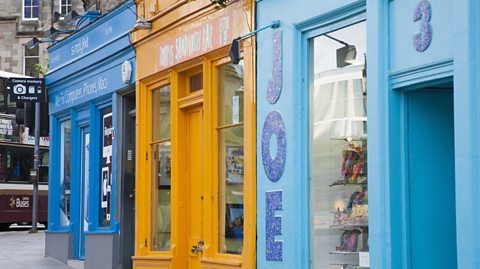
Read the four adverts for different shops and complete the activity below.
Advert A
Aprovecha al máximo cada esfuerzo, cada kilómetro y cada carrera con unos productos creados para ir más rápido.
Advert B
Ofertas exclusivas para clientes en la compra semanal o mensual … aprovéchate de las ventajas que ofrecen las compras en línea.
Advert C
¿Quieres diseñar camisetas personalizadas incluyendo tus diseños? Ven a nuestra tienda y crea tu propia ropa. ¡Es muy fácil!
Advert D
Somos una farmacia en línea, un lugar donde se encuentran todos los productos necesarios para sentirse mejor cada día.
Read what the following statements and decide which advert matches what each person is looking for
Nadim
Me gusta ser diferente y prefiero llevar cosas originales.
The answer is C
This is an advert for a shop where you can design your own t-shirts. Nadim says that he likes to be different and prefers to wear original things.
Translation
Do you want to design personalised t-shirts including your own designs? Come to our shop and create your own clothes. It’s really easy!
Marta
Es más fácil y barato comprar productos de salud en línea.
The answer is D
This is an advert for an online chemist. Marta says it is easier and cheaper to buy health products online.
Translation
We are an online pharmacy, a place where you can find all the products to help you feel better every day.
Alejandro
Mis padres no tienen tiempo para ir al supermercado los fines de semana.
The answer is B
This is an advert for weekly and monthly online shopping. Alejandro says that his parents are too busy to go to the supermarket at the weekend.
Translation
Exclusive offers for customers on weekly and monthly shopping …Take advantage of the offers on online shopping.
Andrea
Me encanta correr y es muy importante para mí tener unas zapatillas de deporte cómodas.
The answer is A
This is an advert for a sports shop. Andrea says that she loves running and it's important for her to have comfortable trainers.
Translation
Make the most of every effort, every kilometre and every race with with some products that are created to make you go faster.
Vocabulary sheet
Click or tap on the image below for a list of useful Foundation Tier vocabulary to use when talking about shopping.

Higher Tier – Vocabulary – Shopping
Useful vocabulary to use when shopping includes:
| Spanish | English |
|---|---|
| ofrecer | to offer |
| claro/a | clear, light |
| oscuro/a | dark |
| vivo/a | bright |
| los productos de belleza | beauty products |
All vocabulary listed in this guide can be found on the vocabulary sheet below.
Higher Tier - Grammar - The simple future tense
The plural forms of the simple future tense are needed at Higher Tier only.
The simple future tense is formed by adding the conditional endings to the infinitive. The endings are the same for ar, er and ir verbs.
| ar verbs | er verbs | ir verbs |
|---|---|---|
| comprar - to buy | escoger - to choose | decidir - to decide |
| compraremos - we will buy | escogeremos - we will choose | decidiremos - we will decide |
| compraréis - you plural will buy | escogeréis - you plural will choose | decidiréis - you plural will decide |
| comprarán - they/you formal plural will buy | escogerán - they/ you formal plural will choose | decidirán - they/you formal plural will decide |
Forming the simple future of irregular verbs
The simple future of some common Spanish verbs is formed by adding the future endings onto an irregular stem. Common Higher Tier verbs that follow this pattern include:
| infinitive | stem | English |
|---|---|---|
| saber | sabr | to know |
| querer | querr | to want |
| venir | vendr | to come |
| decir | dir | to say |
| salir | saldr | to go out |
For example:
Saldré a las tres. - I will go out at three.
Querremos comprar muchos recuerdos. - We will want to buy lots of souvenirs.
Higher Tier - Mini quiz
Complete the following sentences using the simple future tense.
? ________ de compras mañana.
We will go shopping tomorrow.
Iremos de compras mañana.
To form the simple future tense take the infinitive of the verb, ir, meaning 'to go', and add the ending emos for the ‘we’ form.
¿________ comprar una camiseta?
Will you (singular informal) want to buy a T-shirt?
¿Querrás comprar una camiseta?
To form the simple future tense of the irregular verb querer, meaning 'to want', use its irregular stem querr and add the ending ás for the ‘you' (singular informal) form of the verb.
Find out more about using the future tenses in the Future tenses in Spanish guide.
Higher Tier - Vocabulary sheet
Click or tap on the image below for a list of useful Higher Tier vocabulary to use when talking about shopping.
Now you have revised the important vocabulary and key grammar points for talking about shopping why not have a look at the Describing the local area in Spanish guide?
Careers advice and tips from BBC Bitesize
Future careers, further studies and the world of work - we're here to help with advice from experts and from young people who've found their path.

More on Free time activities
Find out more by working through a topic
- count1 of 5

- count2 of 5

- count3 of 5
- count4 of 5