Key points
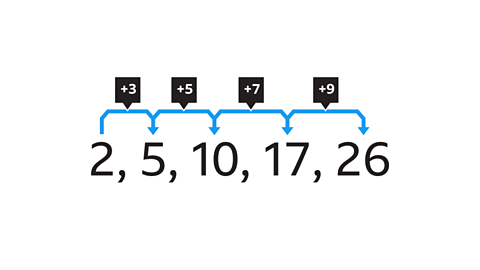
A A sequence is a set of numbers that follow a certain rule. For example, 3, 5, 7, 9… is a sequence starting with 3 and increasing by 2 each time. is a list of numbers or diagrams that are in order.
Number sequences are sets of numbers that follow a pattern or a rule.
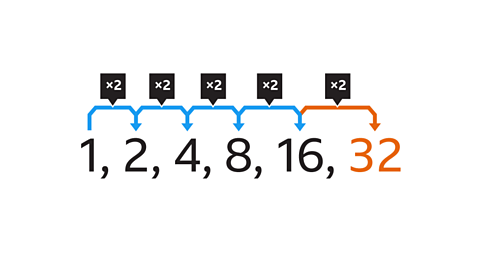
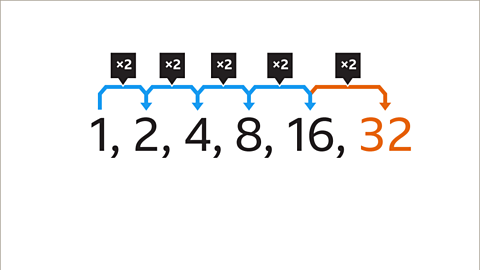
If the rule is to multiply or divide by a specific number each time, it is called a geometric sequence.
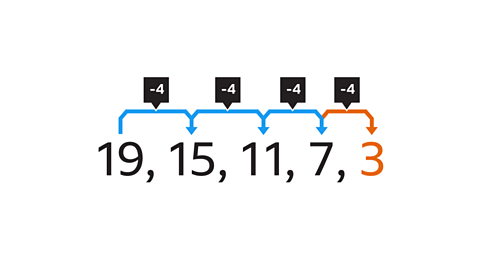
A number pattern which increases (or decreases) by the same amount each time is called an An arithmetic sequence is a sequence of numbers with a definite pattern. If you take any number in the sequence then subtract the previous one, the result is always a constant amount..
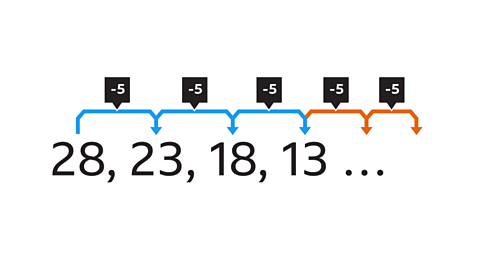
Recognising the pattern between the An element within an algebraic sentence. Elements (terms) are separated by + or - signs. means that the sequence can be continued using a A term-to-term rule is a rule that allows you to find the next number in a maths sequence, if you know the previous numbers (or terms). rule.
Sequences that are connected by Two numbers which are connected by multiplication. relationships are geometric sequences, whereas those connected by The same number is added each time to produce the next value. relationships are linear.
Finding missing terms in a geometric sequence
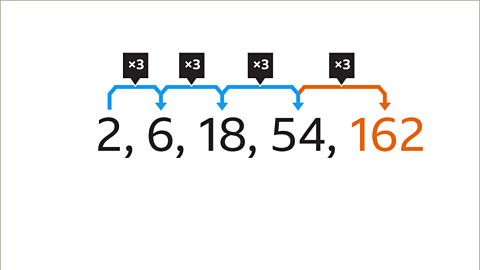
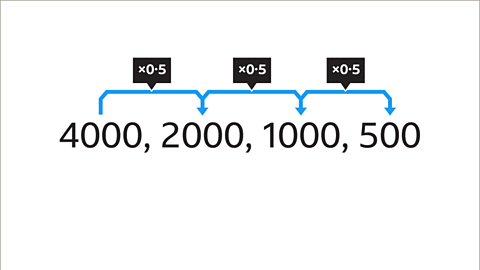
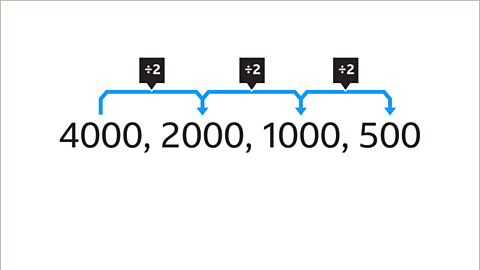
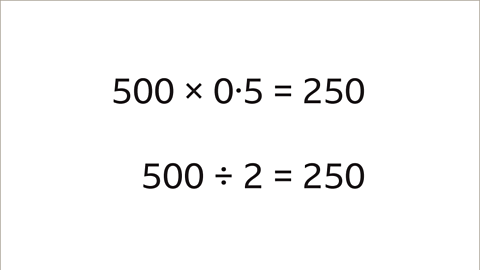
Each term in a geometric sequence is found by multiplying or dividing the previous term by the same amount, this is called the common ratio.
To find the common ratio, start by calculating the difference between each pair of numbers, moving from one term to the next.
Examples
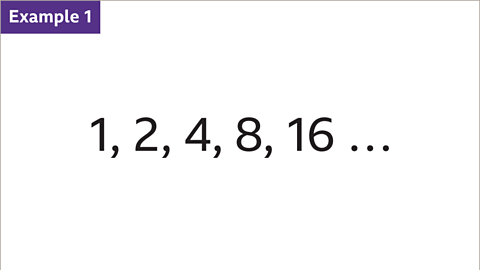
Image caption, What is the next term in the sequence?
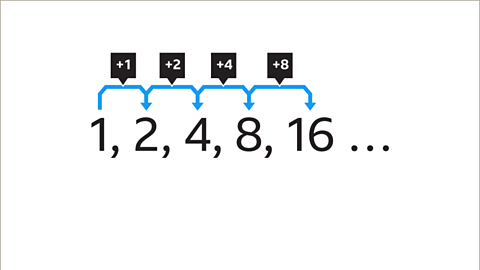
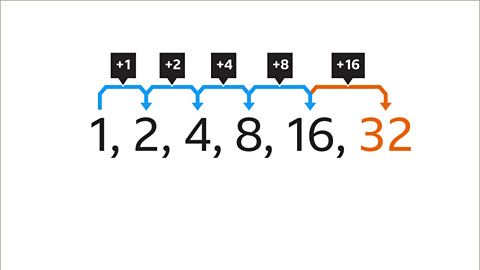
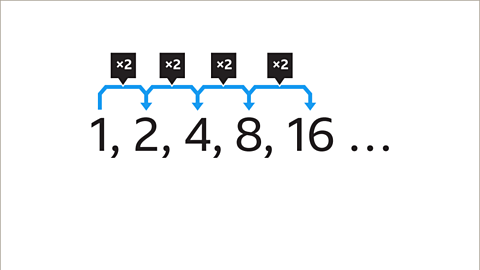
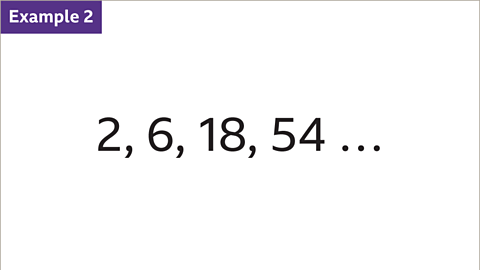
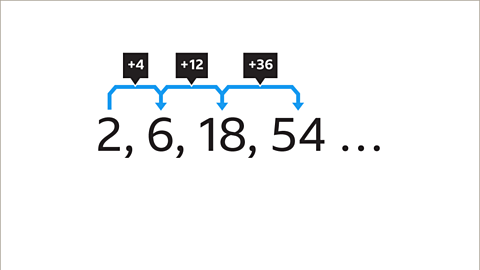
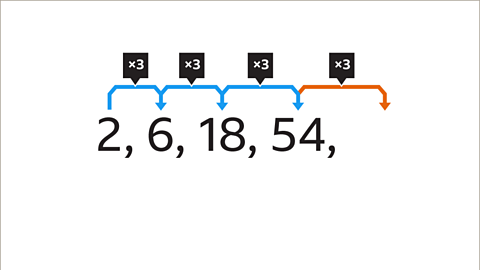
1 of 9
Question
What is the next number in this geometric sequence?
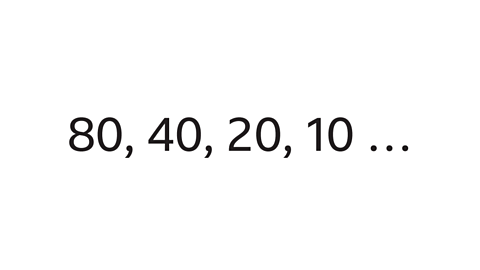
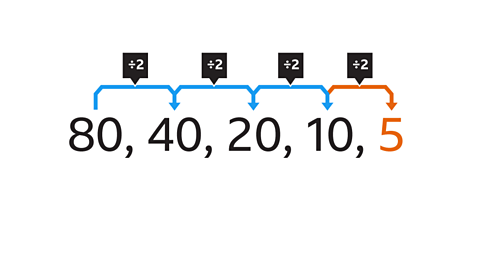
Each term in the sequence is divided by 2 to create the next term.
The next term in the sequence is found by dividing the previous term (10) by 2
10 ÷ 2 = 5
5 is the next number in this geometric sequence.
Finding the common ratio
The common ratio is the number you multiply or divide by at each stage of the sequence. It is found by dividing two consecutive pairs of terms.
It does not matter which pair of terms is chosen, as long as they are next to each other in the sequence.
Examples
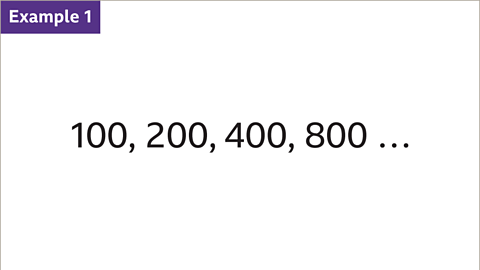
Image caption, What is the common ratio of this geometric sequence of numbers?
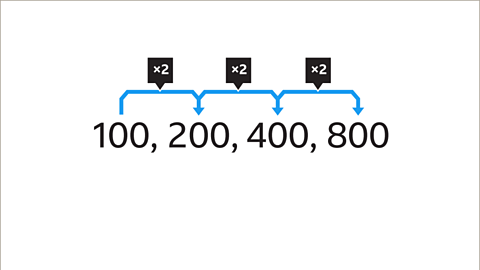
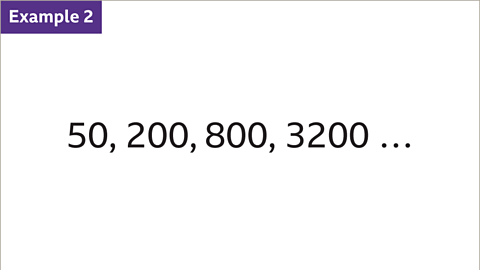
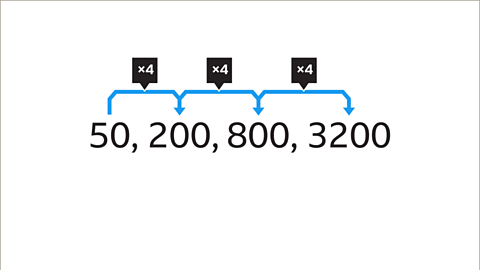
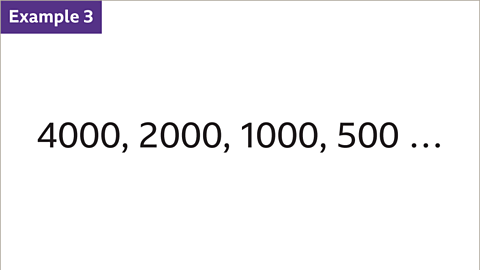
1 of 8
Question
What is the common ratio of this geometric sequence?
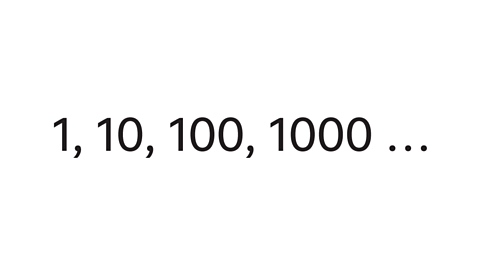
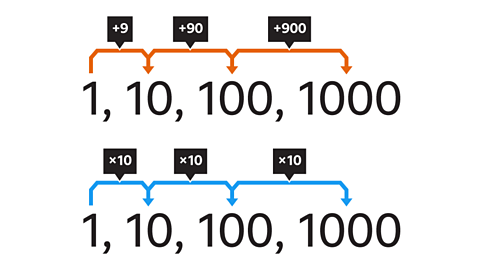
The common ratio is the number you multiply or divide by at each stage of the sequence.
The differences between the terms are not the same each time, this is found by subtracting consecutive terms.
The differences are 9, 90 & 900. This shows that it is not an arithmetic linear sequence.
The common ratio is found by dividing two consecutive pairs of terms.10 ÷ 1 = 10, 100 ÷ 10 = 10 and 1000 ÷ 100 = 10
The next term in the sequence is calculated by multiplying the last term by 10, so the common ratio is 10
Practise geometric sequences
Quiz
Practise recognising and finding terms in geometric sequences with this quiz. You may need a pen and paper to help you with your answers.
Real-life maths

Geometric sequences are used in everyday life when something follows a pattern. An example of this is in scientific work, when the growth of bacteria is monitored.
If provided with the optimum conditions for growth, the population of bacteria grows in a geometric sequence, because bacteria reproduce by dividing into two.
Scientists, such as microbiologists, can predict how much bacteria will develop in a petri dish after a certain number of days by finding the common ratio.
Play Sudoku with BBC Bitesize!
Every weekday we release brand new easy, medium and hard Sudoku puzzles. Perfect for testing your skill with numbers and logic.

More on Patterns and sequences
Find out more by working through a topic
- count4 of 4